



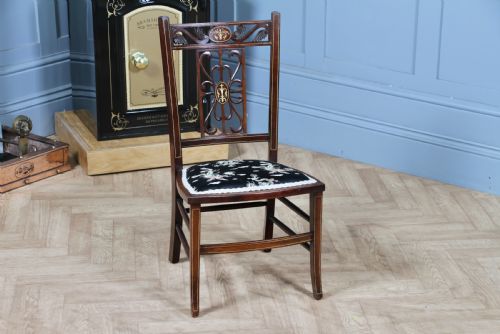


Mahogany and Satinwood Chair
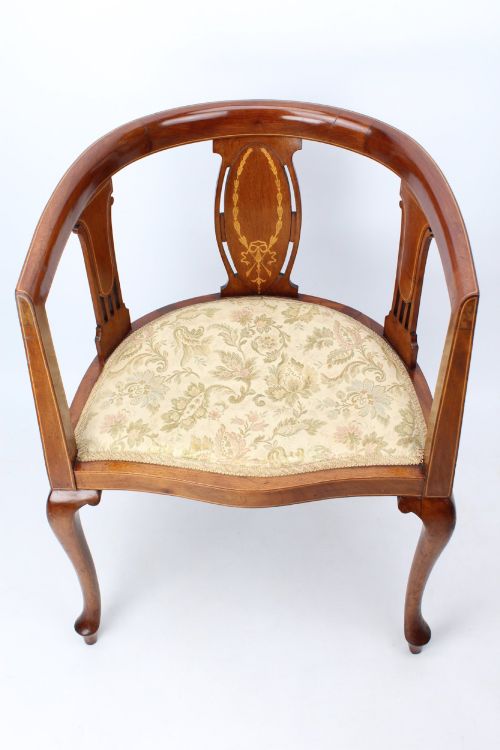
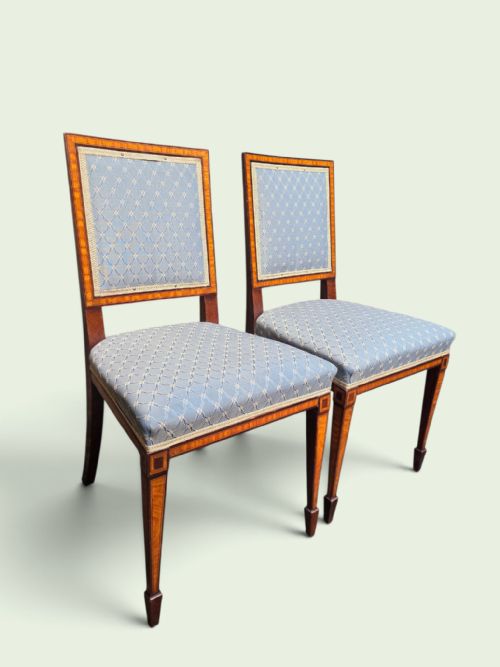
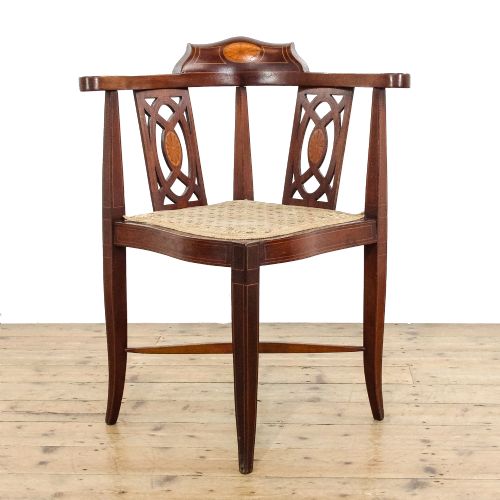
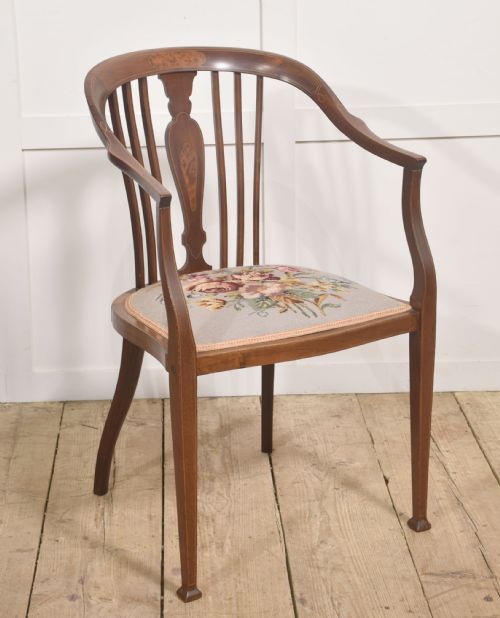
These mahogany and satinwood chairs bring together rich timbers and fine inlay, offering a touch of elegance for everyday seating.
Mahogany and Satinwood Chair
The mahogany and satinwood chair encompasses a variety of seating forms designed for parlours, dining rooms, and studies. These pieces primarily date from the Edwardian era and the Victorian period, drawing heavily on Georgian and Sheraton Revival aesthetics.
Buyers will most frequently encounter Edwardian examples on this page, often featuring delicate string inlay, contrasting satinwood details, and original upholstery fabrics such as silk, velvet, or leather. Forms range from occasional and salon chairs to robust armchairs, elbow seats, and nursing chairs.
Alongside standard dining and side chairs, the selection includes specialised seating such as corner armchairs, rocking chairs, piano stools, tub chairs, and even swivelling ships chairs. Each piece displays the distinctive grain of mahogany set against lighter satinwood ornamentation.
Materials and construction
Cabinet makers utilised solid mahogany for the main frames and structural members of the chairs, providing durability and a deep, dark ground colour. Satinwood was then employed for contrasting inlays, bandings, and decorative motifs, creating a striking visual interplay between light and dark timbers.
Details were further enhanced through string inlay, brass fittings, and carved elements integrated into the mahogany framework. Seating surfaces were finished with traditional upholstery techniques, utilising fabric, velvet, leather, or silk supported by underlying webbing and stuffing.
Mahogany and Satinwood Chair Retail Price Guide 2026
Typical asking prices for mahogany and satinwood chair among the pieces listed under this phrase on Sellingantiques today, from the lower quarter to the upper quarter. They describe what is for sale here now, not the wider market.
Listings feature mahogany, satinwood, and brass alongside upholstery materials like velvet, leather, silk, and woven fabric.
Assessing quality and execution
Quality in a mahogany and satinwood chair is determined by the crispness of the inlay work and the precision of the timber joints. Finer pieces display meticulously fitted satinwood banding and stringing that remain flush with the surrounding mahogany surface.
The sophistication of the carved details and the integrity of the structural frame distinguish higher-grade examples. Well-executed pieces maintain balanced proportions and harmonious lines across complex forms such as elbow chairs, corner seats, and salon sets.
Shoolbred
The Mahogany and Satinwood Chair Glossary
- Satinwood inlay
- A decorative technique where lighter satinwood is set into recesses cut into the darker mahogany surface. This creates contrasting geometric patterns or floral motifs.
- String inlay
- A very thin line of contrasting timber, such as satinwood, embedded into the mahogany frame to outline panels or legs. It adds subtle definition to the edges of the chair.
- Elbow chair
- An armchair featuring shorter arms that do not extend the full length of the seat rails. These were often used at desks or as occasional seating in bedrooms and morning rooms.
- Bergere
- An upholstered armchair with enclosed cane or upholstered sides and back panels. The wooden frame is typically exposed and shaped from mahogany.
- Sheraton Revival
- A late nineteenth and early twentieth-century style that emulates the lighter, neoclassical designs of George Sheraton. Pieces from this movement often combine mahogany bodies with satinwood and string inlay.
Mahogany and Satinwood Chair: Frequently Asked Questions
What is an Edwardian mahogany and satinwood chair?
An Edwardian mahogany and satinwood chair is a piece of seating furniture produced during the early twentieth century or late nineteenth century. These chairs combine a dark mahogany structure with lighter satinwood inlay and often feature upholstered seats in fabric, silk, leather, or velvet.
They reflect revival styles such as Sheraton Revival and Georgian designs, functioning as decorative and practical additions to domestic interiors like bedrooms, salons, and drawing rooms.
How do I identify a Sheraton Revival chair?
Sheraton Revival chairs are typically characterised by slender proportions, neoclassical motifs, and sophisticated use of contrasting timbers. They frequently pair a mahogany frame with delicate satinwood inlay and stringing.
These pieces emerged in the late nineteenth and early twentieth centuries, drawing inspiration from eighteenth-century furniture designs while utilising the manufacturing techniques of the Victorian and Edwardian eras.
Where were these chairs used in the home?
These chairs served multiple functions across different domestic spaces, from formal dining rooms to private bedrooms and studies. Specific forms such as salon chairs and corner armchairs were designed for entertaining guests and social gatherings.
Other variations include nursing chairs, piano stools, rocking chairs, and swivelling ships chairs, each tailored to specific physical activities and room layouts within the home.
What fabrics are used on these chairs?
Original and period upholstery on these chairs encompasses a range of textiles including silk, velvet, fabric, and re-leathered surfaces. The choice of material often corresponds to the specific function and formal quality of the seating.
Armchairs and nursing chairs frequently incorporated plush or woven coverings, whilst desk chairs and swivelling variants utilised durable leather to withstand regular daily use.