
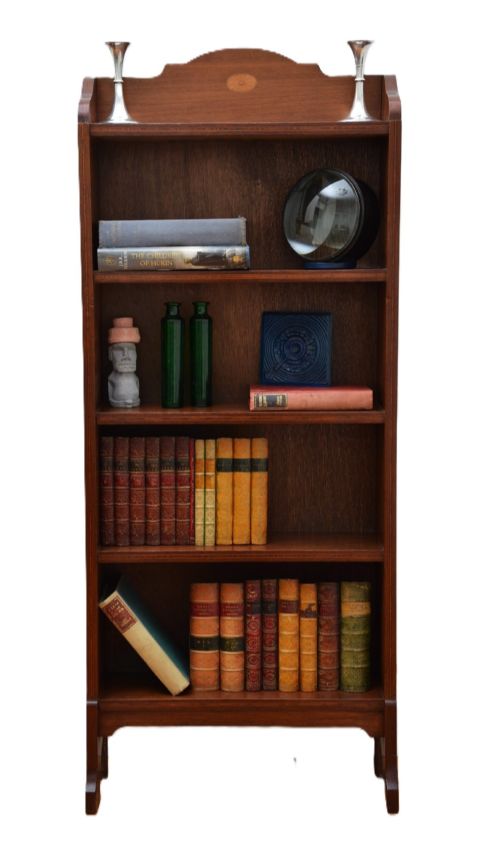
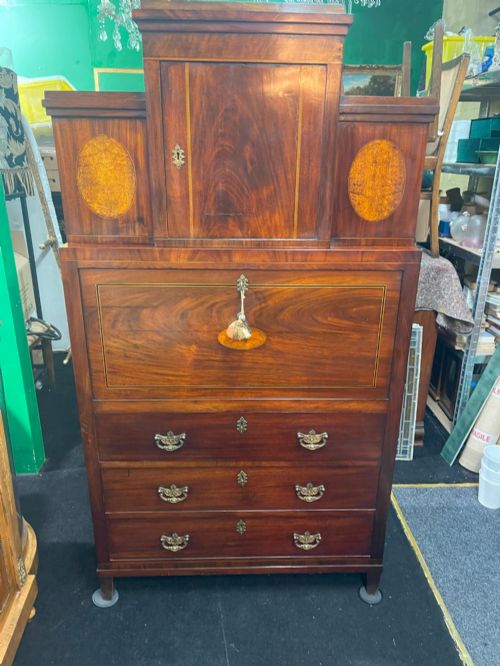
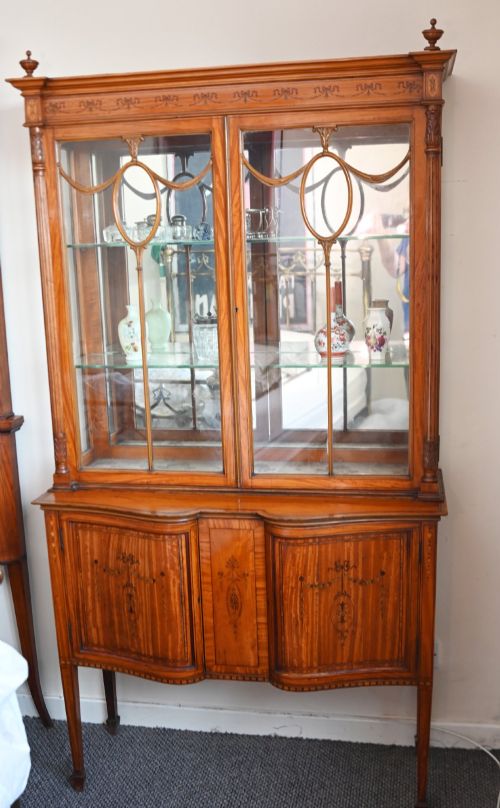
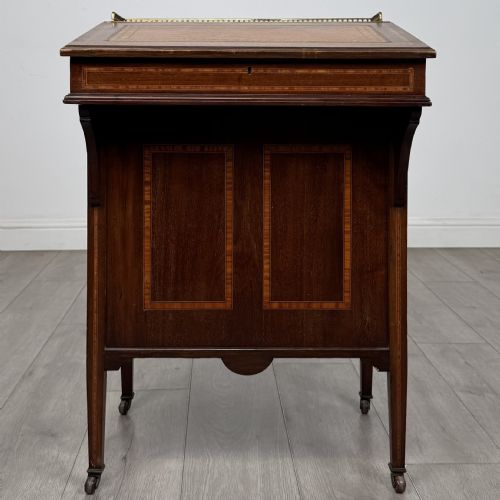
Mahogany and Satinwood Cabinet
A mahogany and satinwood cabinet brings warmth and crisp neoclassical detail to a room, offering both display space and refined storage.
Mahogany and Satinwood Cabinet
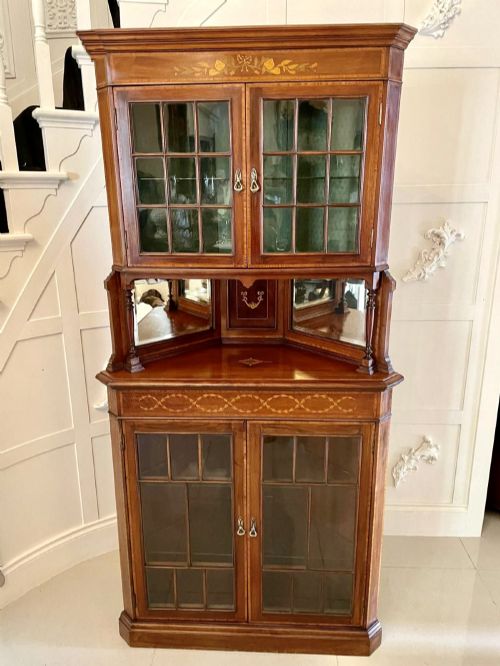
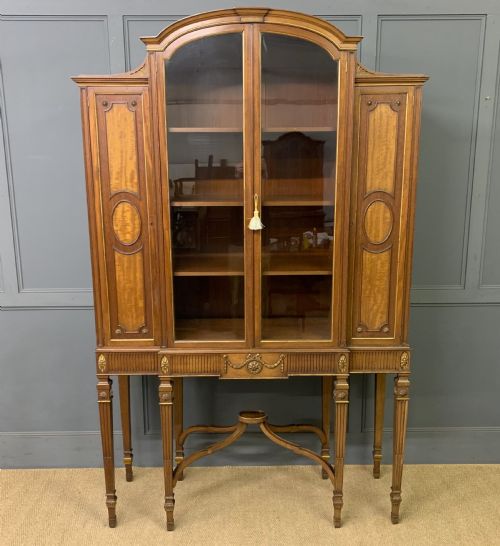
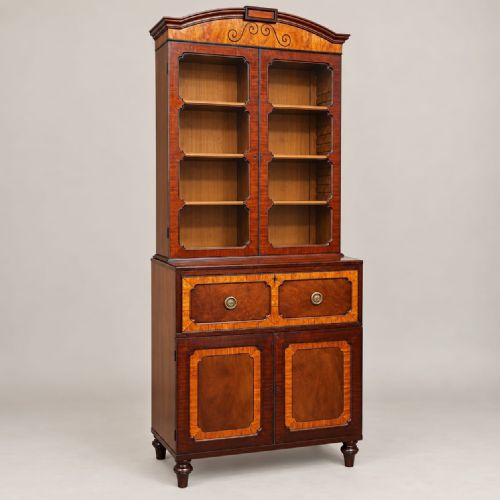
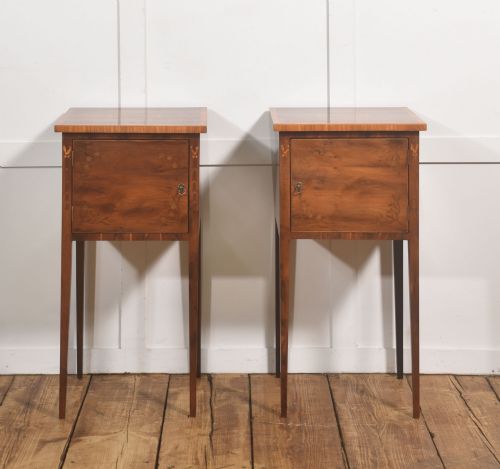
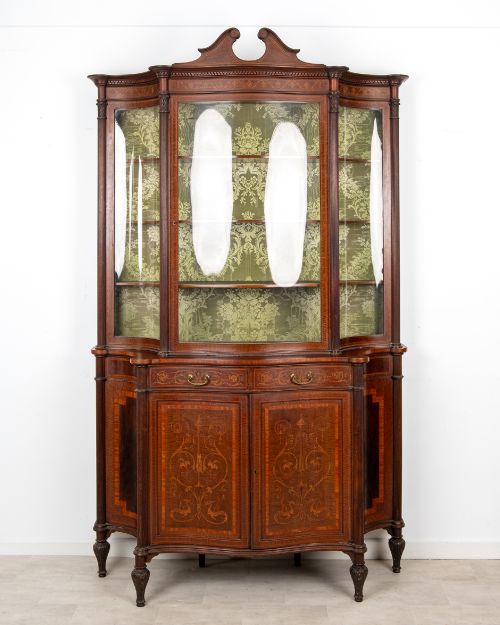
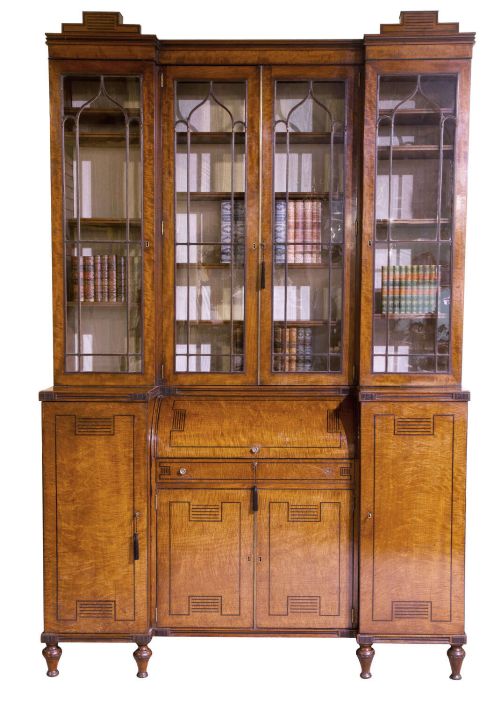
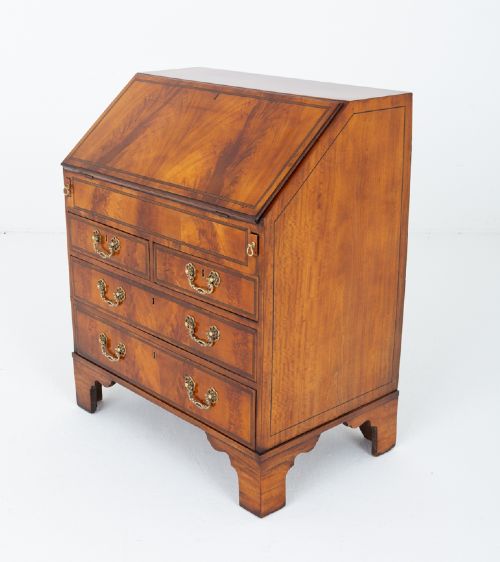
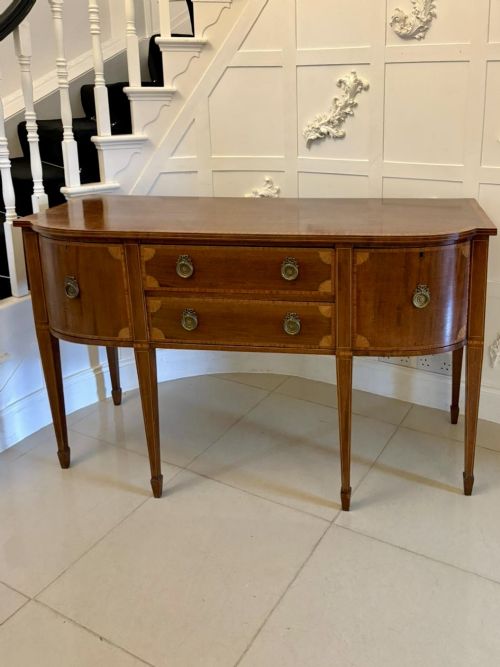
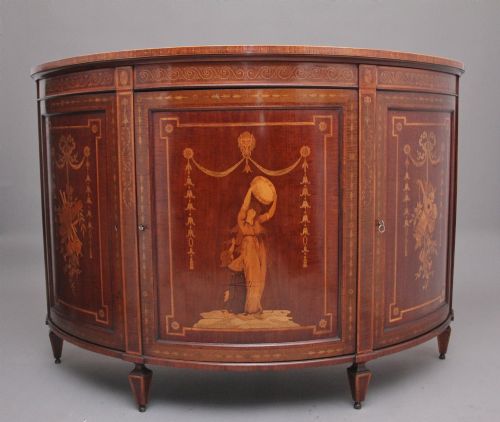
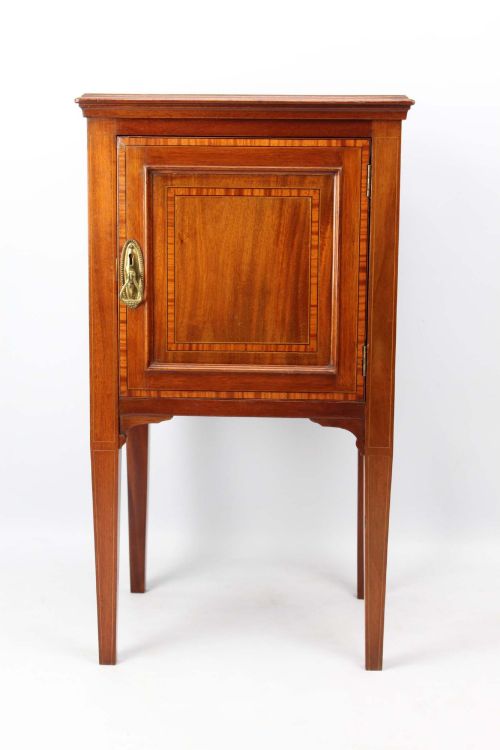
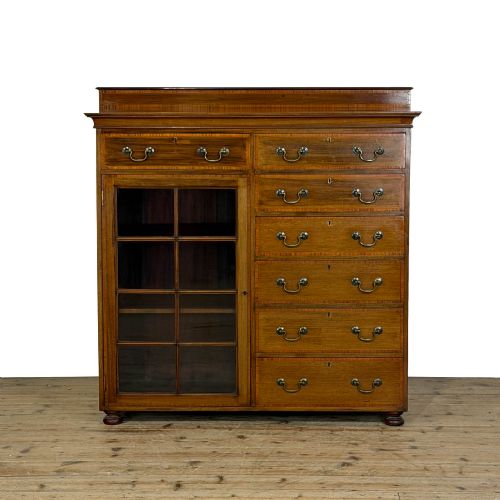
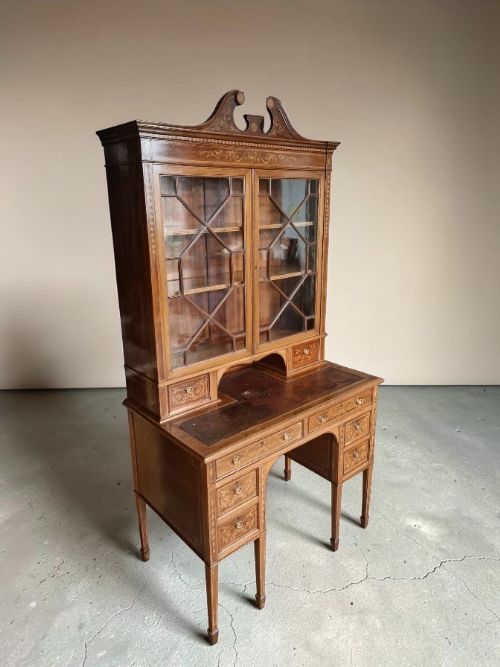
When you search for a mahogany and satinwood cabinet, you encounter a refined group of furniture spanning the eighteenth, nineteenth and early twentieth centuries. These pieces encompass display cabinets, sideboards, bookcases, bedside cupboards and secretaire bookcases built to organise and exhibit.
The Edwardian era and the Sheraton Revival period dominate the examples you meet here, alongside Georgian originals from around eighteen hundred. Cabinet makers of these periods utilised pale satinwood bandings and inlay to contrast sharply against the dark red grain of mahogany.
You find both freestanding corner display cabinets and larger breakfront side cabinets designed for principal reception rooms. Smaller bedside cabinets and compactum wardrobes also appear, carrying the same characteristic wood combinations and refined proportions.
How they were made
Cabinet makers constructed carcass frames in solid mahogany, applying fine veneers of satinwood and boxwood to drawer fronts, friezes and door panels. They created decorative contrast through stringing, crossbanding and marquetry depicting classical motifs or delicate urns.
Many Edwardian and Victorian pieces incorporate painted satinwood panels alongside glazed doors and brass hardware. Secondary timbers such as oak or pine appear in drawer linings and internal shelving, constructed with traditional dovetail joints.
Listings feature Edwardian, Victorian, and 18th Century periods, incorporating mahogany, satinwood, and boxwood.
What varies in quality
The precision of the inlay work and the selection of timber grain separate standard production from exceptional pieces. Finer cabinets display meticulously matched veneers and crisp boxwood stringing that follows complex curves without lifting or gapping.
Superior examples retain original brass mounts, hand-painted details and undisturbed patination on the polished mahogany surfaces. The integration of secondary timbers and the weight of the timber frame indicate the degree of care taken in the workshop.
Waring and Gillow·Maple and Co·Edwards and Roberts·Druce and Co
The Mahogany and Satinwood Cabinet Glossary
- Satinwood
- A dense, lustrous timber native to India and Ceylon, prized for its golden-yellow colour and reflective grain. Makers used it primarily for banding, stringing and full veneer surfaces on neoclassical furniture.
- Crossbanding
- A border veneer technique where strips of wood are laid across the grain rather than running parallel to it. This frames panels of mahogany and satinwood on cabinet doors and tabletops.
- Sheraton Revival
- A late nineteenth and early twentieth-century design movement inspired by the neoclassical furniture of George Sheraton. These pieces frequently feature satinwood inlay, painted decoration and slender proportions.
- Secretaire
- A cabinet or chest incorporating a fitted writing drawer with a drop-front fall. Internal compartments often include small pigeonholes and concealed document drawers.
- Marquetry
- The art of forming decorative patterns using thin veneers of various coloured woods and other materials applied to a structural carcass. It appears frequently on Edwardian display cabinets and sideboards.
Mahogany and Satinwood Cabinet: Frequently Asked Questions
How do I date a mahogany and satinwood cabinet?
Examine the construction methods visible inside the drawers and carcass, noting whether machine-cut or hand-cut dovetails are present. The secondary woods and the style of the satinwood inlay also point toward either the Georgian period or the later Sheraton Revival.
Hardware such as brass handles and hinges offer further clues, as do lock types and backboards. Edwardian pieces often exhibit lighter internal framing and machine-finished components compared to eighteenth-century originals.
Where should I place a display cabinet?
Position your display cabinet away from direct sunlight and radiators to protect fragile wood veneers and antique glass from thermal shock. Drawing rooms, studies and dining areas suit their proportions, providing a secure space for porcelain and glassware.
Ensure the floor is level so that doors hang true and close evenly without straining the hinges. Corner cabinets make efficient use of difficult angles in smaller reception rooms.
How do I care for satinwood veneer?
Dust the surfaces regularly with a soft, dry cloth to prevent abrasive particles from accumulating on the polished finish. Avoid silicone-based polishes, opting instead for a microcrystalline wax sparingly applied to nourish the timber.
Maintain stable humidity levels in the room to prevent the satinwood and mahogany veneers from shrinking, expanding or lifting away from the carcass.
What is the difference between George III and Sheraton Revival?
George III furniture dates from the second half of the eighteenth century and represents original neoclassical craftsmanship in solid timbers and fine veneers. These pieces carry the patina of daily use over two centuries.
Sheraton Revival pieces date from the late Victorian and Edwardian eras, reviving those earlier eighteenth-century designs. They often employ machine assistance alongside hand inlay, utilising bright satinwood and painted floral motifs.