

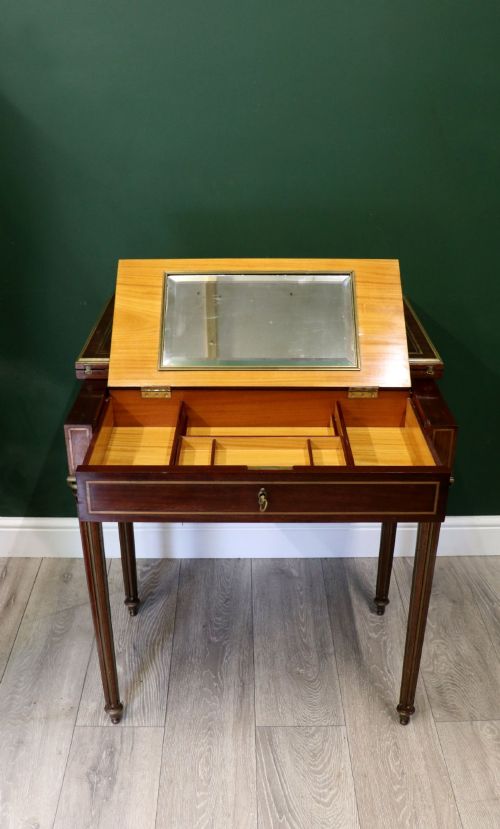
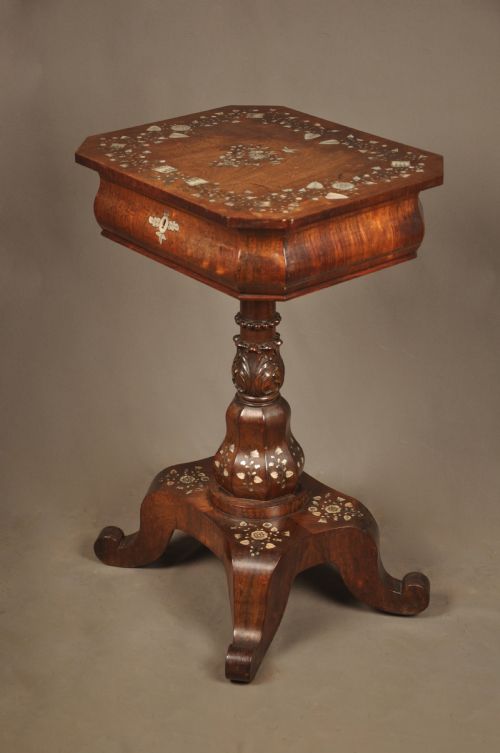
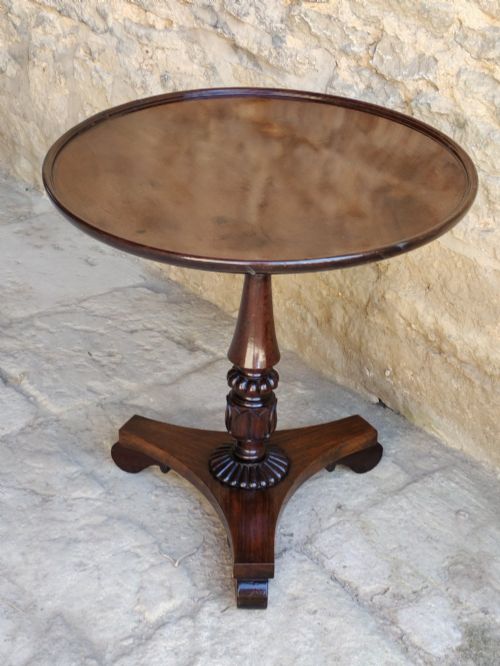
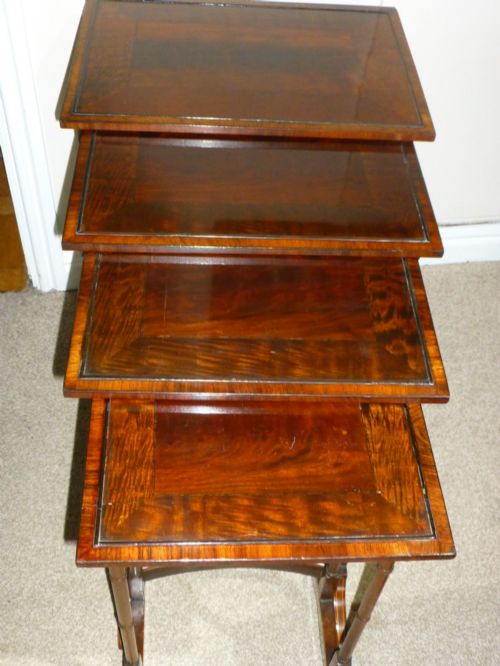




Mahogany and Rosewood Table
A mahogany and rosewood table brings together rich cabinet timbers for formal reception spaces and intimate studies alike.
Mahogany and Rosewood Table
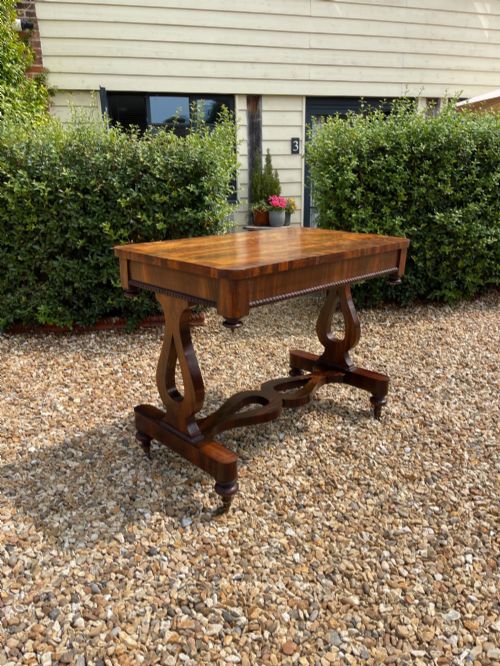
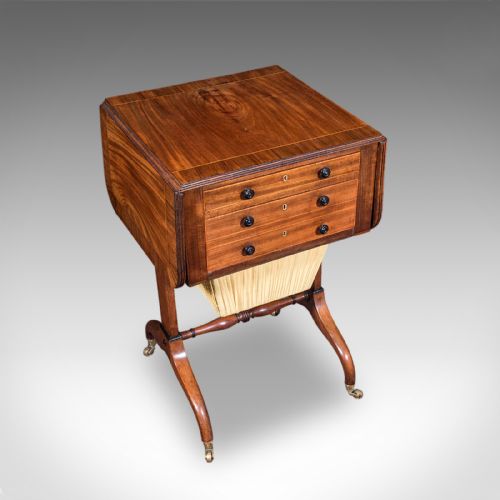
A mahogany and rosewood table encompasses diverse functional forms including card tables, games tables, sofa tables, occasional tables, and centre tables. These pieces emerge across Georgian, Regency, William IV, Victorian, and Edwardian periods.
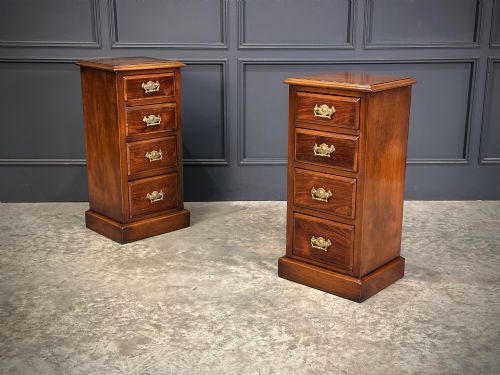
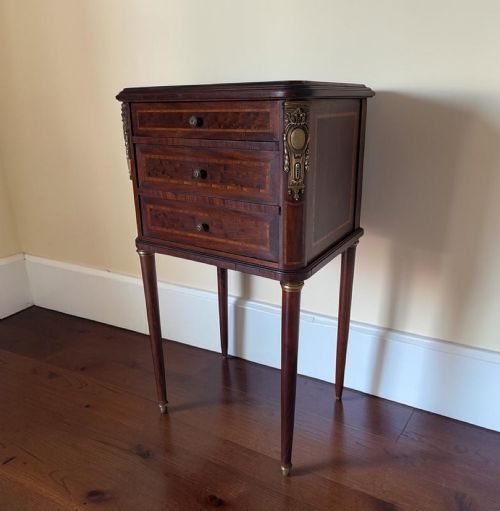
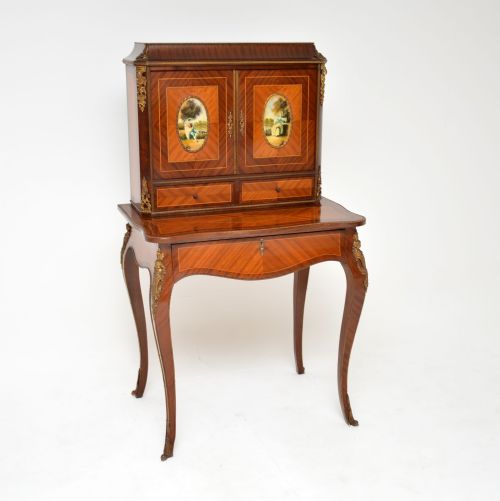
Makers construct these items using primary carcasses of mahogany paired with contrasting rosewood veneers and crossbanding. Examples range from compact bedside chests to large breakfast and dining tables.
The selection on this page demonstrates how cabinetmakers utilised these dense timbers for structural stability and striking visual borders. Pieces from the early nineteenth century frequently display brass inlay and drop leaves.
Construction materials and techniques
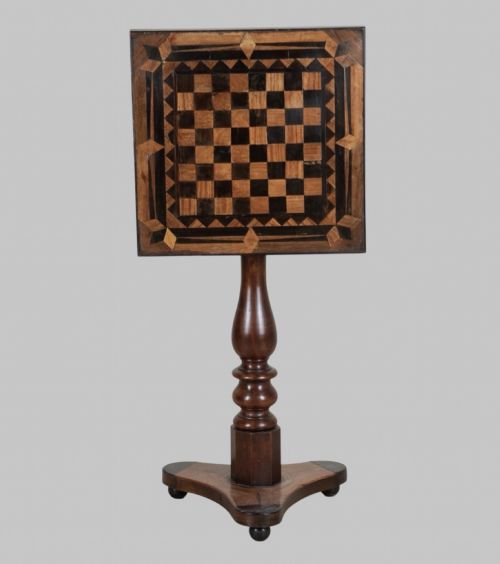
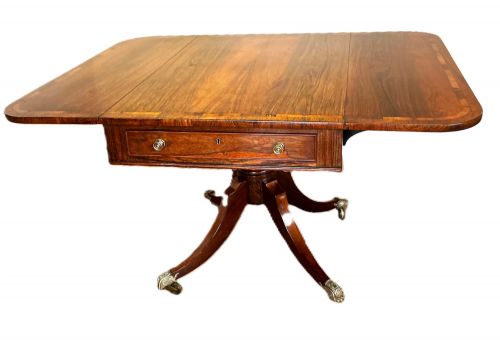
Cabinetmakers applied rosewood veneers over solid mahogany and hardwood frames to create contrasting geometric borders and crossbanding. Boxwood, satinwood, and brass stringing often delineate the edges of table tops.
Turned pedestals, triform bases, and pillar supports provide the structural backbone for circular breakfast tables and centre tables. Drop-leaf and envelope mechanisms allow functional surfaces to expand or fold away.
Mahogany and Rosewood Table Retail Price Guide 2026
Typical asking prices for mahogany and rosewood table among the pieces listed under this phrase on Sellingantiques today, from the lower quarter to the upper quarter. They describe what is for sale here now, not the wider market.
Several tables include hidden compartments for cards, sewing gear, and letters, designed to keep nineteenth-century drawing rooms delightfully clutter-free.
Distinctions in construction and design
The standard of timber selection dictates the visual depth of the surface, with tightly figured grain and uniform crossbanding separating superior examples from plain construction. Precision in the brass inlay and the tightness of veneer joints reveal the maker's hand.
Structural integrity in pedestals, hinges, and drawer linings determines how well a piece survives centuries of use. Finer specimens retain original mounts, harmonious timber colour, and crisp carving on the legs and bases.
Edwards and Roberts·Maple and Co.·James Mein Kelso·John MaClean·George Orpwood
The Mahogany and Rosewood Table Glossary
- Crossbanding
- A border strip of veneer laid around the perimeter of a table top with the grain running perpendicular to the centre.
- Card table
- A folding table designed for playing cards, featuring a hinged top that opens to reveal a baize-lined surface.
- Sofa table
- A rectangular library or writing table traditionally placed in front of a sofa, equipped with drop leaves at either end.
- Triform base
- A three-sided pedestal support commonly found beneath circular breakfast and centre tables from the Regency and William IV periods.
- Specimen wood
- A tabletop constructed from a mosaic of various decorative timbers arranged in geometric patterns.
Mahogany and Rosewood Table: Frequently Asked Questions
How do I identify a Regency table?
A Regency table often exhibits classical proportions, brass inlay, and dark mahogany surfaces paired with rosewood borders. Look for distinct architectural motifs, sabre legs, and brass paw feet.
Construction details from this era include hand-cut dovetails in the drawers and solid secondary timbers. Makers frequently utilised brass stringing to accent the junction between mahogany fields and rosewood crossbanding.
What is a sofa table used for?
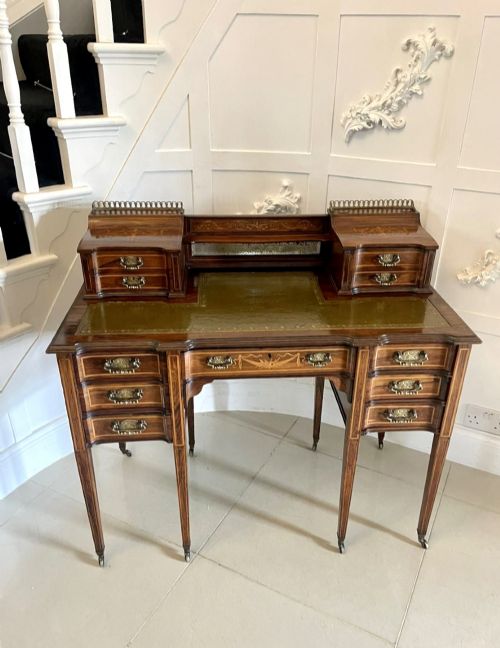
A sofa table serves as a versatile side or writing surface with drop leaves that fold down when space is restricted. Historically positioned behind a sofa, these pieces held books, writing materials, and lamps.
Many examples feature small drawers beneath the top for storage. Their proportions make them adaptable as console tables in modern hallways or sitting rooms.
How do I care for rosewood and mahogany?
Protect antique timber surfaces by placing them away from direct sunlight and maintaining stable room humidity. Regular dusting with a soft, dry cloth prevents particulate accumulation.
Avoid silicone-based polishes, which can penetrate aged finishes and attract dust. Application of a traditional beeswax feed periodically helps nourish dry veneer.