



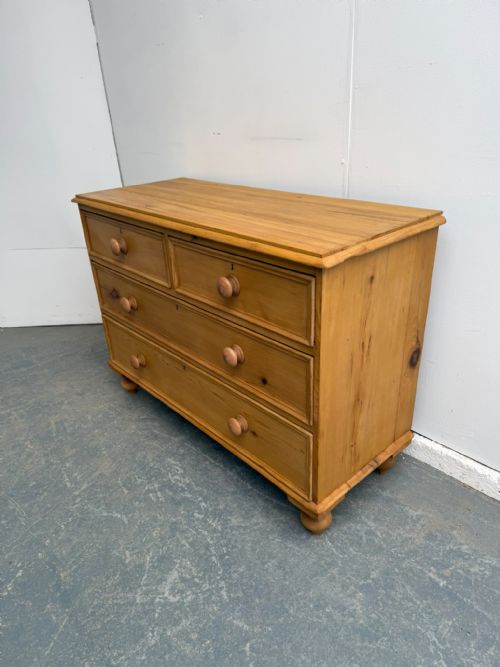
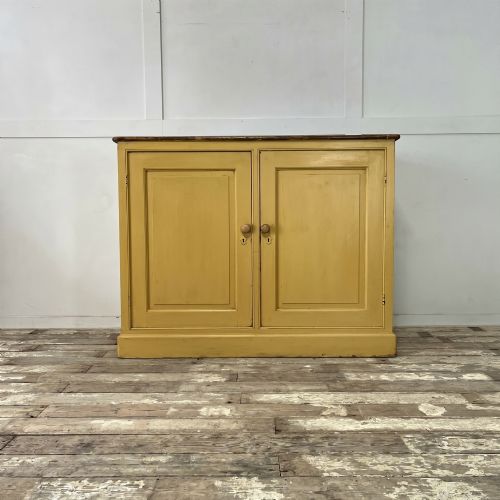
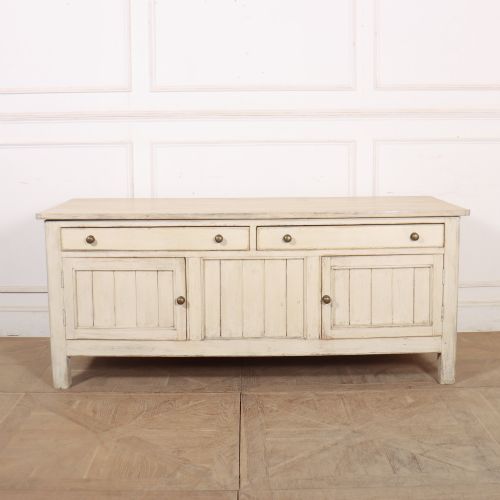


Low Pine Dresser
These low pine dressers and related bases offer practical country storage that anchors a kitchen with warmth and utility.
Low Pine Dresser
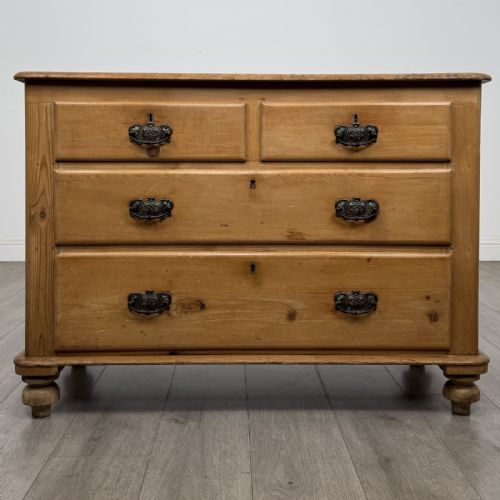
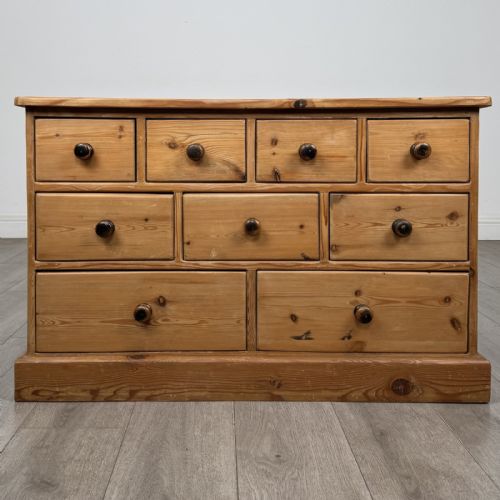
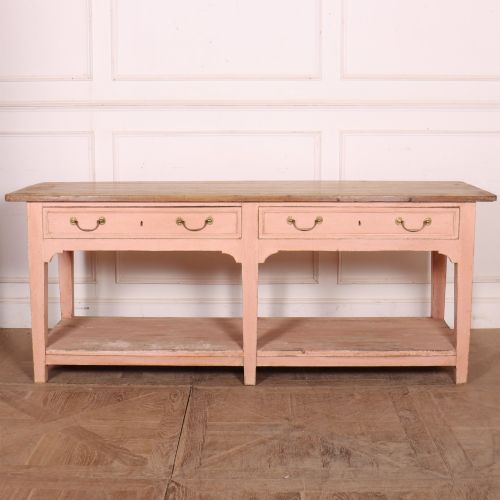
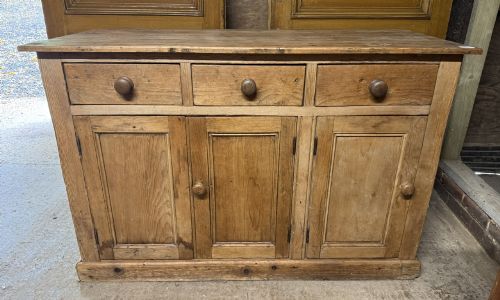
A low pine dresser provides sturdy surface space and lower storage, appearing across this selection as Victorian, Edwardian, and 18th-century examples. The pieces range from straightforward kitchen dresser bases and potboard designs to related cupboards and chests that share the same utilitarian footprint.
Most items you encounter here belong to the 19th century or the Victorian era, shaped by regional English, Scottish, and occasionally Hungarian traditions. Forms vary from open potboards to multi-drawer bases and compact chiffoniers designed for everyday household service.
How they were made
Makers built these pieces primarily from solid pine and pitch pine, selected for accessibility and straightforward carpentry. Iron and brass hardware such as drawer pulls and hinges secured the construction while bearing heavy domestic use.
Surfaces were finished according to regional taste and utility, varying between clear wax and original paintwork. Some pieces retain historic painted surfaces, while others show the natural grain of waxed timber.
Low Pine Dresser Retail Price Guide 2026
Typical asking prices for low pine dresser among the pieces listed under this phrase on Sellingantiques today, from the lower quarter to the upper quarter. They describe what is for sale here now, not the wider market.
Listings feature solid pine, pitch pine, iron, and brass across 19th-century, Victorian, and 18th-century periods.
What varies in quality
Quality rests in the integrity of the timber and the honesty of the construction, from straightforward dovetail joints in the drawers to the weight of the boards used in the top. Pieces retaining their original painted finish or untouched waxed surfaces carry greater character than those stripped down repeatedly.
Proportion and regional form also set examples apart, with open potboards and specific Scottish or English country vernacular shapes commanding particular interest over standard utility cupboards.
The Low Pine Dresser Glossary
- Dresser base
- The lower section of a kitchen dresser, featuring cupboards or drawers beneath a work surface without the upper plate rack. This form provides a solid counter and generous base storage.
- Potboard
- An open slatted lower shelf built into a dresser base, traditionally used for storing heavy pots and pans. This feature is particularly characteristic of earlier English and Scottish country furniture.
- Chiffonier
- A compact low cabinet with drawers and lower doors, evolving during the Victorian and Edwardian periods for dining room or parlour use. It offers refined storage compared to rugged kitchen furniture.
- Pitch pine
- A dense, resinous variety of pine timber known for its durability and strong grain pattern. It was frequently utilised for heavy-duty cupboards and large furniture.
- Waxed finish
- A traditional treatment applied to bare wood to protect the surface while developing a soft sheen over decades of handling.
Low Pine Dresser: Frequently Asked Questions
What is a low pine dresser used for?
These pieces serve as versatile sideboards, kitchen islands, or low media consoles in modern rooms. Their modest height makes them practical surfaces for daily tasks while keeping storage out of sight below.
Historically, they organised kitchenware and provisions in farmhouses and rural cottages. Today, their generous surface area and sturdy cupboards suit living spaces and hallways alike.
How do I tell an 18th-century dresser from a Victorian one?
Earlier pieces from the 18th century often feature pegged construction, hand-planed boards, and open potboard lower tiers shaped by regional vernacular traditions. Their proportions tend to reflect simpler, utilitarian country requirements.
Victorian and later 19th-century examples frequently incorporate machine-sawn elements, standardised drawer construction, and varied hardware like brass pulls. Painted finishes and waxed surfaces from this era also show different patination patterns.
Are painted finishes original?
Some pieces retain their original historic paint, which displays characteristic wear, crackle, and layers accumulated through generations of use. This untouched surface is valued for its authentic visual record.
Other items have been stripped back to bare wood or painted at later dates to suit changing decorative tastes. Inspecting the surface closely reveals whether the pigment has bonded deeply into the pine grain over time.
How do I care for waxed pine furniture?
Maintain waxed pine by dusting it regularly with a dry cloth and applying a traditional beeswax polish sparingly when the wood appears dry. Avoid placing these pieces near direct heat sources or strong sunlight, which can dry out the timber and crack the wax.
Spills should be wiped up promptly to prevent marking the porous surface. Gentle upkeep preserves the warm patina built up over a century or more.