

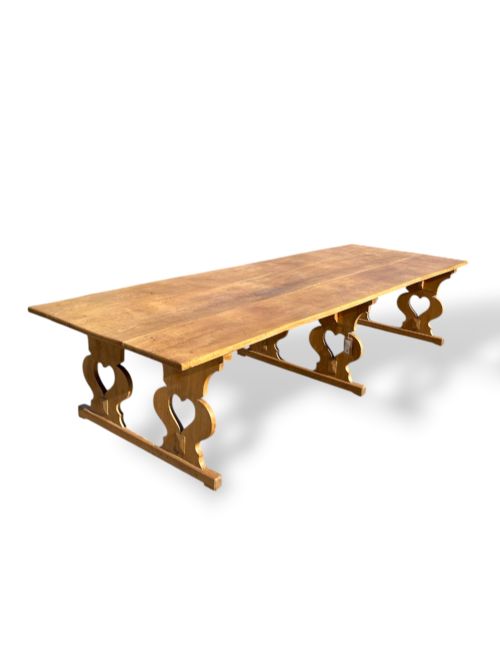


Low Oak Centre Table
A low oak centre table anchors a room with quiet warmth, bringing sturdy timber and useful low surfaces into daily life.
Low Oak Centre Table
A low oak centre table serves as a sturdy surface for living spaces, drawing on forms from the eighteenth, nineteenth, and twentieth centuries. These pieces appear in styles such as rustic farmhouse, French provincial, and Jacobean, with origins spanning England, France, and Austria.
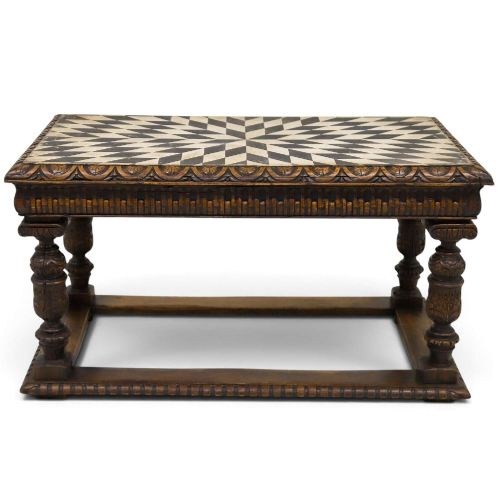
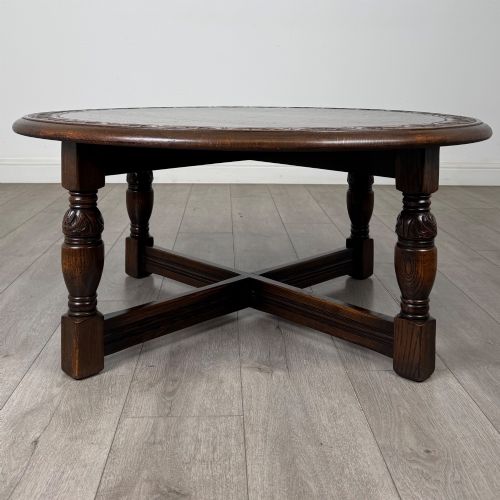
The selections available here range from round Victorian designs with carved legs to large English tables and smaller occasional pieces. Many examples feature solid timber construction, while others combine the primary wood with walnut, iron, leather, pine, glass, rattan, or cane.
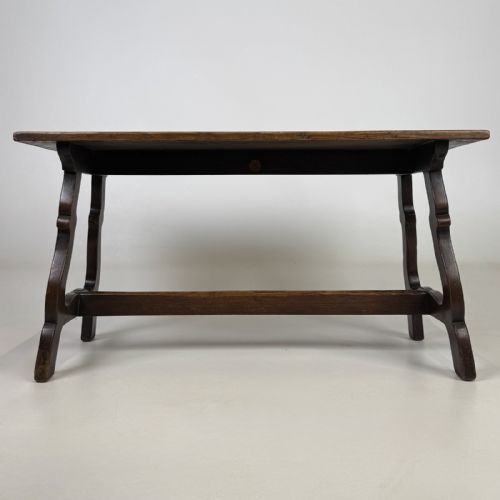
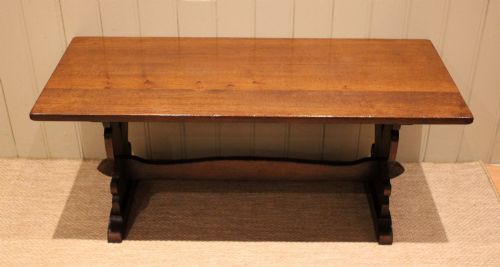
Buyers seeking a low oak centre table will find examples resting on turned legs, with circular or rectangular tops suited to everyday placement in a room. The materials and forms reflect utilitarian roots adapted over generations for domestic use.
How they were made
Carpenters built these tables primarily using solid oak, alongside supplementary materials like walnut, pine, fruitwood, and sycamore. Joinery methods relied on traditional woodcraft to support heavy timber tops without losing structural integrity over decades of use.
Surfaces received various treatments, from natural golden tones to bleached finishes, while specific designs incorporated inserted panels of rattan, cane, leather, or glass. Structural supports frequently involved turned legs or carved wooden elements derived from regional workshop traditions.
Low Oak Centre Table Retail Price Guide 2026
Typical asking prices for low oak centre table among the pieces listed under this phrase on Sellingantiques today, from the lower quarter to the upper quarter. They describe what is for sale here now, not the wider market.
The inventory includes regional European styles such as French provincial, alpine country, and rustic farmhouse.
What varies in quality
Quality in these tables depends on the selection of the timber and the honesty of the construction, distinguishing robust workshop output from simpler utilitarian items. Solid oak construction with well-proportioned turned legs and balanced proportions represents the stronger end of the range.
The integrity of the secondary materials, such as tight-woven cane or properly fitted glass and leather inserts, also dictates the overall standard of a piece. Finer examples maintain structural stability and surface character while showing the authentic marks of their period.
The Low Oak Centre Table Glossary
- Occasional table
- A small, movable table designed for light, specific uses rather than central dining. These pieces often sit beside seating or serve secondary functions in a room.
- Bleached oak
- Timber treated to lighten the natural dark tones of the wood. This finish creates a pale, muted surface popular in nineteenth-century and regional European furniture.
- Turned legs
- Support posts shaped on a lathe to create symmetrical rings and curves. This traditional woodworking technique adds decorative detail to the vertical supports.
- Rattan
- A slender, pliable palm stem woven into flat panels for furniture surfaces. It provides a lightweight, textured insert often paired with wooden frames.
- Jacobean style
- An English design aesthetic from the seventeenth century characterised by dark woods and rectilinear forms. Later revivals borrowed these heavy, geometric motifs for domestic furniture.
Low Oak Centre Table: Frequently Asked Questions
What is a low oak centre table?
A low oak centre table is a sturdy, low-profile wooden surface designed for living areas, drawing on historical forms from the eighteenth century onward.
These pieces utilise solid timber and varied regional styles to provide practical table space while displaying the natural grain of the wood.
How do I date an oak table?
Dating relies on examining the construction methods, tool marks, and specific stylistic details such as leg turnings or edge profiles. Eighteenth-century examples often show hand-tool signatures, whereas later nineteenth- and twentieth-century pieces incorporate standardised workshop practices.
Material combinations like pine secondary woods or added glass and rattan also help narrow the period of origin.
Are these tables solid oak?
Many listings feature solid oak construction, though some incorporate related timbers such as walnut, pine, fruitwood, or sycamore in secondary structural parts.
Surfaces may also integrate contrasting materials like leather, cane, glass, or iron depending on the specific regional tradition and date.
Where were these tables made?
The pieces originate from various European regions, with English, French, and Austrian workshops represented across the selection.
Regional preferences influenced everything from the choice of bleached or golden finishes to the presence of carved legs or woven rattan inserts.
How do I care for an antique oak table?
Maintaining an oak table involves keeping it away from direct heat sources and excessive moisture to protect the timber and any secondary materials like leather or cane.
Regular dusting with a dry cloth preserves the natural finish without building up heavy chemical residues on the surface.