



Low Fireside Stool
These low fireside stool pieces offer traditional domestic comfort, bringing centuries of timber craftsmanship and textile upholstery directly to your hearth.
Low Fireside Stool
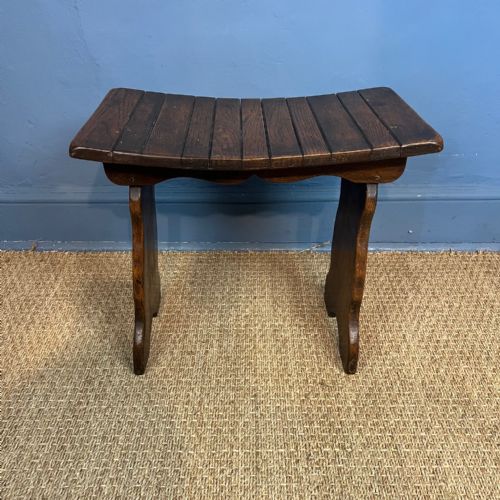
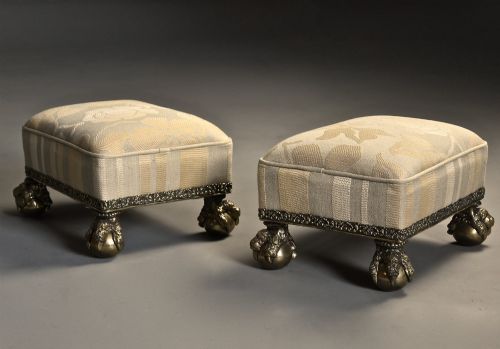
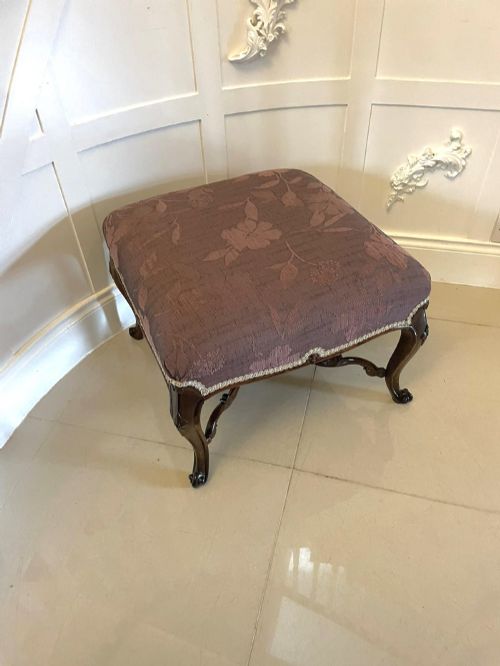
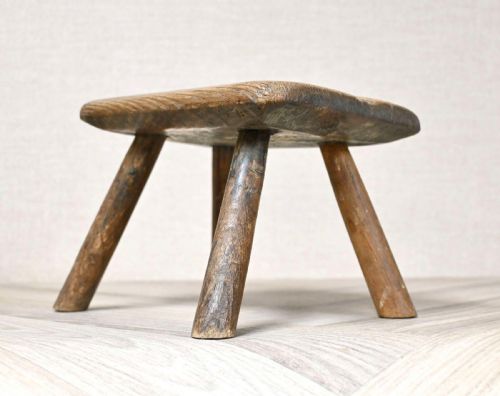
A low fireside stool provides compact seating or foot support near a hearth, appearing across periods from the eighteenth century through the Edwardian era. These pieces generally take the form of footstools, hearth stools, and carriage stools designed for domestic utility.
The versions most commonly met on this page date from the Victorian period, alongside earlier eighteenth-century examples and later pieces from around nineteen hundred. They span diverse aesthetic revivals and regional workshops, reflecting changing interior tastes over generations.
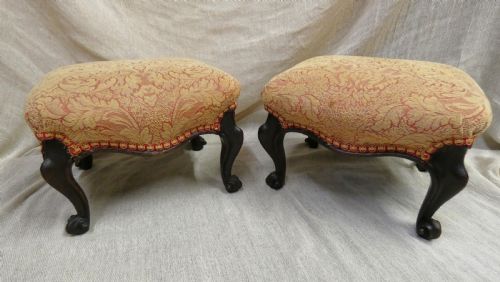
Makers utilised various timber frames, from mahogany and walnut to pitch pine and oak, often paired with traditional textile coverings like crewelwork, wool, and tweed. Their low profile made them practical additions to domestic rooms for warming feet close to open fires.
Materials and construction methods
Makers constructed these frames using durable hardwoods like mahogany, walnut, oak, and rosewood, alongside softer timbers such as pitch pine. Joinery techniques varied from traditional joint construction to solid timber frames shaped with carved details.
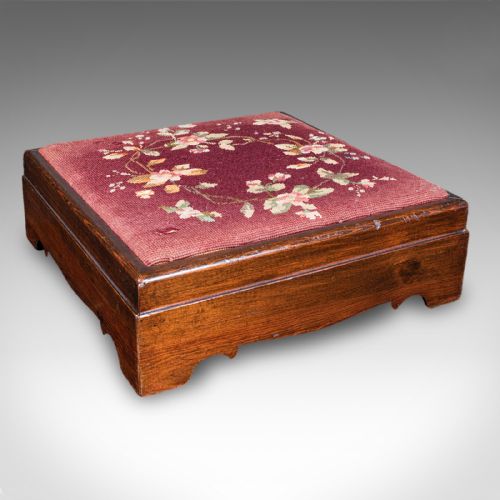
Upholstery formed a central part of the construction, utilising textiles including wool, crewelwork, and tweed secured over internal padding. Carved motifs on wooden frames, such as apotropaic marks or revival ornamentation, demonstrate the manual skill involved in their production.
Low Fireside Stool Retail Price Guide 2026
Typical asking prices for low fireside stool among the pieces listed under this phrase on Sellingantiques today, from the lower quarter to the upper quarter. They describe what is for sale here now, not the wider market.
Distinctions in craftsmanship and materials
The refinement of the timber frame and the complexity of its carved details separate standard utility pieces from more ambitious examples. Dense hardwoods like rosewood and walnut, combined with deeply carved frames, indicate a higher grade of manufacture.
The preservation and quality of the textile upholstery also differentiate pieces, with intricate crewelwork or bespoke tweed representing superior decorative investment compared to plain fabric coverings.
The Low Fireside Stool Glossary
- Apotropaic mark
- A carved symbol intended to ward off evil spirits, occasionally found on eighteenth-century woodwork. These protective carvings reflect popular folklore integrated into domestic furniture.
- Crewelwork
- Traditional embroidery executed in wool yarn on a sturdy base fabric. This technique often appears on historical footstool upholstery.
- Joint stool
- A sturdy wooden stool constructed with mortise and tenon joints rather than turned legs. These pieces date back to early periods of furniture making.
- Carriage stool
- A low foot rest or seat originally designed for use inside horse-drawn carriages or close to domestic hearths. Their compact dimensions suited restricted spaces.
- Pitch pine
- A resinous softwood utilised for framing furniture during the nineteenth and early twentieth centuries. It offered strength and distinct grain patterns.
Low Fireside Stool: Frequently Asked Questions
What is a low fireside stool used for?
These pieces served primarily as foot rests or low seats positioned close to the hearth for warmth. Their compact dimensions allowed them to be tucked away easily when not in use.
Over generations, they adapted to various domestic settings, functioning as carriage rests or small occasional seats in parlours and living rooms.
How do I identify a Victorian footstool?
Victorian examples often feature dense timbers like mahogany, rosewood, or walnut, sometimes paired with elaborate carved decoration or turned supports. Upholstery styles from this period frequently include needlework, wool, or patterned textiles.
Comparing the timber finish and structural joinery helps distinguish mid-nineteenth-century pieces from earlier eighteenth-century designs or later Edwardian alternatives.
What woods were used for these stools?
Makers selected a range of domestic and exotic timbers depending on the period and desired finish. Hardwoods such as oak, walnut, mahogany, and rosewood provided durable framing for formal rooms.
Softer or more utilitarian woods like pitch pine also appear, particularly in simpler domestic footstools and regional pieces from the nineteenth century.
How do I care for antique upholstery?
Preserving antique textiles requires gentle maintenance, avoiding direct sunlight and excessive moisture to protect historical wool, tweed, or crewelwork. Regular light dusting helps prevent dirt accumulation within the fabric fibres.
Wooden frames benefit from occasional treatment with appropriate traditional wax polish to nourish the timber without harming adjacent original textiles.