
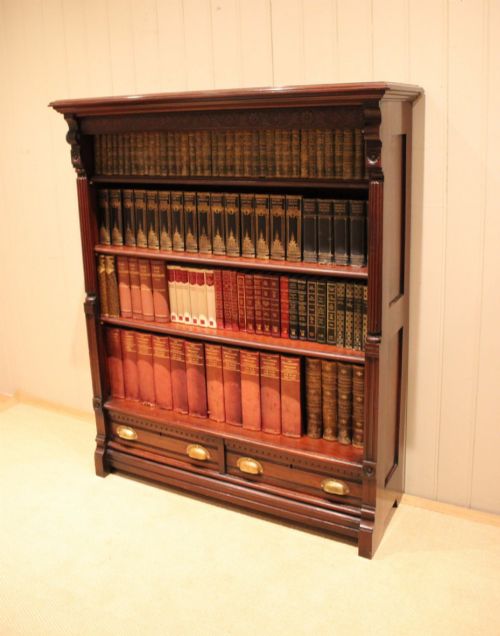
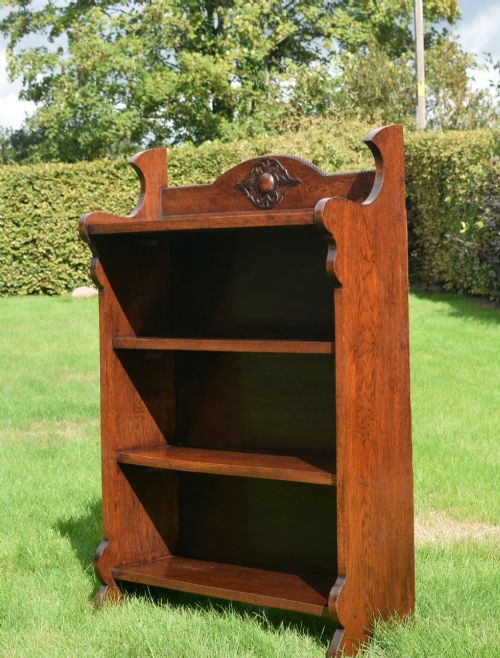
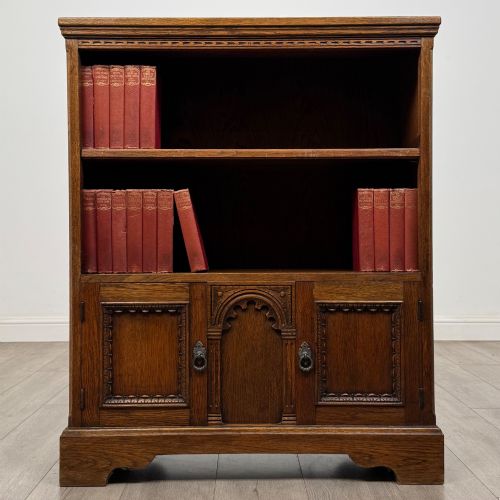
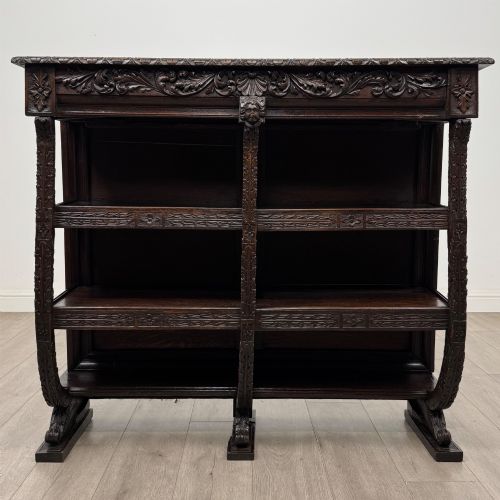
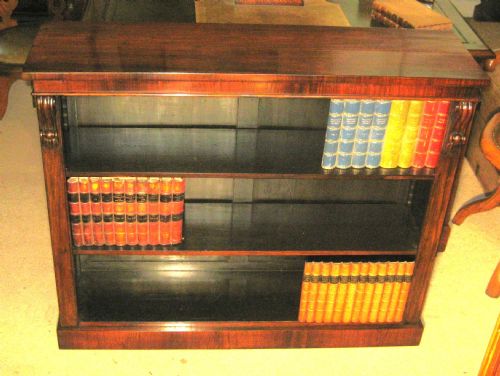
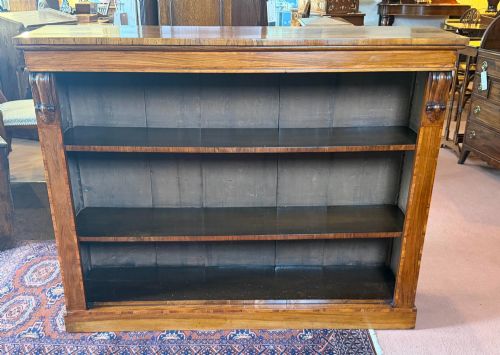
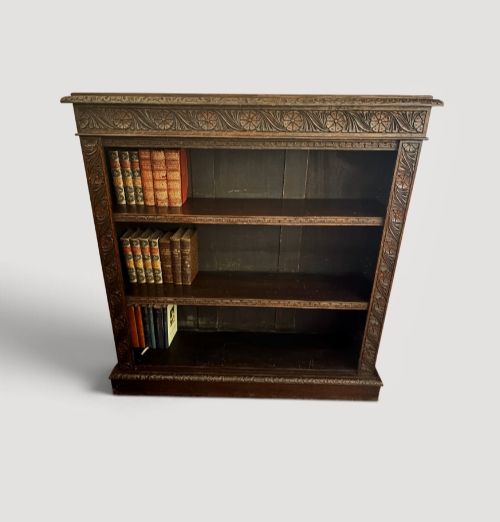
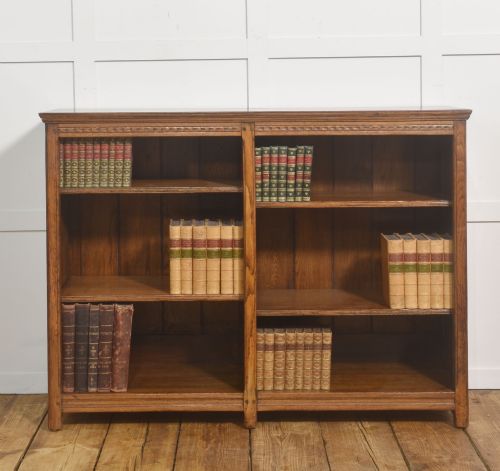
Low Carved Open Bookcase
A low carved open bookcase offers immediate utility and proportion, placing books within arm's reach while keeping the room feeling open.
Low Carved Open Bookcase
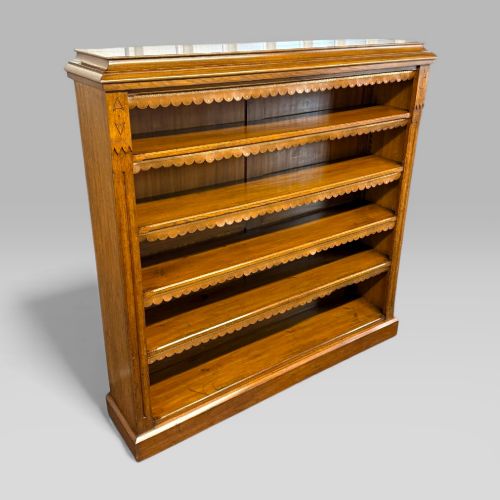
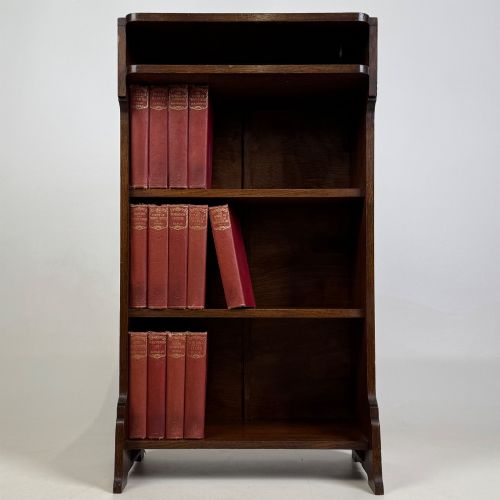
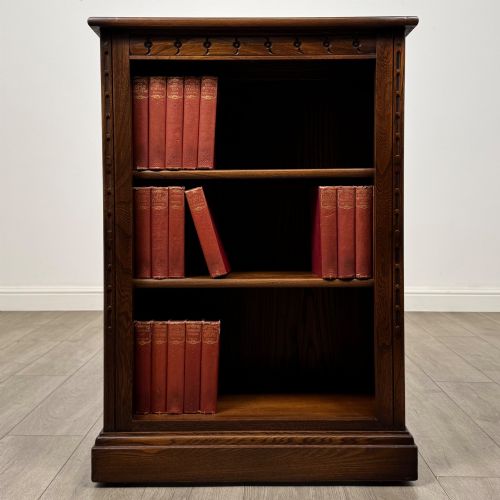
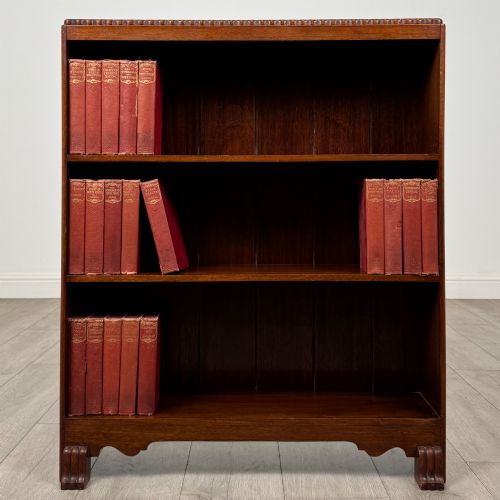
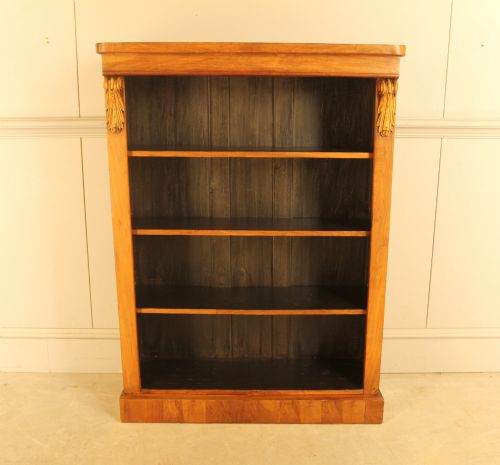
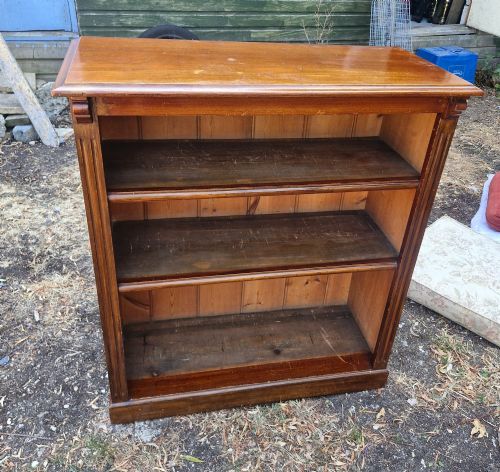
A low carved open bookcase is a low-level piece of furniture designed for displaying books without glass doors or enclosed cupboards, often appearing in compact proportions suitable for nineteenth-century and early twentieth-century domestic interiors.
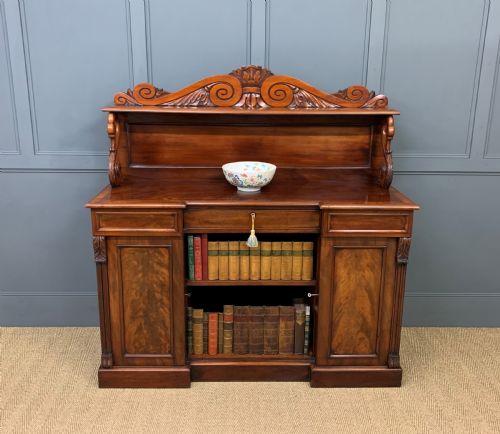
The pieces on this page emerge predominantly from Victorian and Edwardian periods, alongside Regency and early twentieth-century examples, spanning formats from small dwarf cases to larger stepped and breakfront configurations.
Oak and mahogany form the backbone of the selection, accompanied by walnut, rosewood, and occasional satinwood or teak, reflecting the changing tastes in domestic joinery across the decades.
Materials and Technique
Cabinet makers utilised dense hardwoods such as oak, mahogany, walnut, and rosewood, applying structural joinery that supported weight across adjustable shelves without sagging.
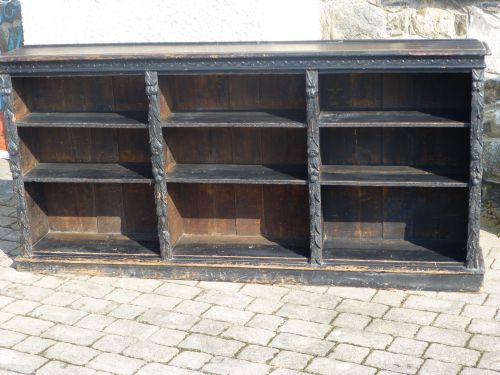
Carving was executed directly into the timber frame, ranging from simple geometric mouldings to elaborate foliage, green man motifs, and Gothic revival detailing.
Surface finishing relied on French polish, wax, or ebonisation, sealing the timber while highlighting the natural grain and figuring of flame mahogany, burr walnut, and golden oak.
One determined Victorian bookcase hides a carved green man peering out from the timber.
Quality and Proportion
The integrity of a low carved open bookcase rests on the sharpness of its carved ornament and the selection of timber figures, where richly grained burr walnut or flame mahogany elevates the presence of the piece.
Construction details such as solid timber backs, well-fitted adjustable shelf mechanisms, and balanced proportions separate utilitarian workshop output from refined cabinet work.
The Low Carved Open Bookcase Glossary
- Breakfront
- A piece of furniture having a central section that projects forward from the flanking sections. This architectural arrangement creates depth and shadow across the front elevation.
- Dwarf bookcase
- A low bookcase traditionally standing beneath window height. These pieces allow surface display space on top alongside accessible shelving.
- Adjustable shelves
- Shelving resting on pins, rack strips, or wooden bearers that can be moved to different heights. This system accommodates volumes of varying vertical sizes.
- Ebonised
- Timber treated with a chemical stain or pigment to imitate ebony. This dark finish gained popularity during the Victorian period for dramatic contrast.
- Burr walnut
- Timber taken from the warted growth on a walnut tree, yielding swirling, knotty patterns. It was sliced into veneers for high-status cabinet work.
Low Carved Open Bookcase: Frequently Asked Questions
How are these bookcases cleaned?
Dust timber regularly with a dry, soft cloth to prevent particulate buildup in carved recesses. Apply a traditional beeswax sparingly to nourish the grain without leaving a heavy residue.
Avoid commercial silicon sprays and moisture-based cleaners, which degrade old French polish over time. Place the bookcase away from direct heat sources to prevent timber shrinkage and splitting.
Can shelves be adjusted?
Many examples feature adjustable shelving systems utilising brass pins, wooden notches, or vertical rack strips. This permits the storage of oversized folios alongside standard octavo volumes.
Fixed shelves do occur in simpler formats, so inspect the interior uprights for adjustment mechanisms if shelf flexibility is required.
What periods do they represent?
The selection spans the nineteenth and early twentieth centuries, encompassing Regency, Victorian, Edwardian, and Arts and Crafts movements. Each era brings distinct stylistic preferences, from Gothic revival oak to inlaid mahogany.
Dates are generally attributed based on timber selection, structural joinery methods, and the style of carved ornamentation present on the frame.