





Low Boy Drawers
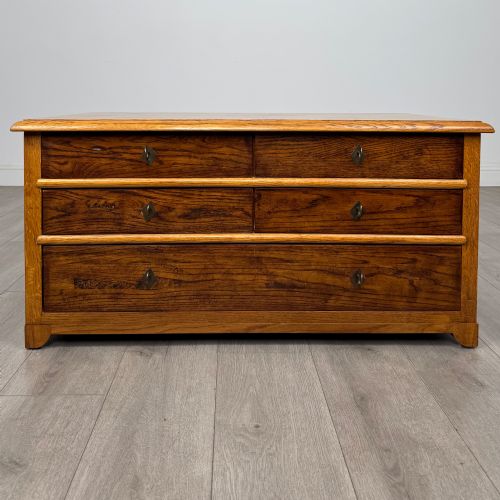
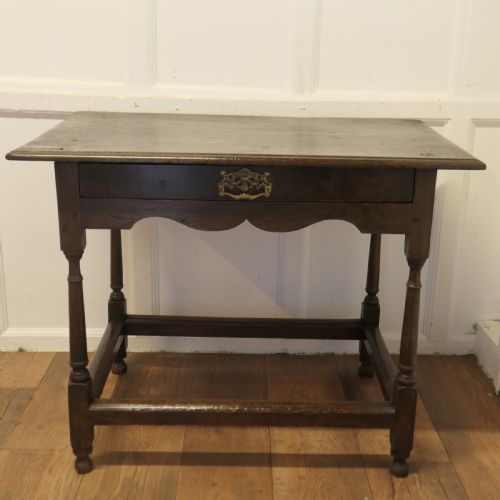
These low boy drawers are compact occasional tables and writing desks prized for their historic timber and neat proportions.
Low Boy Drawers
Low boy drawers appear in records as low boys, side tables, writing desks, and low chests of drawers. When searching for low boy drawers, a buyer encounters forms ranging from country made oak pieces to formal Georgian mahogany examples.
The material palette spans 18th century oak and mahogany alongside later burr walnut, painted wood, and Edwardian oak. These tables typically combine a low stance with one or more working drawers beneath the top surface.
Dating ranges from the 18th century and George III periods through the Victorian and Edwardian eras up to the 1920s. Queen Anne and Queen Anne Revival styles also appear amongst the listed objects.
How they were made
Makers utilised solid timbers including oak, mahogany, and walnut, often enhanced with boxwood inlay or burr walnut veneers. Metal fittings such as brass handles and hardware complete the construction.
Surface finishes vary from polished wood to painted wood coatings, while structural elements include locking mechanisms on Edwardian examples.
Low Boy Drawers Retail Price Guide 2026
Typical asking prices for low boy drawers among the pieces listed under this phrase on Sellingantiques today, from the lower quarter to the upper quarter. They describe what is for sale here now, not the wider market.
Materials recorded on this page include oak, mahogany, burr walnut, brass, metal, boxwood inlay, and painted wood.
What varies in quality
The distinction between standard and superior pieces rests on the choice of timber, from utilitarian country made oak to figured burr walnut and rich mahogany. Refinement of carving and inlay work also elevates certain examples.
Proportion and stylistic purity separate provincial iterations from pieces adhering strictly to Georgian or Queen Anne design canons.
The Low Boy Drawers Glossary
- Low boy
- A small dressing table or side table with drawers, standing on relatively tall legs. This form gained popularity during the late 17th and 18th centuries.
- Boxwood inlay
- Narrow strips of contrasting pale boxwood inserted into a darker wood surface to create decorative geometric patterns or borders. This technique highlights the edges and panels of finer furniture.
- Burr walnut
- Timber taken from a walnut tree growth featuring swirling grain patterns and knots. Furniture makers sliced this wood into veneers to cover larger surfaces.
- George III
- The stylistic period spanning the reign of George III from 1760 to 1820, known for refined proportions and classical restraint in British cabinet making.
Low Boy Drawers: Frequently Asked Questions
What is a low boy used for?
These pieces functioned historically as dressing tables, compact writing desks, or side tables in private chambers and reception rooms.
Today, buyers utilise them as hallway tables, bedside surfaces, or small writing desks in rooms with limited floor space.
How do I date a low boy?
Dating relies on examining the timber species, construction joints, hardware, and overall stylistic markers. Eighteenth-century versions often feature country made oak or early mahogany.
Later Victorian, Edwardian, and 1920s reinterpretations frequently incorporate revival styles or machine-sawn timber characteristics.
Are low boy drawers always made of oak?
Oak is common among 18th-century country pieces, but makers also worked extensively in mahogany and walnut.
Other listed materials include painted wood, boxwood inlay, and burr walnut veneers across various periods.
Where should I place a low boy?
Their compact depth makes them suitable for narrow hallways, landings, or as dressing tables in bedrooms.
They also serve effectively as small desks where a full-sized bureau would overwhelm the room.