
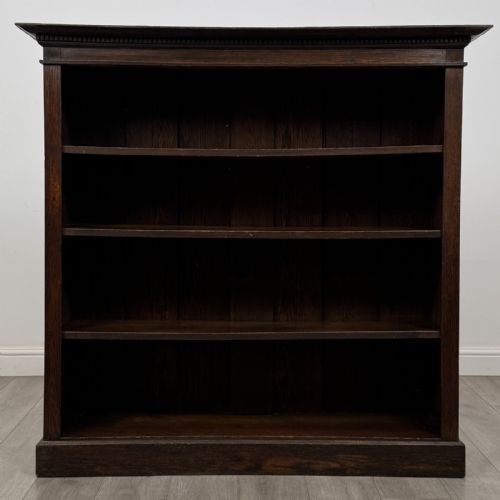
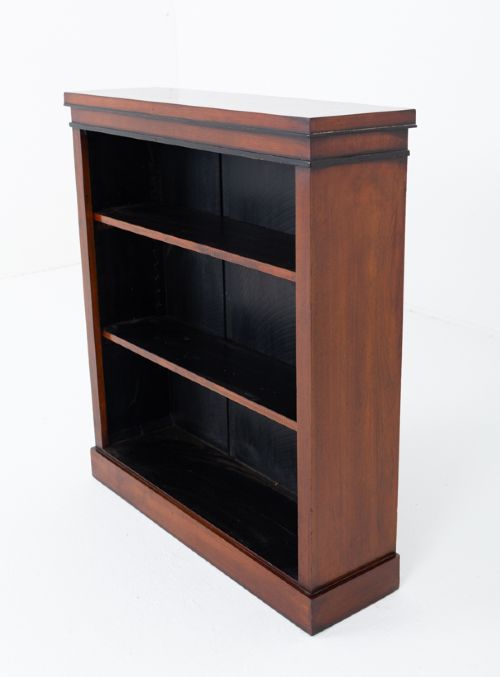
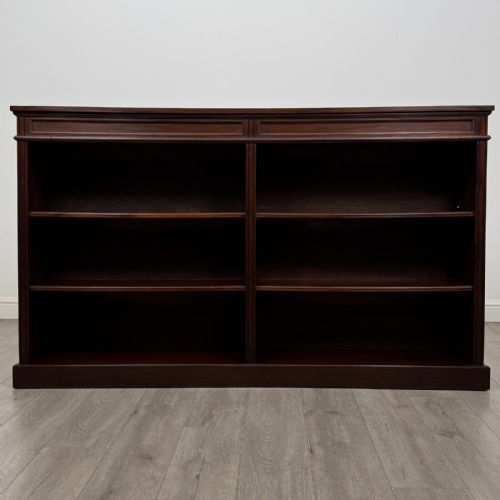
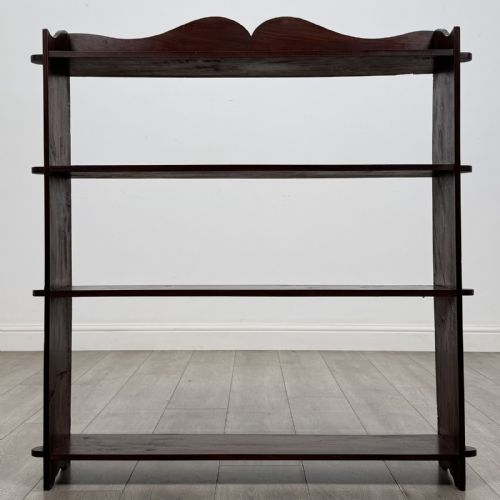
Low Bookshelf Unit
A low bookshelf unit provides accessible open storage for a room, bringing character and practical organisation to any interior.
Low Bookshelf Unit
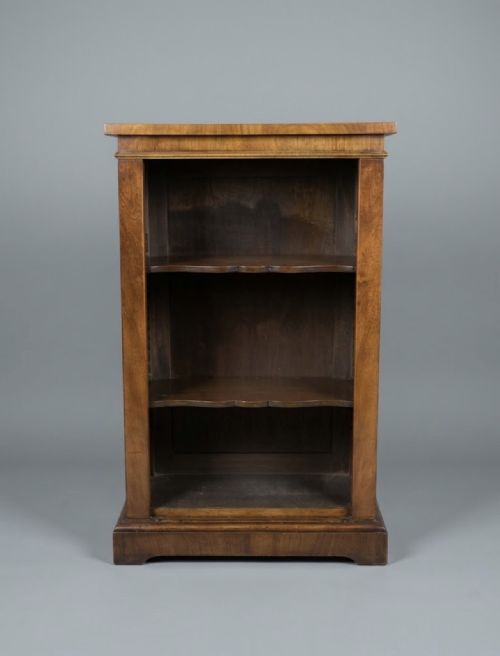
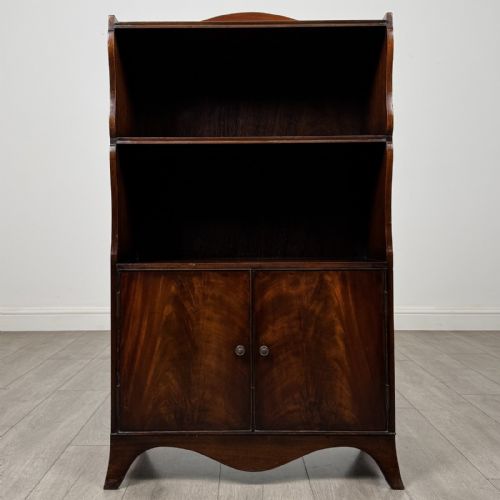
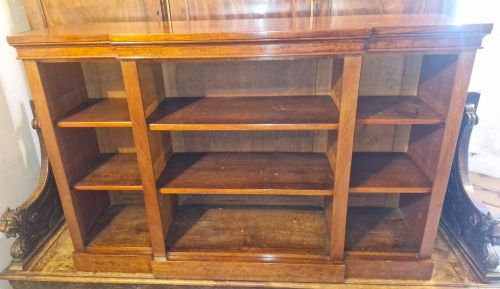
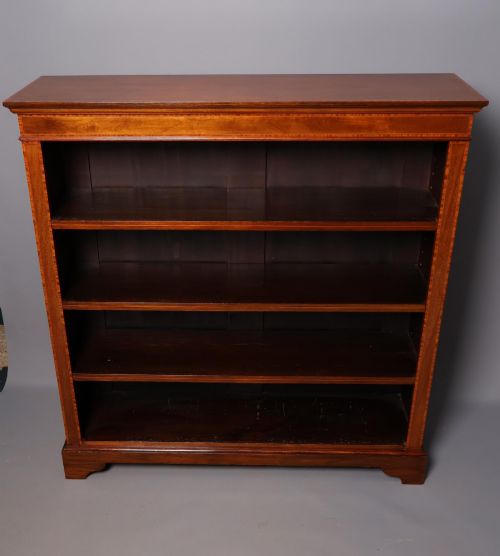
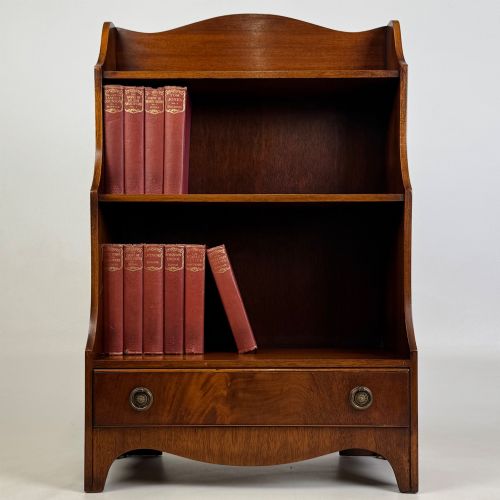
A low bookshelf unit offers convenient display and storage at a reduced height, making it well suited for placing beneath windows or along living room walls. These pieces appear frequently in mahogany and oak, with periods ranging from the Victorian era through the Edwardian period and into the early twentieth century.
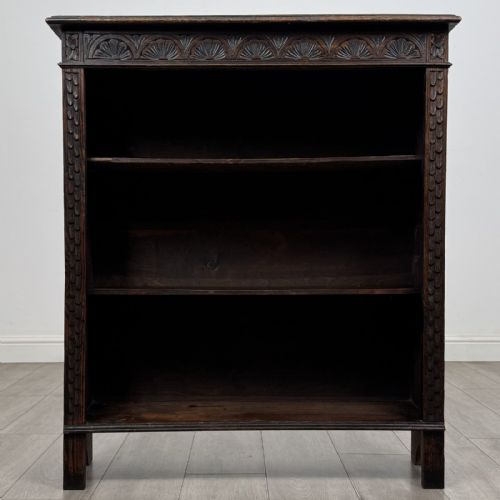
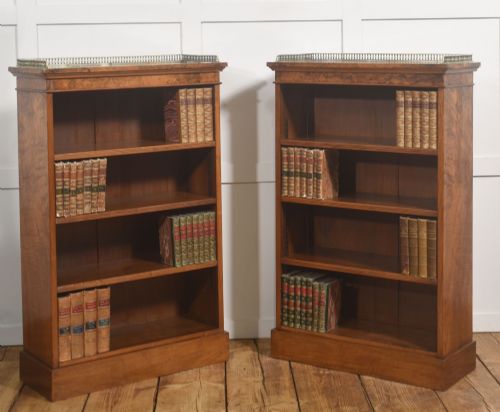
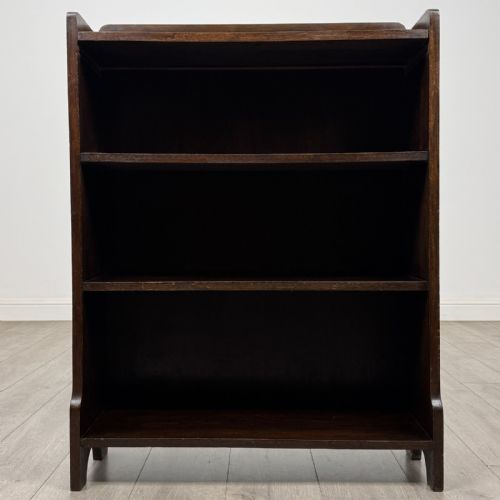
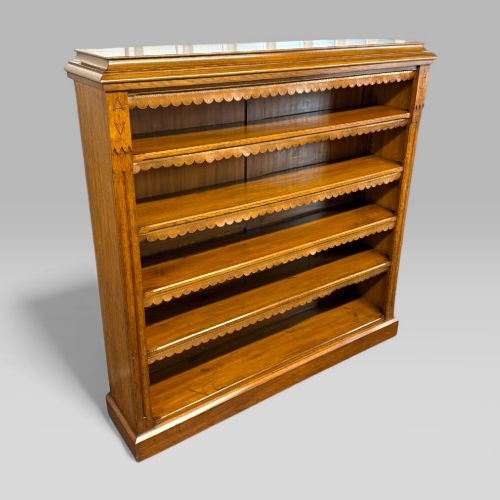
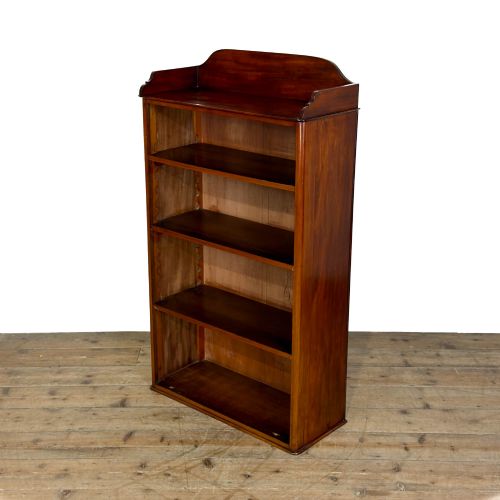
Most examples take the form of open bookcases or low dwarf bookcases, often featuring adjustable shelves or raised galleries. Buyers encounter variations spanning Arts and Crafts designs to Aesthetic Movement and Art Deco styles.
How they were made
Cabinet makers utilised dense timbers such as mahogany, oak, walnut, and rosewood, frequently incorporating brass galleries and fine inlay work for decorative effect. Construction often involved sturdy plinth bases, carved edges, and beaded detailing along the shelf fronts.
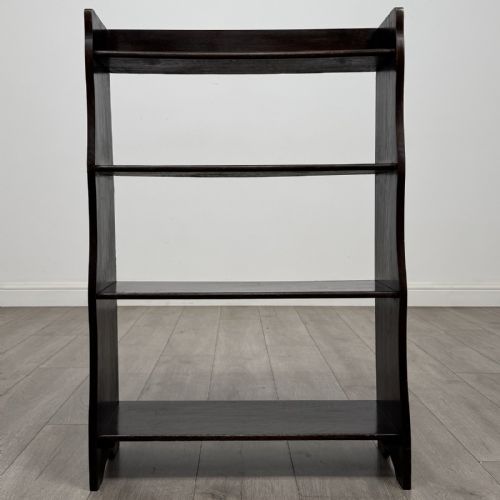
Shelving systems relied on functional timber supports, while applied carving and shaped sides demonstrated traditional woodworking techniques employed during the nineteenth and early twentieth centuries.
Listings feature woods including oak, mahogany, walnut, rosewood, pine, and burr walnut across the Victorian, Edwardian, and 1920s periods.
What varies in quality
The standard of a low bookshelf unit rests upon the selection of timber grain, such as burr walnut or figured mahogany, and the crispness of any carved ornamentation. Superior examples display thoughtful proportions, integrated galleries, and well-executed joinery that secures the structure over decades of use.
The Low Bookshelf Unit Glossary
- Plinth base
- A solid flat block foundation supporting the base of the bookcase, providing stability and a grounded appearance. This feature appears commonly on nineteenth-century pieces.
- Raised gallery
- A low decorative railing or upstand positioned along the top edge of a cabinet or bookcase. It prevents items placed on top from sliding off.
- Adjustable shelves
- Shelves resting on movable supports that allow the user to alter the internal vertical spacing. This mechanical convenience appears frequently in Victorian and Edwardian library furniture.
- Aesthetic Movement
- A late nineteenth-century design style emphasising visual beauty and artistic expression over heavy historic revivalism. Pieces from this movement often feature ebonised wood or golden oak.
- Dwarf bookcase
- A term historically used for a low open bookcase designed to sit beneath dado height. These items offer accessible storage without dominating the wall space of a room.
Low Bookshelf Unit: Frequently Asked Questions
How were low bookcases used?
These units served primarily for housing accessible reference volumes, novels, and decorative objects within domestic libraries and studies. Their reduced height allowed homeowners to display ornaments on top while keeping everyday reading material close at hand.
In period interiors, they were frequently positioned beneath windows or against panelled walls to maximise floor space. They offered an alternative to tall bookcases, maintaining an open and airy feel in smaller reception rooms.
How do I tell Edwardian pieces apart from Victorian ones?
Victorian examples tend to feature heavier timbers, deeper carved details, and darker polished finishes such as rosewood or figured mahogany. They often incorporate Gothic motifs, robust plinth bases, and rich patination developed over decades of use.
Edwardian pieces generally exhibit a lighter aesthetic, frequently utilising golden oak or inlaid mahogany with delicate crossbanding. The construction often feels airier, incorporating shaped sides and raised galleries that reflect the transition towards cleaner domestic interiors.
Can I adjust the shelves?
Many period low bookcases feature adjustable shelving systems utilising traditional wooden ratchets, brass studs, or slotted vertical strips. This allows the internal layout to accommodate books of varying heights.
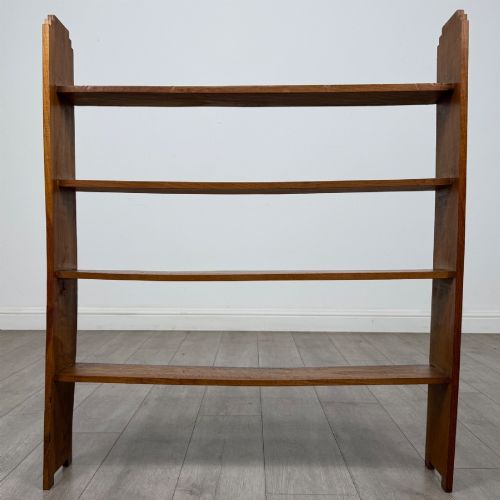
Some simpler vernacular or rustic country examples feature fixed shelves secured directly into the side panels. Checking the interior uprights reveals whether the shelving height can be modified.
Where should I place a low bookshelf unit?
These units suit placement in living rooms, hallways, and studies where tall furniture might overwhelm the available wall space. Their low profile makes them ideal for positioning beneath windows or framing a fireplace.
The flat top surface also provides a convenient platform for table lamps, plants, and decorative collections. This dual function of storage and display makes them adaptable for modern room layouts.