






Low Armed Chair
A low armed chair offers a deep, relaxed seat designed for comfort and ease of movement within traditional interiors.
Low Armed Chair
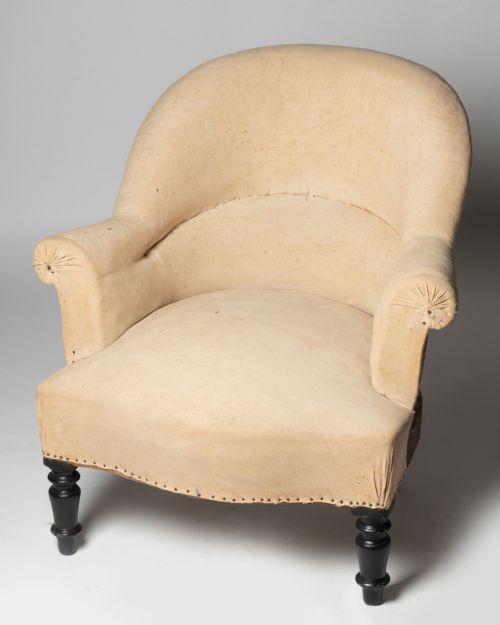
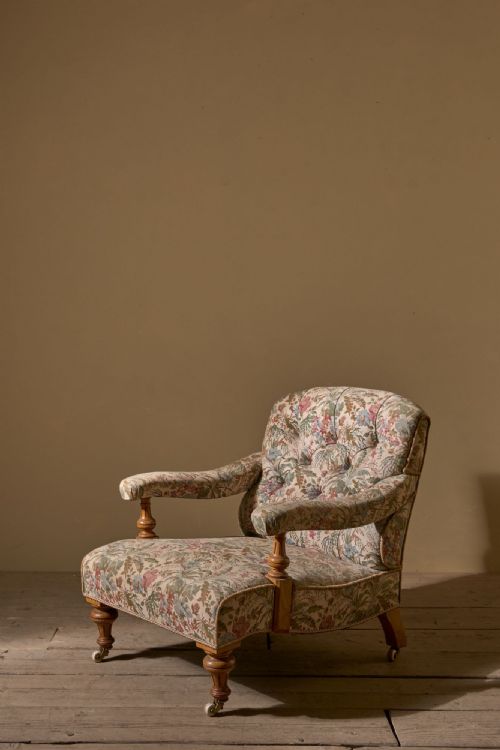
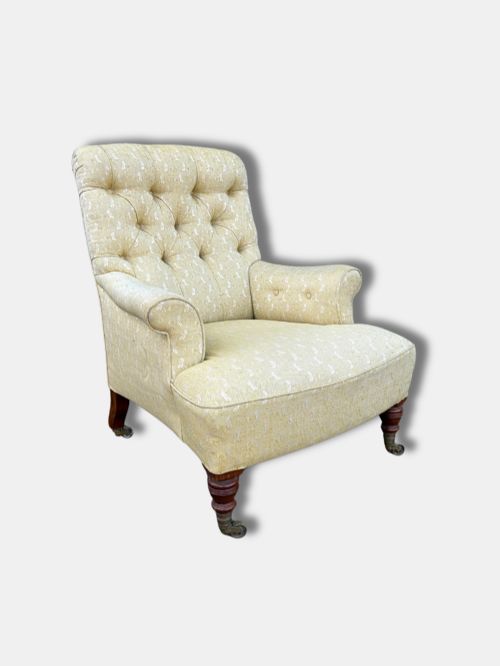
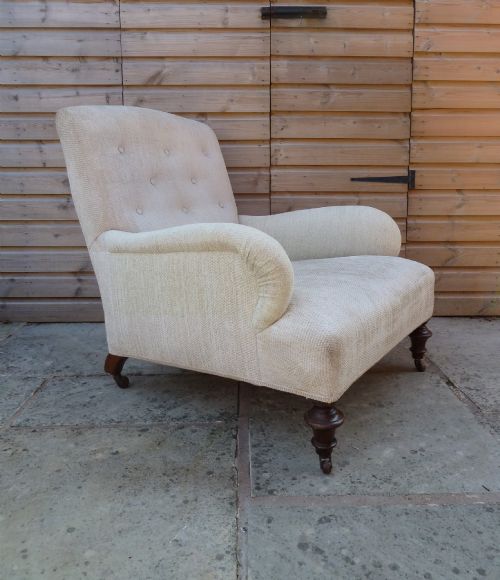
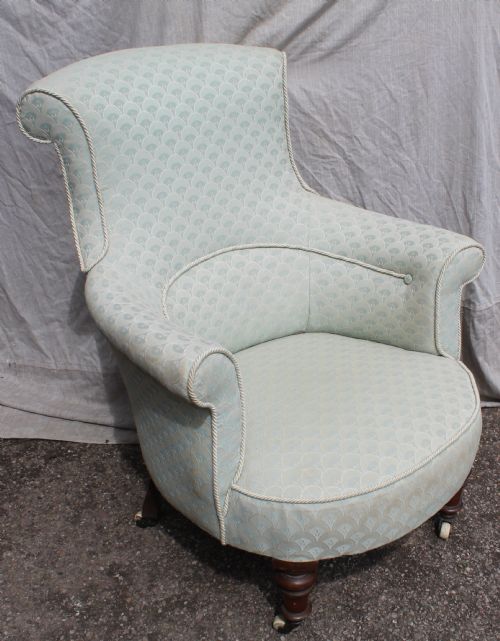
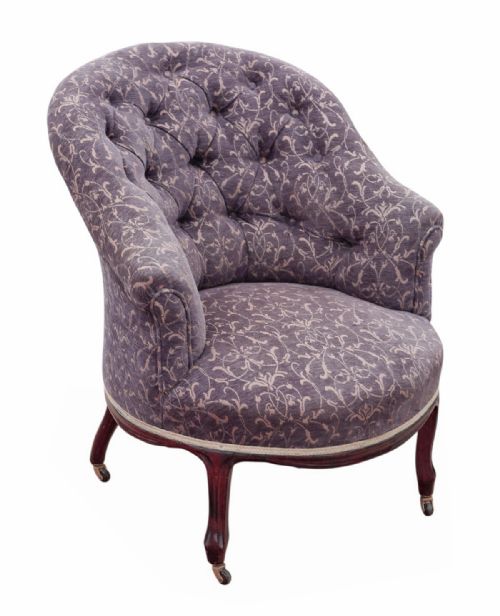
A low armed chair brings together comfortable upholstered lounging and compact seating from the nineteenth and early twentieth centuries. Pieces range from button-backed Victorian bedroom chairs to deep-seated English country house designs and low Windsor forms.
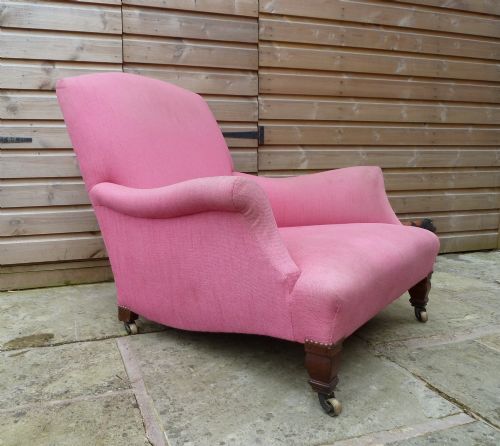
Most examples hail from the Victorian and Edwardian periods, frequently demonstrating the influence of makers such as Howard and Sons. Buyers frequently encounter low armchairs finished in velvet, fabric, or brass-castor detailing.
Originating largely from British and French workshops, these seats serve well in libraries, drawing rooms, and bedrooms. The selection spans straightforward vernacular timber frames to elaborate Napoleon III upholstered models.
Materials and construction
Frames rely upon hardwoods like mahogany, walnut, elm, ash, and yew wood, joined to provide stable structural support. Turnings, barley twist details, and painted surfaces appear across both country and salon models.
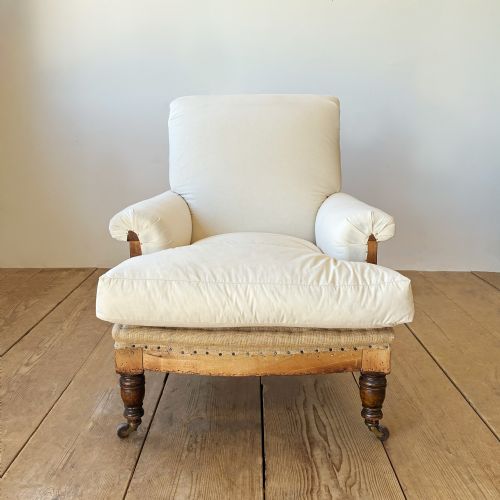
Upholstery employs traditional stuffing beneath layers of fabric, velvet, or kilim, secured with careful buttoning where specified by the design. Brass fittings and castors often complete the lower framework of upholstered club and armchair styles.
Low Armed Chair Retail Price Guide 2026
Typical asking prices for low armed chair among the pieces listed under this phrase on Sellingantiques today, from the lower quarter to the upper quarter. They describe what is for sale here now, not the wider market.
Listings span the nineteenth and twentieth centuries, featuring Victorian, Edwardian, and 1930s periods alongside materials like walnut, mahogany, fabric, and velvet.
Separating the ordinary from the exceptional
The distinction between standard examples and top-tier pieces lies in the sophistication of the frame carving, the integrity of the timber, and the historical pedigree of the maker. Master workshops achieved cleaner proportions and sturdier joinery.
Fabric choice and upholstery execution heavily influence the overall character, with original textiles and traditional stuffing retaining greater historical interest than later replacements.
Howard and Sons
The Low Armed Chair Glossary
- Howard style
- A design archetype inspired by the comfortable, deep-seated upholstered armchairs produced by the Victorian firm Howard and Sons. These pieces prioritise relaxed proportions and generous cushioning.
- Button back
- An upholstery technique where buttons are pulled deep into the padding to create a padded, geometric pattern. This finish is common on Victorian bedroom and tub chairs.
- Barley twist
- A decorative turning technique resembling a spiral rope, frequently seen on the wooden legs and supports of mid-Victorian chairs. It adds architectural texture to the frame.
- Stick back
- A chair construction where turned wooden spindles form the backrest, typically associated with vernacular Windsor and country seating. These frames rely on simple timber craft.
- Tub chair
- A fully upholstered armchair featuring a rounded, enclosed back and arms that form a single continuous curve. The shape provides a cozy and supportive seat.
Low Armed Chair: Frequently Asked Questions
Where were these chairs used?
Historically, these seats were placed in bedrooms, drawing rooms, and libraries for comfortable daily use.
Their compact proportions allowed them to fit into private chambers and smaller sitting spaces.
How do I identify a Howard style chair?
Howard style chairs are recognised by their deep seats, low arms, and generous proportions designed for comfort.
Original pieces and quality style adaptations often feature low wooden legs with brass castors.
What materials are common in these chairs?
Frames utilise hardwoods such as walnut, mahogany, elm, and yew wood beneath the upholstery.
Coverings frequently include velvet, patterned fabrics, kilim, and traditional button-back textiles.