






Low Armed Armchair
A low armed armchair brings deep-seated comfort and relaxed proportions to a room, offering shorter frames and supportive arms designed for lounging.
Low Armed Armchair
When you search for a low armed armchair, you encounter a selection of seating spanning the nineteenth and twentieth centuries, including Victorian, Edwardian, and later examples. These chairs often manifest as English country house loungers, club chairs, and tub chairs designed for intimate spaces.
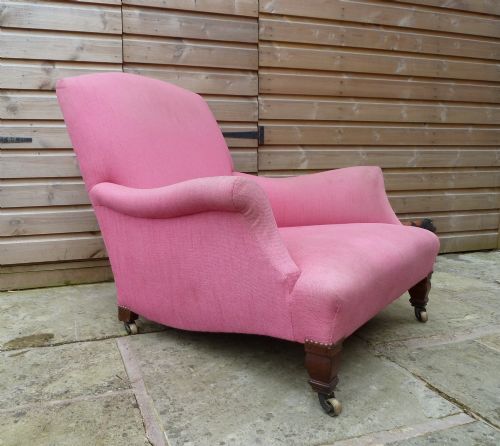
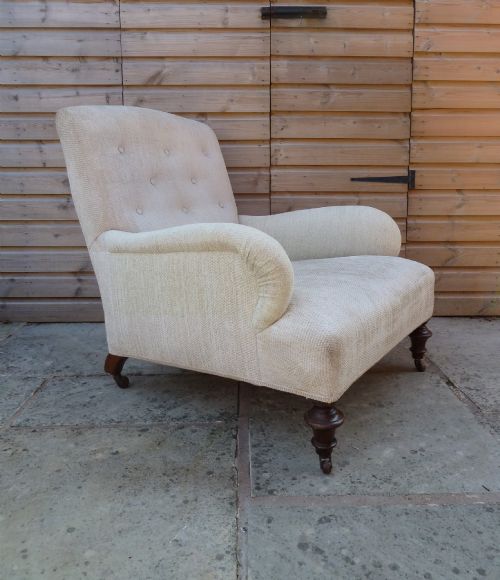
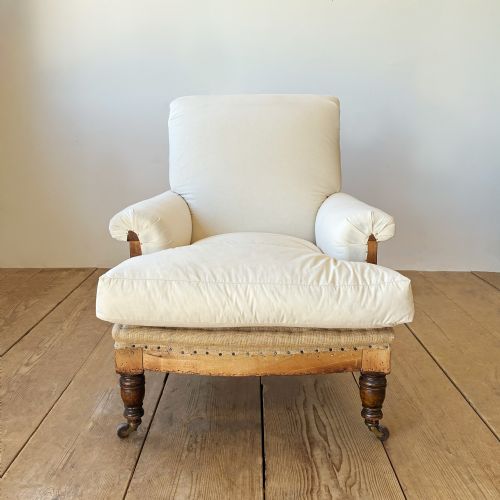
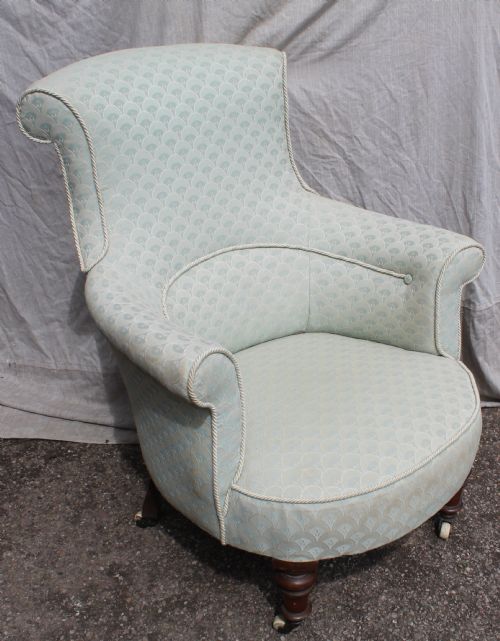
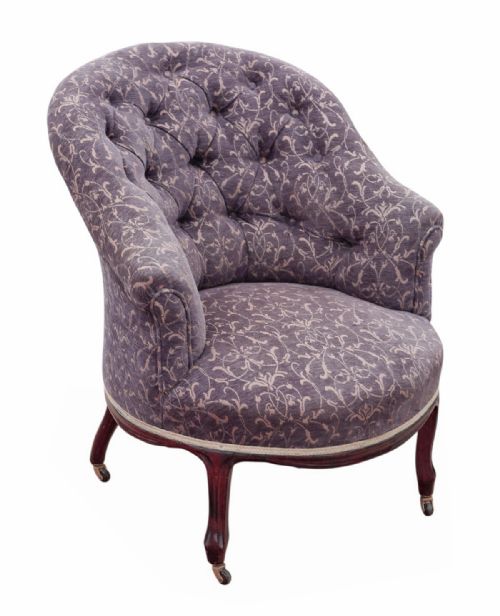
The most frequent variations on this page include Howard style upholstered armchairs, button-backed bedroom chairs, and low wooden Windsor or stick-back designs. Their shared characteristic is a reduced height and lower arms, which historically suited bedroom placement, smaller parlours, or relaxed library settings.
How they were made
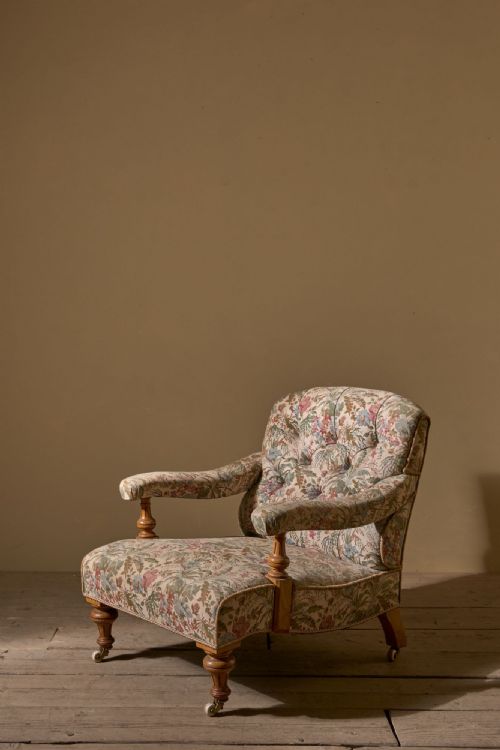
Frames rely on sturdy timbers such as mahogany, walnut, elm, ash, and yew wood, joined using traditional cabinet-making methods to ensure structural integrity over generations. Turned elements like barley twist framing or exposed wooden legs appear frequently across Victorian and Edwardian examples.
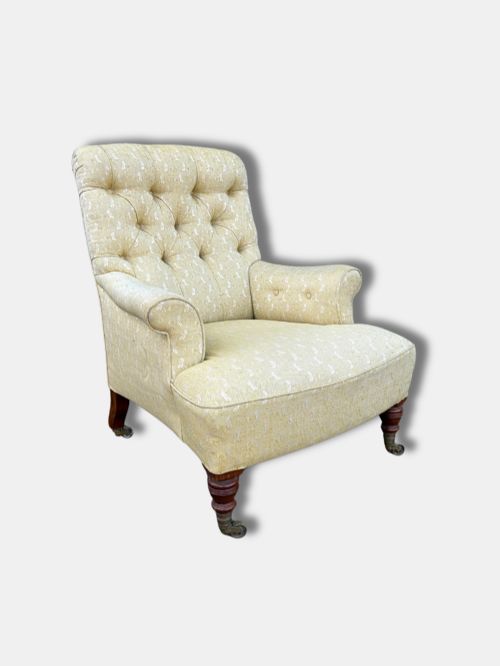
Upholstery techniques involve deep cushioning covered in fabrics including velvet and patterned textiles, frequently secured with buttoning or brass tacks. Structural support beneath the upholstery utilises coil springs and webbing, particularly in club and Howard style armchairs.
Low Armed Armchair Retail Price Guide 2026
Typical asking prices for low armed armchair among the pieces listed under this phrase on Sellingantiques today, from the lower quarter to the upper quarter. They describe what is for sale here now, not the wider market.
Some nineteenth-century bedroom chairs were built intentionally low so ladies in heavy crinolines could sit down without tipping over.
What varies in quality
The integrity of the internal wooden frame and the resilience of the original springing system distinguish a superior piece from a standard one. Chairs retaining sound joinery and supportive webbing hold their shape and comfort far better than those with compromised internal structures.
The refinement of the woodwork, from hand-turned legs to carefully carved details in walnut or mahogany, marks the distinction between workshop production and simpler utilitarian seating. Furthermore, the quality and historical appropriateness of the fabric upholstery contribute significantly to the character of each chair.
Howard and Sons
The Low Armed Armchair Glossary
- Button back
- An upholstery style where depressions are formed in the padding by stitching buttons at regular intervals, creating a diamond pattern. This technique provides tension and firm support to the backrest.
- Barley twist
- A type of furniture turning resembling a twisted rope, carved into wooden legs or stretchers. It gained popularity during the Victorian period for accentuating structural uprights.
- Tub chair
- An armchair with a curved, continuous back and arms enclosing the sitter in a rounded shape. These pieces typically sit low to the ground and function well in bedrooms or salons.
- Stick back
- A chair construction where turned wooden spindles are inserted directly into a solid seat and connected to a bentwood crest rail. This method characterises traditional vernacular seating.
Low Armed Armchair: Frequently Asked Questions
Where were low armed armchairs placed?
Historically, these chairs served primarily in bedrooms, small parlours, or low-ceilinged country house reception rooms where standard, taller seating would overwhelm the proportions of the space.
Their reduced height made them convenient for dressing areas or intimate fireside seating without blocking views or light.
How do I identify a Howard style armchair?
Howard style armchairs are characterised by deep, sprung seats, low rolled arms, and casters, often accompanied by ticking fabric or heavy upholstery.
They prioritize relaxed lounging and generous proportions while maintaining a tailored silhouette.
Are these chairs suitable for daily use?
Many of these pieces remain robust enough for regular sitting, provided the internal webbing, springs, and frame have been maintained or restored.
Upholstered versions may require professional evaluation of the interior stuffing to ensure long-term comfort and support.
What is the difference between Victorian and Edwardian examples?
Victorian models frequently feature darker woods, walnut frames, deep buttoning, and heavier proportions designed for formal or private domestic spaces.
Edwardian pieces often introduce lighter inlaid mahogany timbers, satinwood details, or simpler geometric upholstery lines reflecting changing interior tastes.