

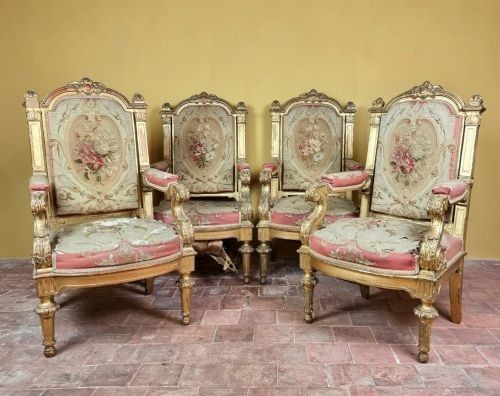


Louis XVI Open Armchairs
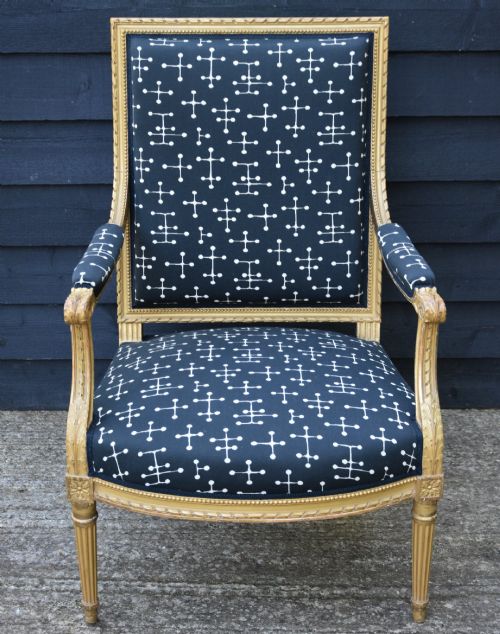
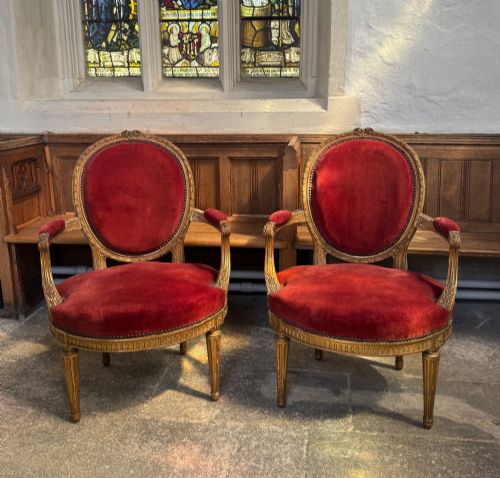
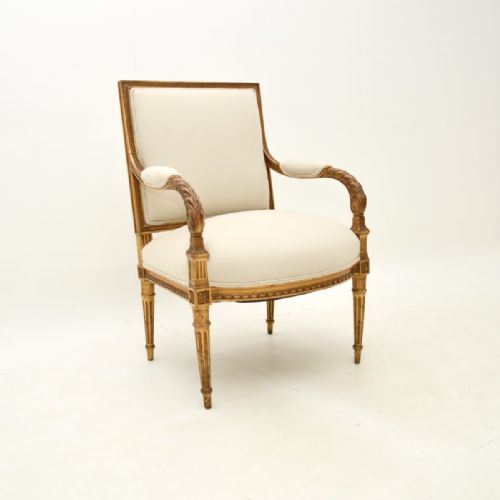
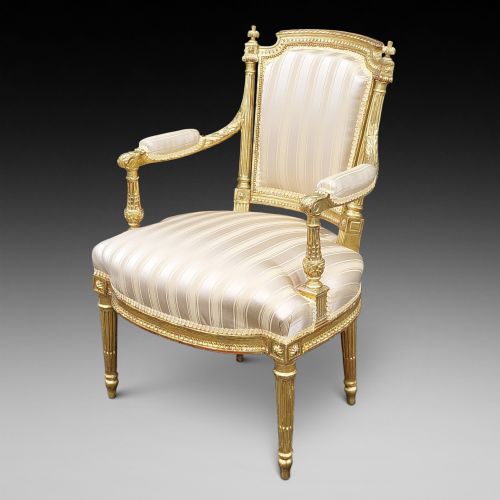
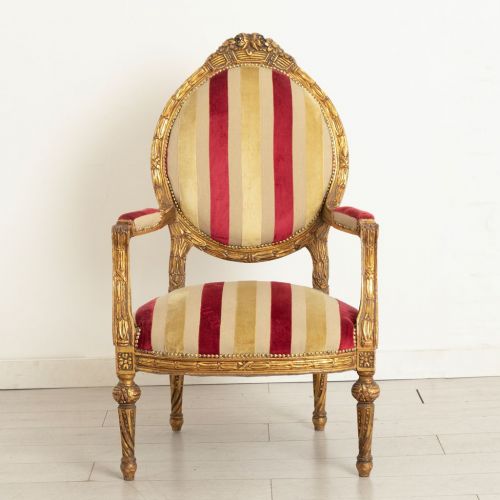
Louis xvi open armchairs bring neoclassical restraint and carved elegance to a room, offering upright comfort with straight fluted legs and disciplined symmetry.
Louis XVI Open Armchairs
Louis xvi open armchairs are seating forms defined by classical proportions, straight lines, and architectural details drawn from antiquity. When exploring these pieces, a buyer encounters authentic period examples alongside later revival interpretations spanning the nineteenth and early twentieth centuries.
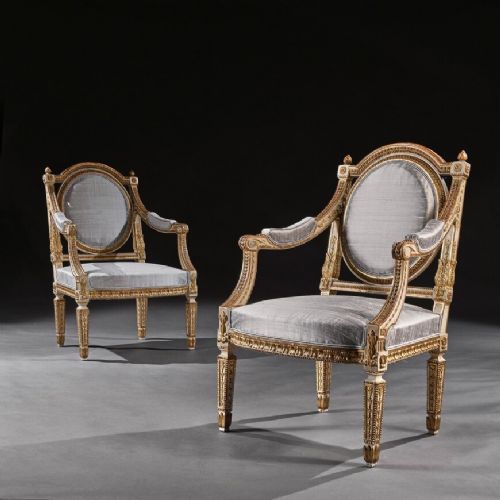
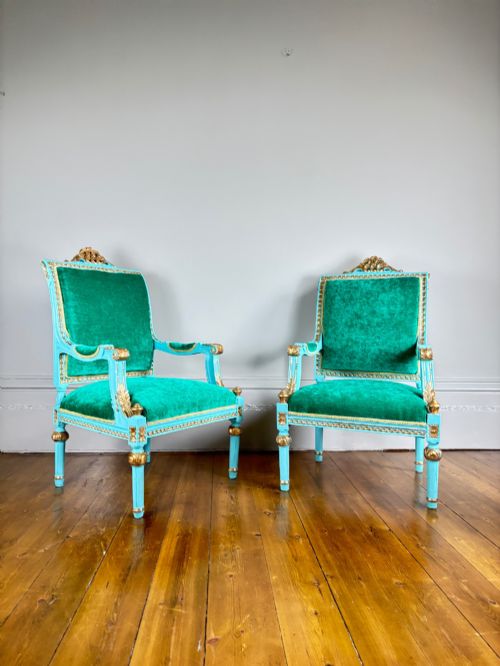
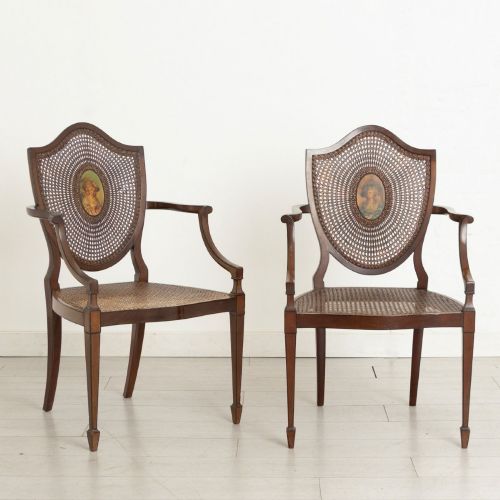
The selection ranges from grand giltwood salon chairs to smaller painted or carved wooden frames designed for bedrooms and parlours. Many survive in pairs or matched sets, upholstered in traditional fabric, velvet, or needlepoint tapestry panels.
How They Were Made
Master craftsmen shaped these frames from beech, walnut, and other timbers, applying layers of gesso and gold leaf to create luminous giltwood surfaces. Alternatively, frames received painted or parcel-gilt finishes to achieve a softer, more subtle decorative effect.
Upholstery techniques involved traditional stuffing and webbing secured directly to the wooden structure, often complemented by hand-woven tapestry or needlepoint panels worked in petit point.
Listings feature examples spanning from the eighteenth century through the nineteenth century to the early twentieth century, utilising giltwood, beech, walnut, and paint.
What Varies in Quality
The sharpness and depth of the wood carving distinguish superior examples from simpler productions, with crisp acanthus leaves, fluted columns, and rosette blocks revealing the hand of a skilled artisan. The integrity of the original gilt or painted surface matters greatly, as does the structural rigidity of the joined frame.
Proportion and balance dictate the aesthetic success of the chair, separating graceful seating designed for formal salons from heavier, less disciplined interpretations.
Holland and Sons
The Louis XVI Open Armchairs Glossary
- Fauteuil
- An open-framed armchair with upholstered armrests, typical of French seating design. These chairs combine exposed wooden structures with padded seats and backs.
- Giltwood
- Timber coated with gold leaf over a prepared gesso ground. This technique provides a brilliant metallic finish frequently utilised in formal seating.
- Bergère
- An enclosed armchair with upholstered sides set into the wooden frame. This form offers a deeper, more enclosed seat than standard open armchairs.
- Parcel Gilt
- A decorative treatment where only specific carved details are highlighted in gold leaf against a painted or natural wood background. It accentuates architectural mouldings.
- Neoclassical
- The dominant eighteenth-century style inspired by archaeological discoveries in Greece and Rome. It relies on geometric symmetry, straight columns, and classical motifs.
Louis XVI Open Armchairs: Frequently Asked Questions
How do I identify a true period piece?
Authentic eighteenth-century examples display hand-cut joinery, period tool marks, and appropriate timber shrinkage consistent with age. Revival pieces from the nineteenth and twentieth centuries often employ machine assistance or cleaner interior joints.
Examining the underside of the seat rail and the construction methods helps clarify whether the chair belongs to the original neoclassical era or a later revival movement.
Where should I place these armchairs?
These seats suit formal drawing rooms, reading corners, or grand bedrooms where their upright posture and architectural lines complement traditional interiors. Pairing them near a fireplace or beneath a mirror highlights their balanced proportions.
Because of their open frames and delicate carving, they function best as accent seating rather than heavy daily lounging chairs.
Are painted and gilt finishes original?
Many nineteenth and twentieth-century revival pieces retain their original surface treatments, though earlier eighteenth-century examples frequently underwent later re-gilding or repainting during their working lives. Closely inspecting the layers beneath the surface reveals whether the finish has been renewed.
Original patination shows soft wear and oxidation that modern refinishing cannot replicate.