





Louis XV Vanity Table
A louis xv vanity table brings French rococo elegance to a room, offering refined curves and practical compartments for daily grooming.
Louis XV Vanity Table
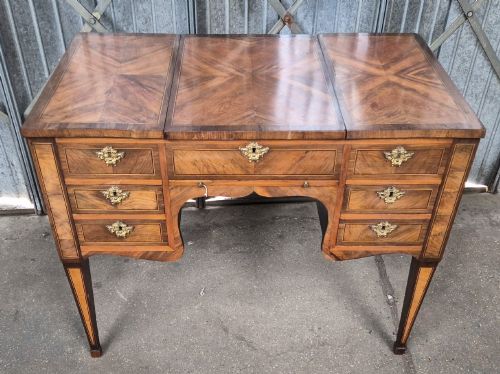
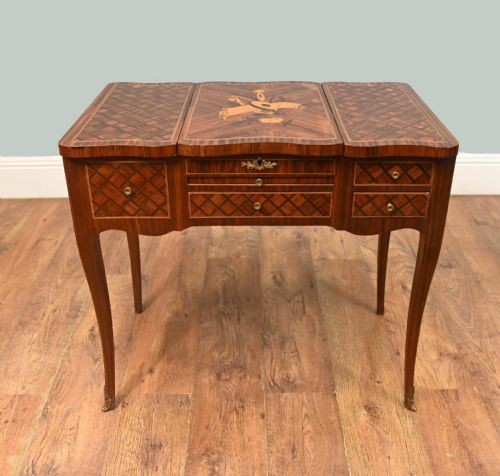
When you search for a louis xv vanity table, you encounter pieces designed for personal grooming and writing, often referred to as poudreuses or dressing tables. These items typically feature compartments and mirrors intended for a lady's morning routine.
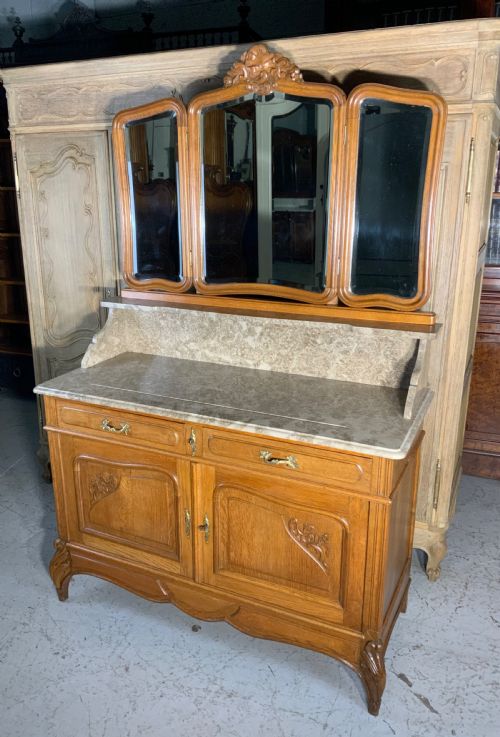
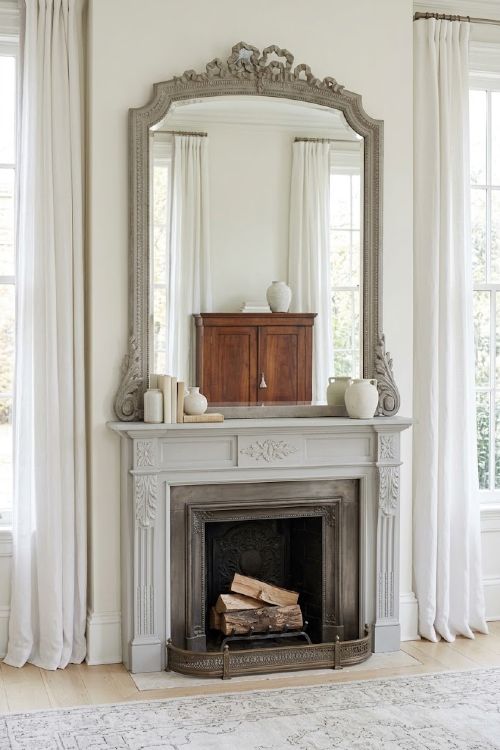
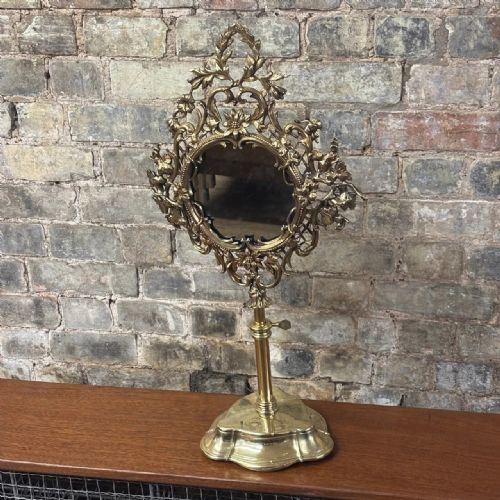
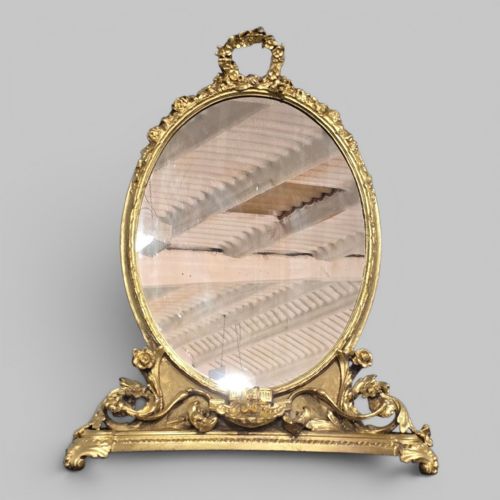
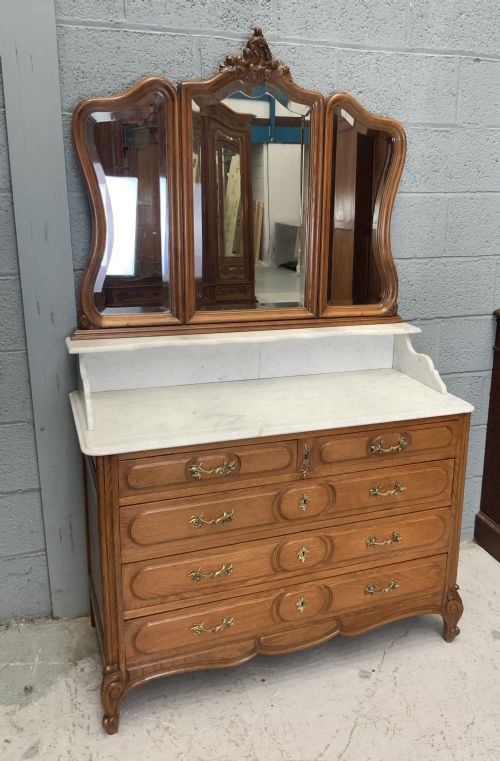
The pieces on this page emerge from periods spanning the nineteenth century and the early twentieth century, drawing on Louis XV revival, French rococo, and French provincial styles. Alongside traditional poudreuses, the selection includes related forms such as dressing mirrors, washstands, desks, and stools.
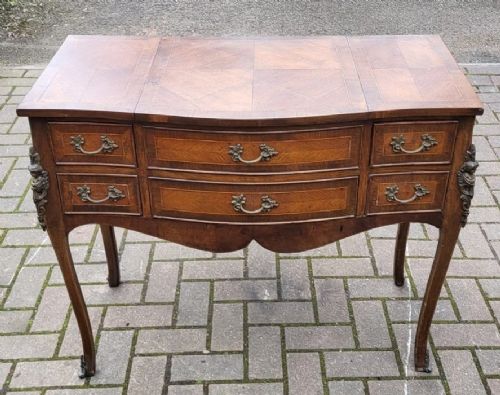
Makers and manufacturers across these decades adopted curvilinear forms, cabriole legs, and elaborate veneers to evoke eighteenth-century French royal aesthetics. Walnut, kingwood, and oak frequently form the structural basis of these items.
Materials and construction
Cabinetmakers utilised hardwoods such as walnut, oak, kingwood, rosewood, and tulipwood, often applying marquetry or crossbanding to the surfaces. Veneers were carefully arranged to create geometric and floral patterns across the tops and sides of the tables.
Ormolu mounts cast in brass provide decorative accents along the corners, aprons, and legs, highlighting the organic contours of the rococo style. Marble tops appear on certain dressing tables, adding a cool, durable surface alongside carved wooden details.
Louis XV Vanity Table Retail Price Guide 2026
Typical asking prices for louis xv vanity table among the pieces listed under this phrase on Sellingantiques today, from the lower quarter to the upper quarter. They describe what is for sale here now, not the wider market.
Several tables include hidden compartments originally meant for secret love letters or clandestine cosmetics.
Determining quality
Quality reveals itself in the intricacy of the veneer work and the precision of the marquetry inlay. Pieces exhibiting finely matched grains and complex wood combinations stand apart from simpler painted or plain oak constructions.
The execution of the cast brass or ormolu mounts and the depth of the hand carving on the frame indicate the level of craftsmanship invested in the piece. Well-defined foliage and crisp scrollwork demonstrate a higher standard than softer, more generalised castings.
The Louis XV Vanity Table Glossary
- Poudreuse
- A type of French dressing table featuring a folding top that opens to reveal a mirror and hidden compartments. It was utilised for powdering wigs and applying cosmetics in the eighteenth and nineteenth centuries.
- Ormolu
- Gilded bronze or brass mounts applied to furniture for decorative effect. It accentuates the contours of rococo revival pieces.
- Kingwood
- A dense, richly figured wood with dark brown and violet stripes used extensively in high-end French cabinetmaking. It forms striking veneer patterns on nineteenth-century tables.
- Marquetry
- Decorative patterns formed by the insertion of small pieces of wood, veneer, and shell into a structured wooden surface. It often depicts floral or symmetrical designs on tabletops.
- Bonheur du jour
- A small, light ladies' writing desk featuring a tiered superstructure with drawers and compartments. It frequently incorporates dressing elements in revival forms.
Louis XV Vanity Table: Frequently Asked Questions
How do I date these tables?
Dating relies on examining the timber species, construction techniques, and revival styles present in the piece. Nineteenth-century examples often employ elaborate kingwood veneers and gilt bronze mounts, whereas later twentieth-century interpretations may feature simpler oak frames.
Stylistic cues such as the severity of the cabriole leg or the presence of machine-cut components versus hand-carved details also assist in placing a piece within its historical era.
Where were these pieces used?
These dressing tables and mirrors were placed in boudoirs, bedrooms, and dressing rooms of nineteenth and early twentieth-century homes. They served as personal stations for grooming and correspondence.
Today, they function well as decorative desks, hallway consoles, or bedroom dressing units, maintaining their original utility while adding historic character to modern interiors.
What is French rococo style?
French rococo style is characterised by asymmetrical designs, flowing curves, C-scrolls, and naturalistic motifs such as foliage and shells. It originated in the eighteenth century and saw major revivals during the Victorian and Edwardian eras.
Furniture from these revival periods adopts the dramatic ornamentation and serpentine outlines of the original court style, executed in walnut and mounted with brass.