





Louis XV Open Shelf
These louis xv open shelf pieces bring fluid French curves and practical display space into a room.
Louis XV Open Shelf
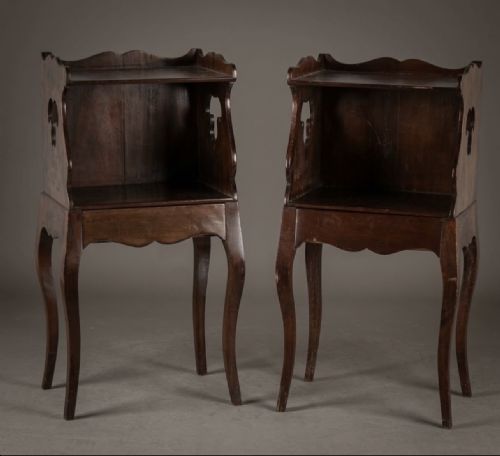
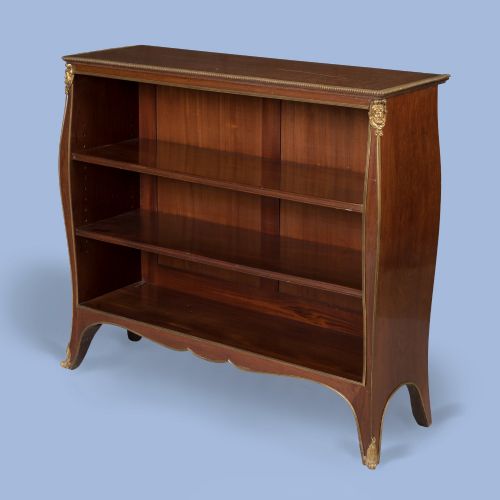
When searching for a louis xv open shelf, collectors seek decorative storage furniture that draws on French Rococo aesthetics. These pieces typically manifest as open bookcases, side shelving, and cabinets designed with curved lines and ornamental mounts.
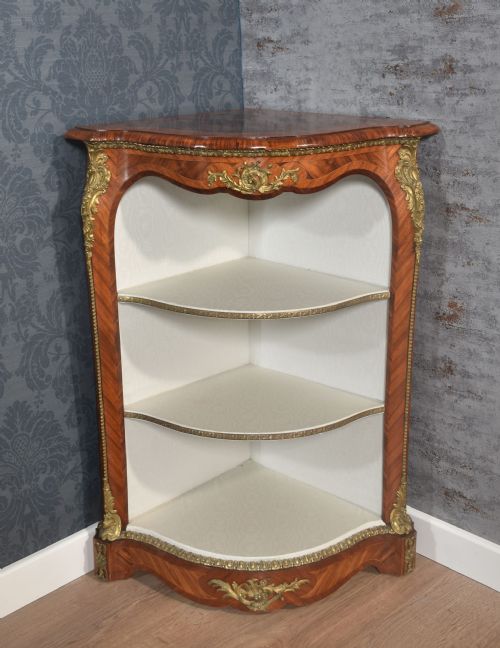
The examples found on this page span the nineteenth century, Edwardian era, and Georgian periods, alongside items from specific decades like eighteen-eighty and nineteen-twenty. They cross several categories including bookcases, bedside cabinets, and corner cupboards.
Buyers most frequently encounter items rooted in the Louis XV Revival style, French Chateau manner, and French Provincial traditions. Woods such as mahogany, walnut, kingwood, cherry wood, and cream painted finishes appear alongside marble and glass elements.
How they were made
Cabinetmakers utilised rich timber veneers including kingwood, walnut, and mahogany over solid carcasses, sometimes applying cream and parcel gilt paint finishes. These surfaces frequently incorporate decorative mounts cast in ormolu and brass.
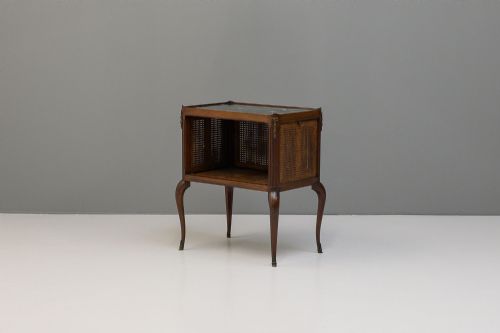
Many items feature inset marble tops in shades of green or white, adding weight and a cool tactile surface to the wooden frames. Glass is also integrated into certain variants, particularly on vitrine tops and display shelving.
Louis XV Open Shelf Retail Price Guide 2026
Typical asking prices for louis xv open shelf among the pieces listed under this phrase on Sellingantiques today, from the lower quarter to the upper quarter. They describe what is for sale here now, not the wider market.
Listings feature items spanning the Georgian, Edwardian, and nineteenth-century periods, alongside specific dates from eighteen-eighty to nineteen-twenty.
What varies in quality
The fineness of the cast ormolu mounts and the precision of their chiselling separate standard production from superior examples. Heavier, more detailed bronze or brass detailing indicates a workshop of higher standing.
Timber selection and veneer matching dictate the visual depth of the piece, with choice cuts of kingwood and walnut creating more striking grain patterns. The integration of high-grade marble tops also elevates the status of an item.
Krieger of Paris
The Louis XV Open Shelf Glossary
- Ormolu
- Gilded bronze used for decorative mounts and accents on furniture. This technique was widely utilised during the eighteenth and nineteenth centuries to highlight structural curves.
- Kingwood
- A dense, heavily figured timber prized for its rich dark grain and contrasting yellow or violet stripes. It was frequently used as a veneer on high-end French-style cabinetry.
- Vitrine
- A glass-fronted display cabinet or cabinet section designed to showcase porcelain and objects. The glass is typically held within a wooden or metal framework.
- Bibliotheque
- The French term for a large bookcase or library cabinet. These pieces often feature adjustable shelving and glazed or open fronts.
- Parquetry
- Geometric wood inlay work forming patterns across a surface. Cabinetmakers used contrasting timbers to create decorative geometric motifs on tabletops and door panels.
Louis XV Open Shelf: Frequently Asked Questions
What is a louis xv open shelf?
A louis xv open shelf is a piece of furniture styled after French Rococo designs featuring curved silhouettes and accessible storage. These items serve as functional bookcases, corner cupboards, and display units.
They reflect aesthetic movements from the nineteenth century through the Edwardian period. Their open architecture allows for the display of books and decorative objects.
How were these cabinets used historically?
Historically, these furnishings held personal libraries, delicate porcelain, and decorative ornaments within formal drawing rooms and studies. They provided both open access to frequently read volumes and secure display surfaces.
Bedside variants and corner cupboards utilised awkward alcoves and smaller spaces in period homes. Their decorative mounts signalled taste and refinement.
How do I identify a revival piece?
Revival pieces display characteristics of eighteenth-century French design recreated during the nineteenth and early twentieth centuries. Look for machine-cut elements alongside hand-chased ormolu mounts. Nineteeth-century interpretations often utilise dense mahogany or walnut veneers over pine or oak secondary woods. The construction methods and fastener types generally point to a later manufacturing date than the original Louis XV reign.