



Louis Style Vitrine
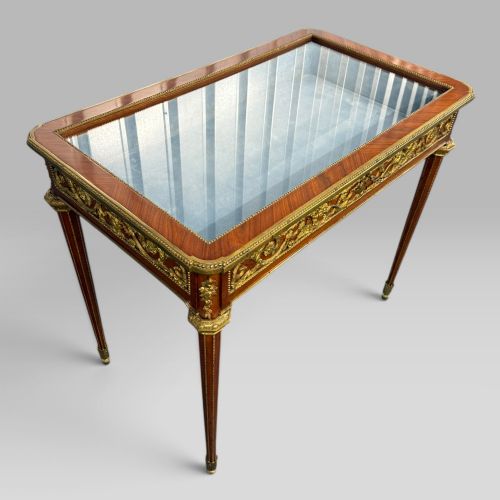
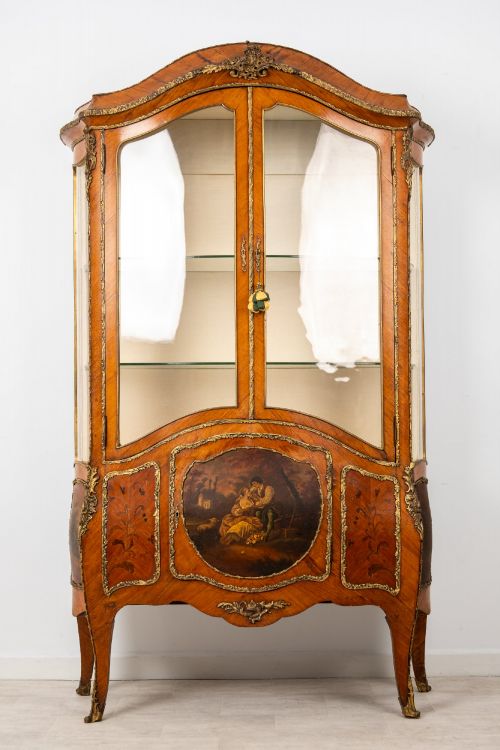
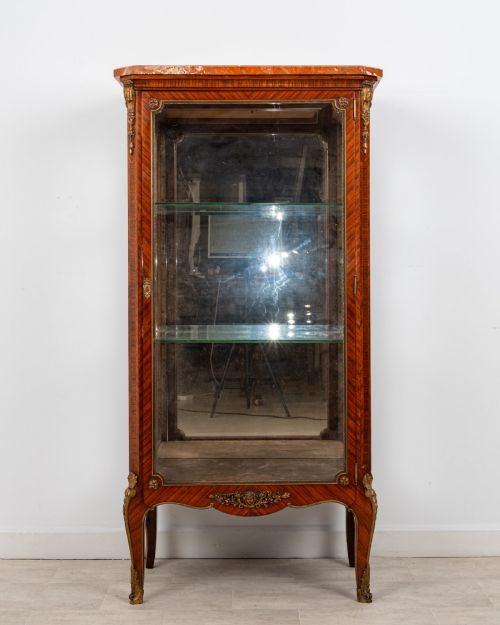
A louis style vitrine brings glass shelves and gilt mounts together to display porcelain and silver behind curved or straight panels.
Louis Style Vitrine
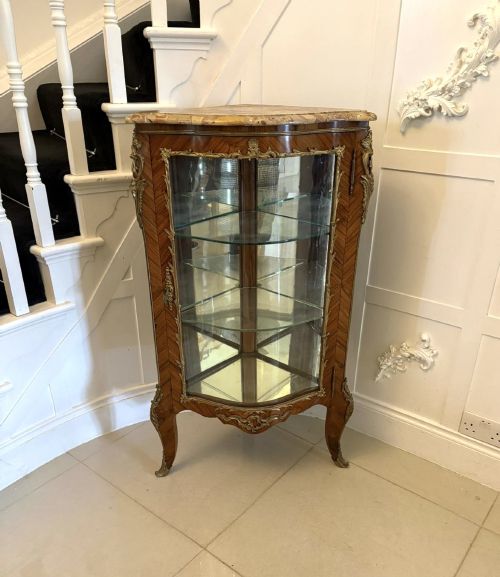
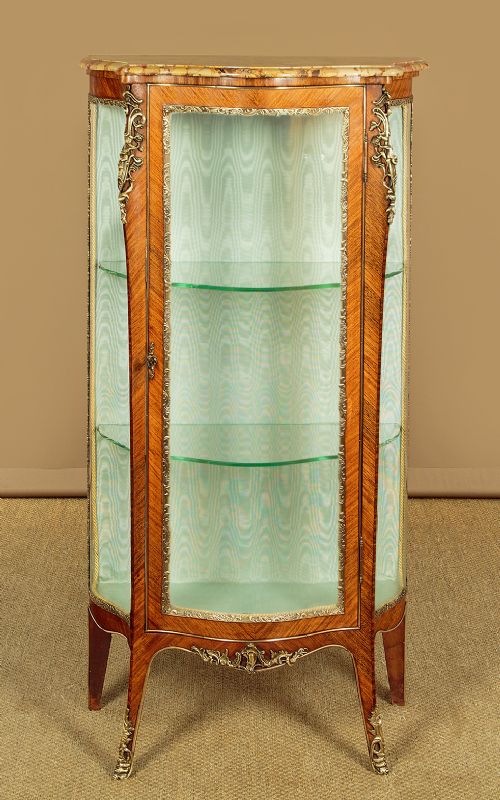
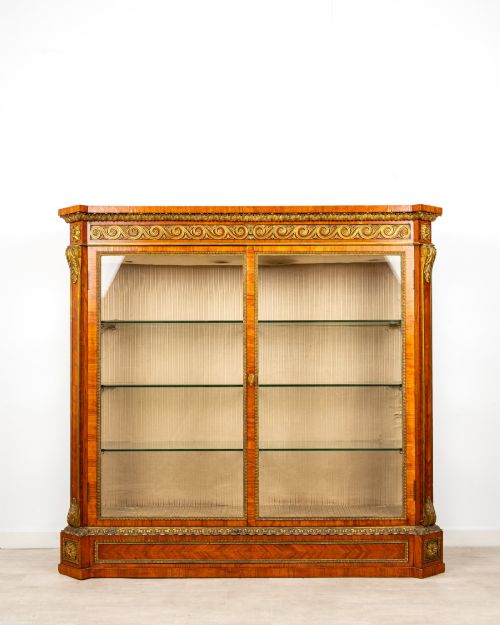
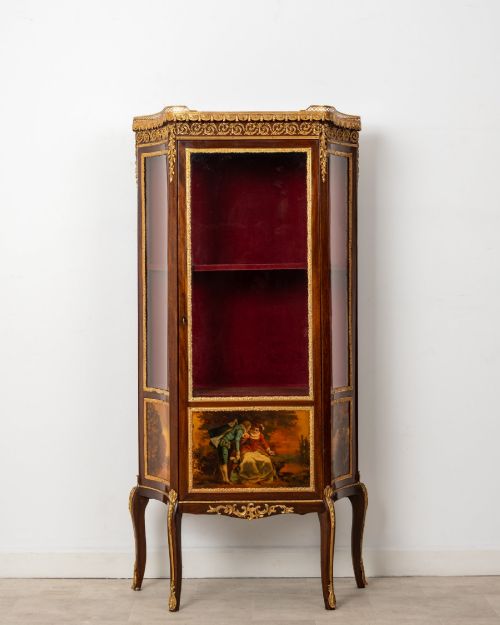
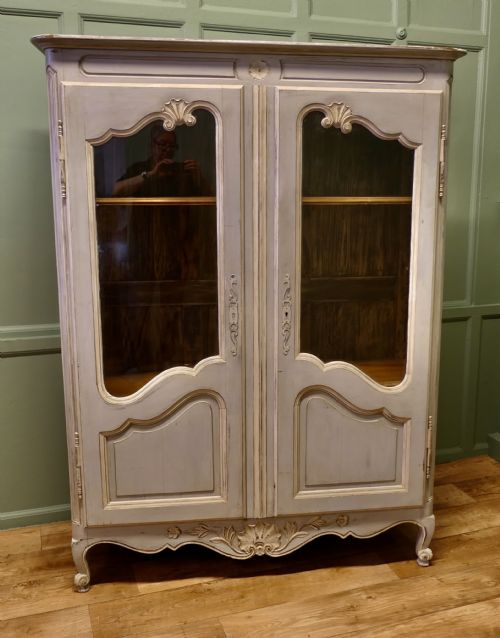
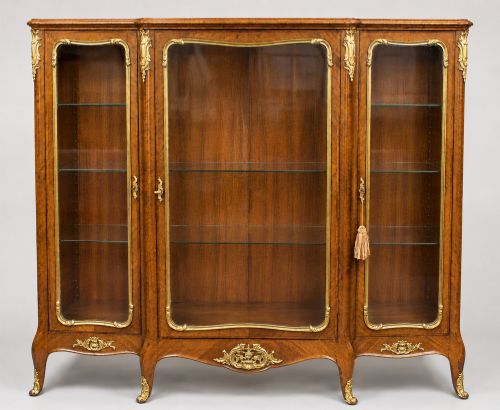
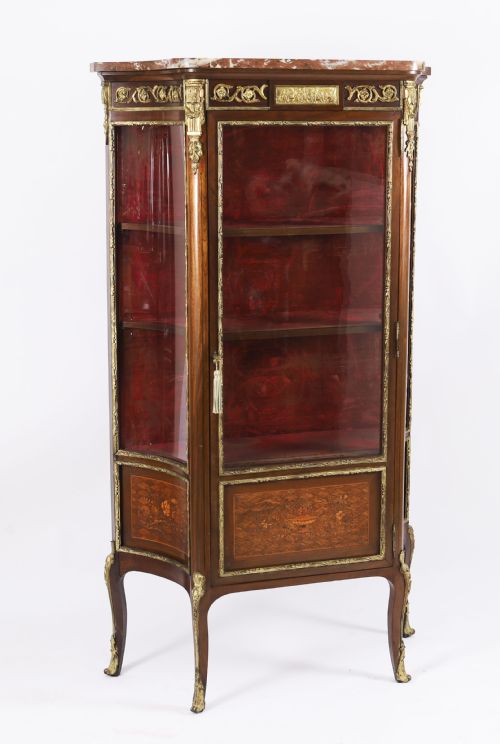
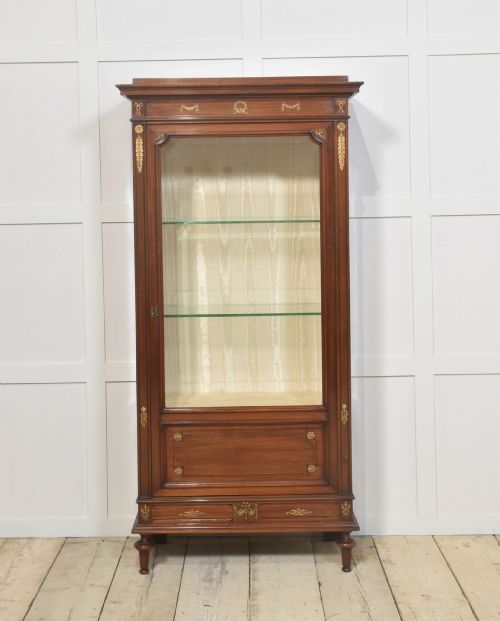
When you search for a louis style vitrine, you enter a field defined by display cabinets, pier cabinets, and bijouterie tables spanning the nineteenth century into the Edwardian era. These pieces draw on French Rococo Revival and Louis XV and XVI styles, taking the form of serpentine corner cabinets, double-door bookcases, and wall-hanging vitrines.
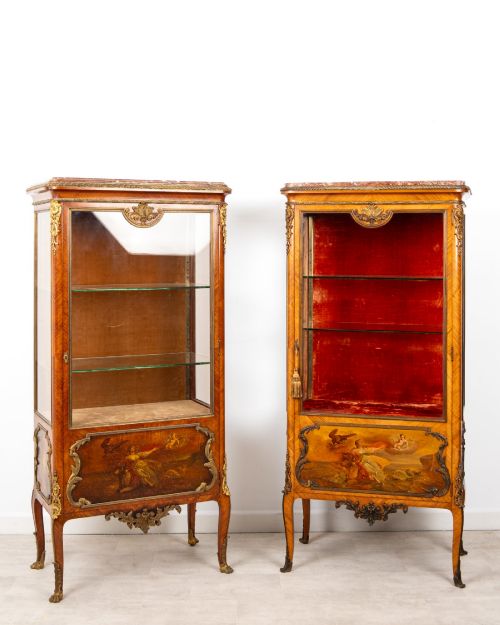
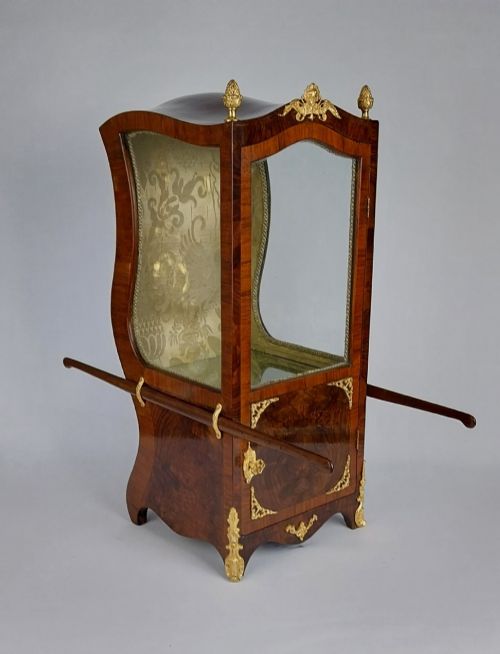
You are most likely to meet mahogany, kingwood, or walnut carcases fitted with glass sides and velvet linings. The forms range from small tabletop sedan vitrines to large matched pairs standing on cabriole legs with marble tops.
How They Were Made
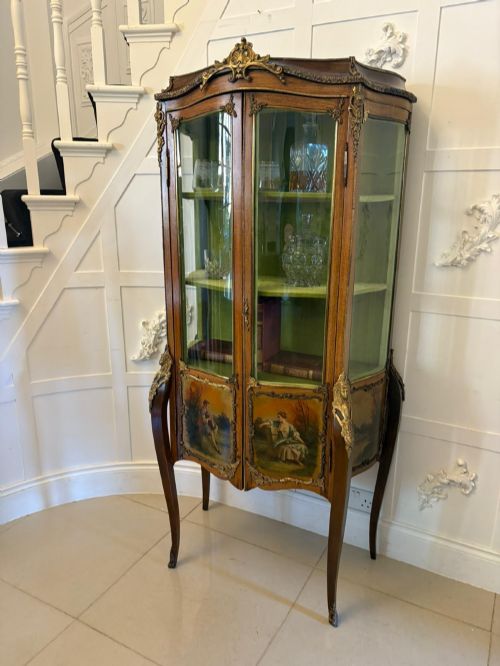
Cabinet makers built these pieces using hardwood foundations of mahogany, kingwood, walnut, or satinwood, often applying intricate parquetry and marquetry in geometric or floral patterns. Panels decorated with Vernis Martin painted scenes frequently sit beneath the main glazed display area.
Gilt bronze and ormolu mounts are cast and chased to frame the glass doors, corners, and aprons, while marble tops are fitted to the upper surfaces of serpentine and straight-fronted cabinets.
Louis Style Vitrine Retail Price Guide 2026
Typical asking prices for louis style vitrine among the pieces listed under this phrase on Sellingantiques today, from the lower quarter to the upper quarter. They describe what is for sale here now, not the wider market.
Sedan vitrines miniaturised full-size display furniture so miniature treasures could travel in style.
What Varies in Quality
The distinction between ordinary and exceptional examples rests in the crispness of the ormolu casting and the depth of the hand-chasing on the gilt bronze mounts. Maker attribution to workshops such as François Linke or Paul Sormani denotes a higher standard of joinery and material selection.
The complexity of the timber veneers, the inclusion of genuine marble tops, and the preservation of hand-painted Vernis Martin panels separate standard production pieces from masterworks.
François Linke·H. J. Hatfield & Sons·Paul Sormani·Gouffel
The Louis Style Vitrine Glossary
- Ormolu
- Gilded bronze mounts applied to furniture. This technique provides decorative highlights to corners, feet, and door frames.
- Vitrine
- A glass-fronted display cabinet. These pieces house porcelain, miniatures, and curiosities.
- Vernis Martin
- Simulated Japanese lacquer work popular in eighteenth-century France and revived later. It employs multiple layers of varnish to protect painted scenes.
- Bijouterie table
- A glass-topped display table designed for jewellery and small valuables. They frequently feature velvet-lined interiors.
- Parquetry
- Geometric wood inlay patterns. Craftsmen arrange contrasting veneers to form cubes, chequers, and diagonal bands.
Louis Style Vitrine: Frequently Asked Questions
What is a louis style vitrine used for?
These cabinets were designed to display porcelain, silver, and fine collectibles behind protective glass panels. The glazed sides and mirrored backs allowed light to reach objects from multiple angles.
Today, they serve the same purpose in domestic interiors, offering dust-free storage for treasured decorative items while adding a formal architectural element to a room.
How do I date a louis style vitrine?
Dating relies on examining the timber construction, carcass wood, and mounting techniques. Nineteenth-century pieces often feature hand-cut dovetails and heavy cast ormolu, while later Edwardian revivals may show more standardised internal fittings.
Style indicators such as Louis XV serpentine curves or Louis XVI straight fluted legs also provide broad chronological markers when matched against period revival trends.
How do I clean the ormolu mounts?
Ormolu requires gentle dusting with a soft, dry brush to prevent the accumulation of dirt in the recessed chased details. Moisture and commercial metal cleaners should be avoided because they can strip the original fire-gilt finish.
Professional conservation is recommended for tarnished or neglected bronze mounts to preserve the integrity of the underlying metal.
Can I adjust the glass shelves?
Many period vitrines feature fixed wooden shelf supports or early channel systems that limit shelf mobility. Forcing adjustments can damage the interior fabric lining or stress the glass panels.
When altering shelf heights, inspect the interior tracks carefully to ensure the weight of displayed objects remains evenly distributed across the cabinet structure.