





Louis Style Pedestal
A louis style pedestal brings continental proportion and refined surface ornament to an interior, channelling the grand tastes of French court design.
Louis Style Pedestal
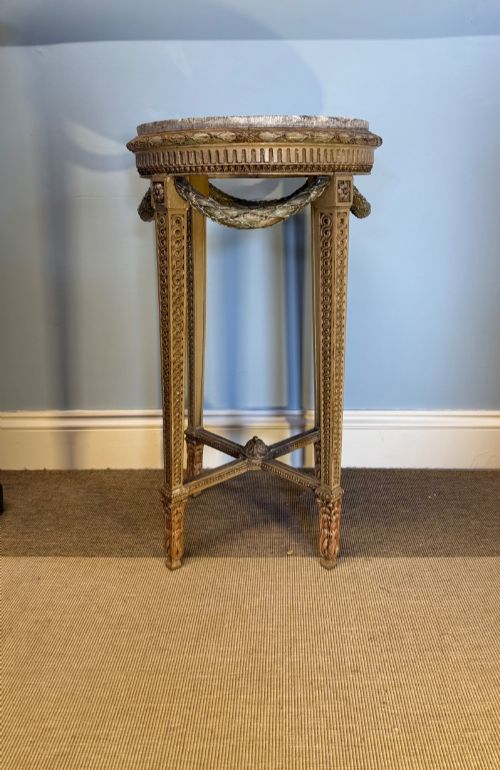
When searching for a louis style pedestal, collectors encounter tall display columns, tiered stands, and occasional tables designed to elevate sculpture, porcelain, or lamps. These pieces draw primarily upon the classical restraint of Louis XVI revival designs or the flowing asymmetric curves characteristic of Louis XV interpretations.
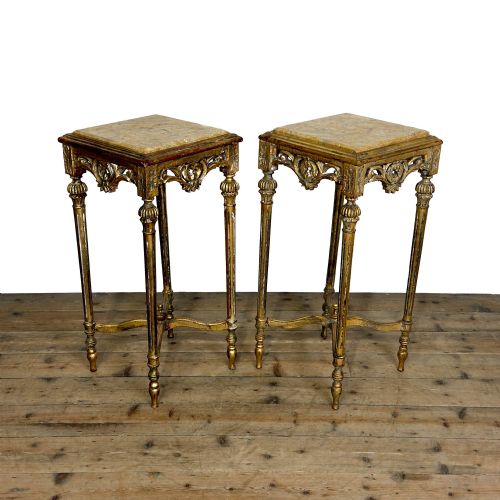
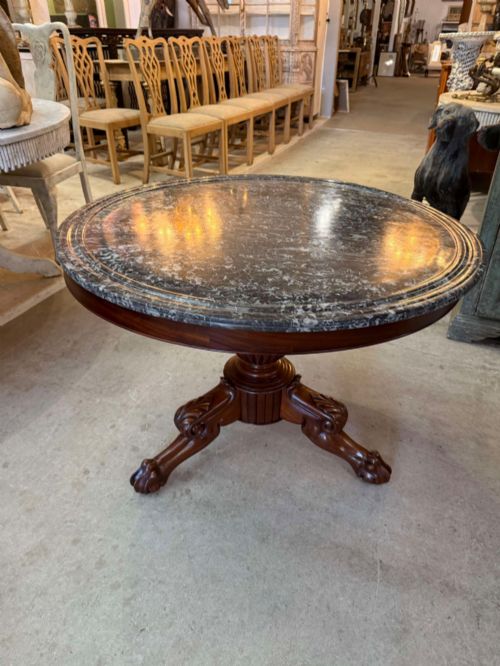
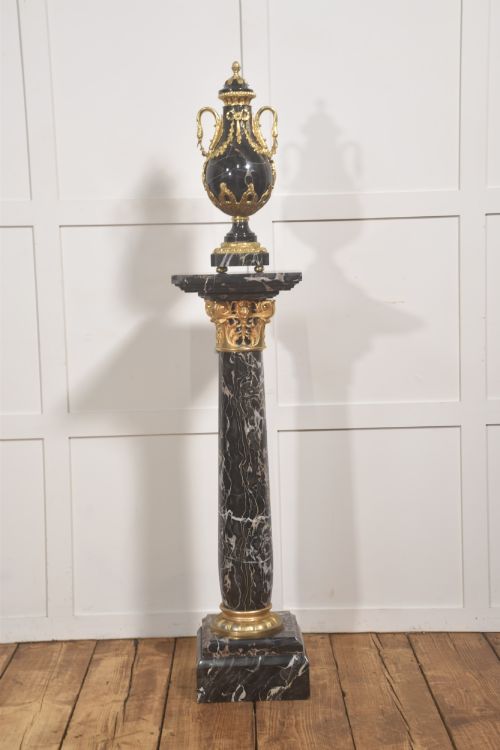
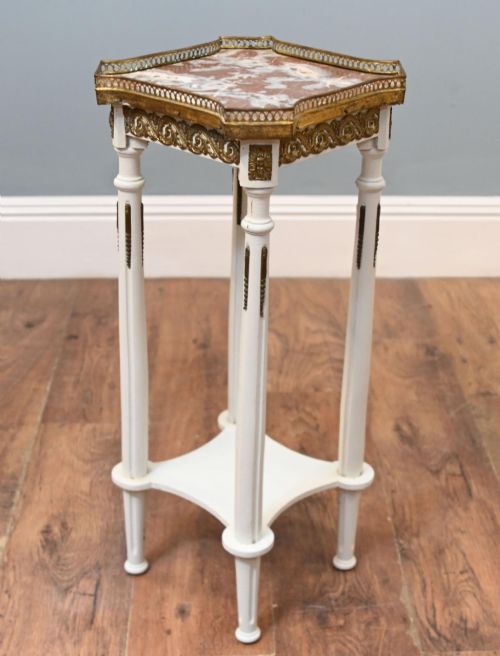
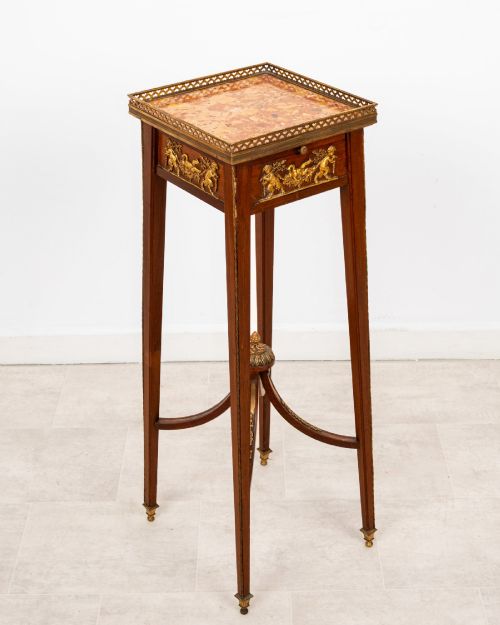
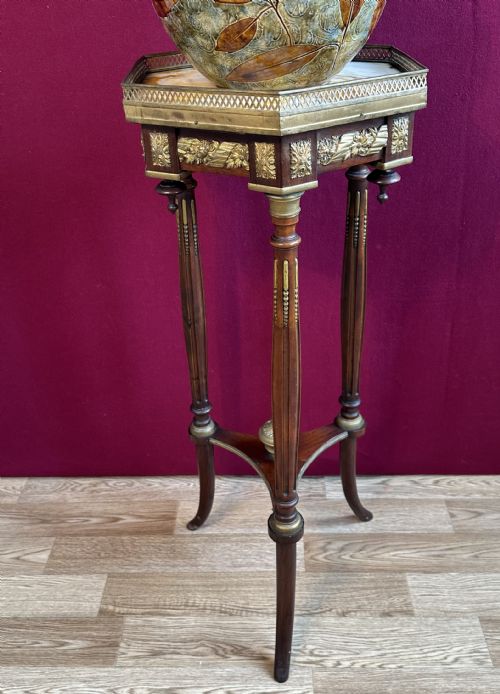
The inventory on this page ranges widely across forms, encompassing marble columns fitted with ormolu collars, chiseled brass and onyx stands, and painted wooden pedestals from the nineteenth and early twentieth centuries. Alongside dedicated column supports, buyers frequently find guéridons, plant stands, and occasional tables that share the same architectural DNA and decorative vocabulary.
Originating largely from French workshops during the nineteenth-century revival periods, these furnishings reflect a nineteenth-century fascination with eighteenth-century royal aesthetics. Makers adapted earlier forms into functional decorative items suited for domestic display spaces, utilising traditional architectural proportions on a smaller scale.
Materials and construction methods
Construction relies upon a robust internal timber frame, frequently fashioned from mahogany, walnut, or kingwood, which provides structural integrity for heavier stone elements. Cabinetmakers applied intricate parquetry and marquetry veneers onto these carcasses, creating geometric patterns or floral motifs.
Ornate cast ormolu and gilt-bronze mounts embellish corners, capitals, and feet, fixed securely to the wooden or marble body via concealed screws or pins. Heavy tops of black, rouge, or vert de patricia marble sit recessed into wooden galleries or metal bezels, secured by their own considerable weight.
Louis Style Pedestal Retail Price Guide 2026
Typical asking prices for louis style pedestal among the pieces listed under this phrase on Sellingantiques today, from the lower quarter to the upper quarter. They describe what is for sale here now, not the wider market.
The selection spans diverse forms including occasional tables, bedside cabinets, torchere stands, and classical marble columns.
Distinctions in craftsmanship
The refinement of the cast bronze or ormolu mounts separates superior examples from routine production, with finer pieces exhibiting crisp chasing, deep relief, and meticulous hand-finishing. Lesser examples rely on softer, shallower casts with visible seams or simplified surface details.
The choice of primary woods and the precision of the parquetry inlay indicate the workshop's standing. Finer items incorporate expensive timbers like kingwood arranged in balanced, symmetrical arrangements with tight joints, whereas standard pieces use simpler veneers and straightforward construction.
François Linke·A Hugnet Paris·Weisweiler·Zwiener Jansen Sucesseur
The Louis Style Pedestal Glossary
- Ormolu
- Gilt-bronze decorative mounts applied to furniture and pedestals. This mercury-gilded bronze creates a rich, lasting metallic lustre characteristic of high-end French furnishings.
- Guéridon
- A small circular table on a single central pillar or tripod base. Originally introduced in seventeenth-century France, these pieces frequently double as display pedestals.
- Parquetry
- Geometric wood inlay work arranged in patterns such as cubes or chequers. Craftsmen used contrasting timber veneers to decorative effect across table tops and pedestals.
- Torchere
- A tall decorative stand or candlestick holder designed to support a light source. In later revival periods, these tall stands functioned purely as decorative pedestals for urns or sculpture.
- Galleried
- A raised border encircling the edge of a marble or wooden table top. This decorative rim prevents items placed on the surface from sliding off.
Louis Style Pedestal: Frequently Asked Questions
What is a louis style pedestal used for?
These pieces serve primarily as elevated display surfaces for decorative objects, bronze sculptures, porcelain urns, and table lamps. Their slender proportions allow them to occupy tight corners or hallways while drawing the eye upward.
Historically, they functioned as architectural accents within formal reception rooms, showcasing prized possessions at an optimal viewing height. Today, they integrate easily into domestic interiors to introduce architectural structure and surface texture.
How do I distinguish Louis XV from Louis XVI styles?
Louis XV pieces feature asymmetrical curves, scrolling cabriole legs, and naturalistic floral motifs that create a fluid, organic silhouette. The aesthetic emphasises movement and decorative whimsy.
Louis XVI pieces pivot toward classical symmetry, straight fluted columns, right angles, and restrained geometric mounts inspired by Greco-Roman archaeology. The lines are visibly stricter and more architectural.
Are marble tops original to these stands?
Most antique pedestals and guéridons retain their original inset marble tops, which were selected by the maker to complement the wood veneers or bronze mounts. Stones like rouge marble and onyx were standard choices for French cabinetmakers.
Replacements do occur during restoration work, though a correct replacement stone should match the period thickness and edge profile. Inspecting the underside reveals whether the marble sits in its original rebated channel.
How do I care for marble and ormolu?
Clean marble tops using a soft damp cloth and mild neutral soap, avoiding acidic substances like vinegar or lemon juice that etch polished stone surfaces. Promptly wipe up spills to prevent staining.
Dust ormolu mounts gently with a dry microfiber cloth, steering clear of metal polishes that strip away the original fire gilding. Gentle dusting preserves the aged patina on the bronze.