



Louis Japy Clock
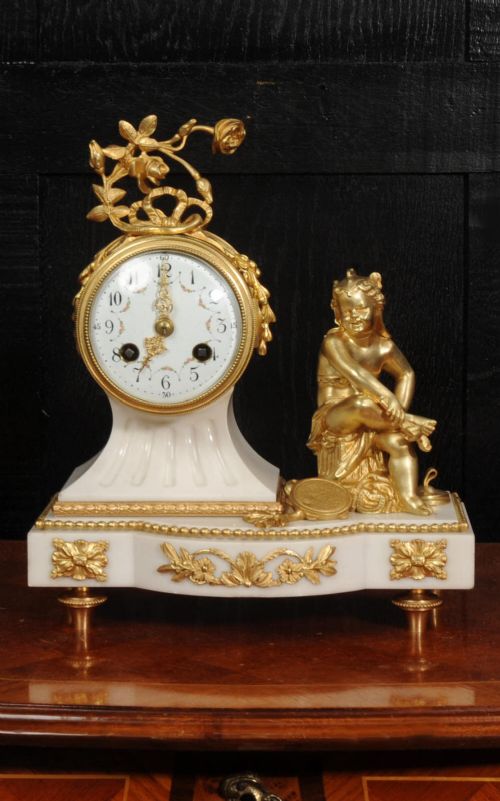
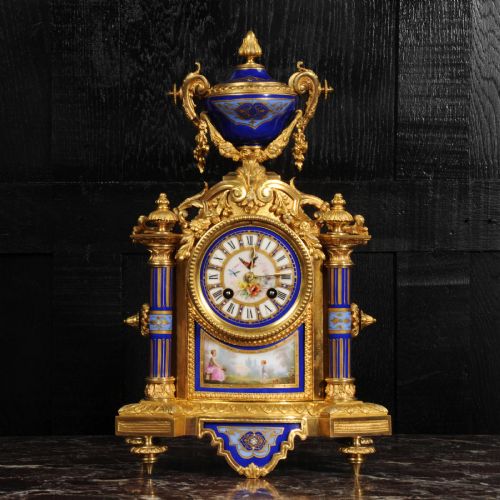
These pieces are a louis japy clock, sophisticated timepieces driven by master French mechanism makers to anchor any mantelpiece.
Louis Japy Clock
The versions most frequently met on this page combine cast bronze or ormolu with porcelain plaques and panels, reflecting the aesthetic preferences of French makers like Japy Freres and Japy Fils. Such objects served both a practical domestic purpose and a decorative function in nineteenth-century drawing rooms.
How they were made
The makers constructed these movements in French workshops, pairing heavy cast brass and gilt bronze with contrasting white marble or ormolu mounts. Porcelains, often styled after Sevres manufacture, were painted with enamel details and set directly into the metalwork cases.
Cases combined bronze casting with chiselled gilt surfaces, housing mechanical gear trains designed to strike on bells or gongs. Enamel dials featuring numerals were fitted behind glass bezels, completing the complex assembly.
Louis Japy Clock Retail Price Guide 2026
Typical asking prices for louis japy clock among the pieces listed under this phrase on Sellingantiques today, from the lower quarter to the upper quarter. They describe what is for sale here now, not the wider market.
Listings show pieces spanning the nineteenth century, predominantly utilising gilt bronze, ormolu, and porcelain.
What varies in quality
The standard of a louis japy clock rests upon the crispness of the gilt bronze chasing and the artistic merit of the painted porcelain panels. Finer examples display deeper hand-chiselling in the ormolu mounts and superior integration of marble bases.
Mechanical execution also separates simpler items from superior pieces, particularly regarding the finish of the movement plates and the precision of the escapement. Recognition at exhibitions, such as gold medal awards, distinguishes the most accomplished workshop productions.
Japy Freres·Japy Fils
The Louis Japy Clock Glossary
- Ormolu
- Gilded bronze achieved by applying a mercury-gilt amalgam to a bronze base. This technique produces a distinctive warm golden lustre characteristic of antique French metalwork.
- Garniture
- A set comprising a central clock accompanied by matching side ornaments such as urns or candelabra. These decorative ensembles were designed to sit symmetrically on a mantelpiece.
- Enamel dial
- A metal dial face covered with fused powdered glass and fired in a kiln to create a smooth white surface. Numerals are subsequently painted onto this vitreous layer.
- Rococo Revival
- A nineteenth-century design style drawing inspiration from the asymmetrical curves and naturalistic motifs of the eighteenth century. It employs scrollwork and floral elements.
- Louis XVI style
- A neoclassical aesthetic characterised by straight architectural lines, symmetry, and classical motifs such as urns and ribands. It marks a return to geometric restraint.
Louis Japy Clock: Frequently Asked Questions
Who made these clocks?
The mechanical movements were produced by the French manufacturing dynasties of Japy Freres and Japy Fils, who supplied base movements to various case makers.
These workshops operated extensively throughout the nineteenth century, earning recognition and medals for their industrial and horological output.
What materials are used?
Clocks from this selection predominantly feature gilt bronze, ormolu, and brass, paired with contrasting white marble bases.
Many examples incorporate painted porcelain panels and enamel dials, echoing the decorative arts of earlier French royal manufactures.
How do I wind the clock?
These mechanical timepieces utilise a dedicated winding key inserted into arbors on the enamel dial to tension the internal springs.
Care must be taken not to over-wind the movement, ensuring the longevity of the brass gear trains and escapements.
How do I date a piece?
Dating relies upon stylistic markers from periods such as Louis XVI Revival and Rococo Revival, alongside evidence from nineteenth-century exhibition medals.
Specific dates within the eighteen hundreds appear on workshop records and movement stamps associated with the makers.