

Long Geometric Carpet
A long geometric carpet brings enduring linear pattern and rich texture to narrow spaces through traditional woven designs.
Long Geometric Carpet
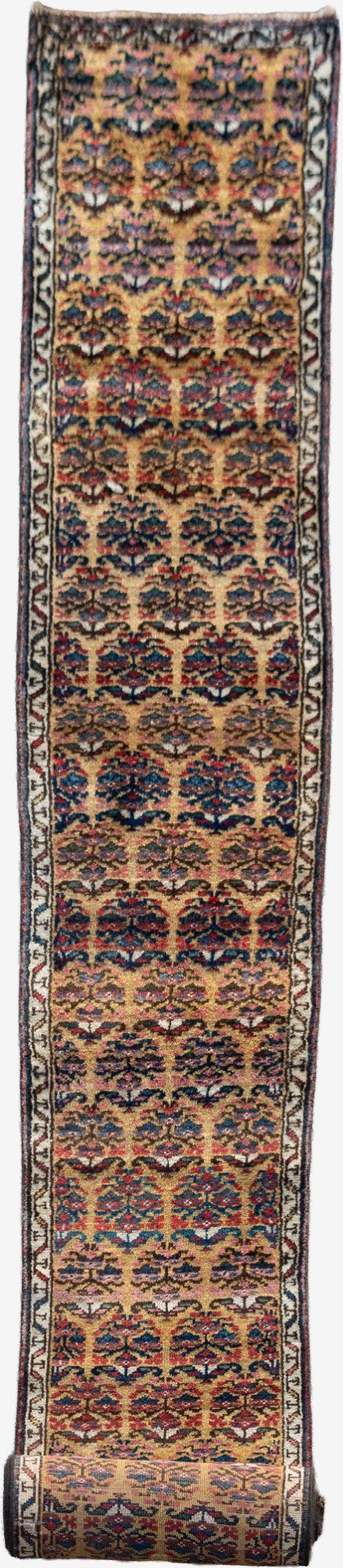
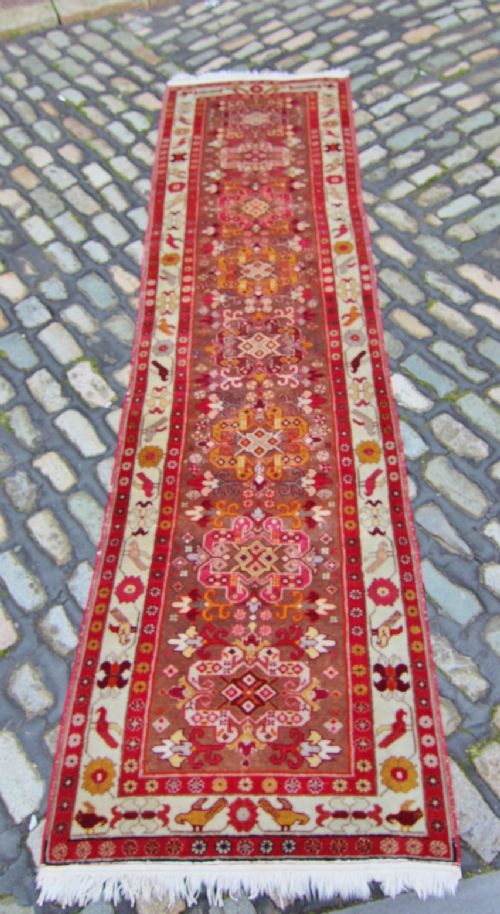
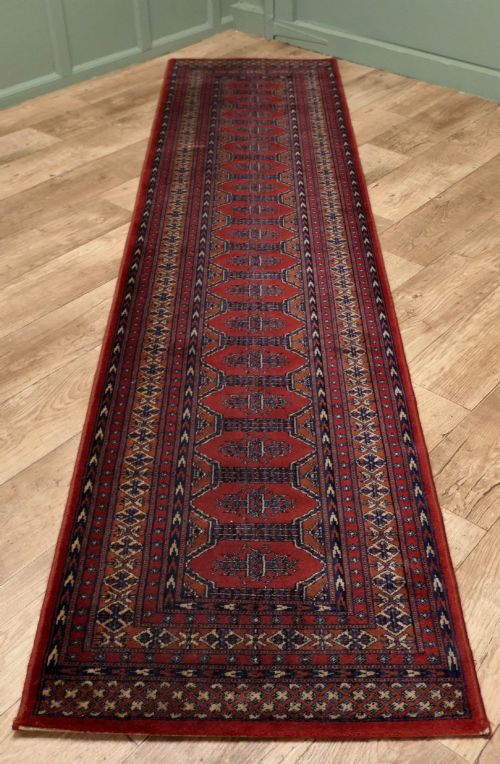
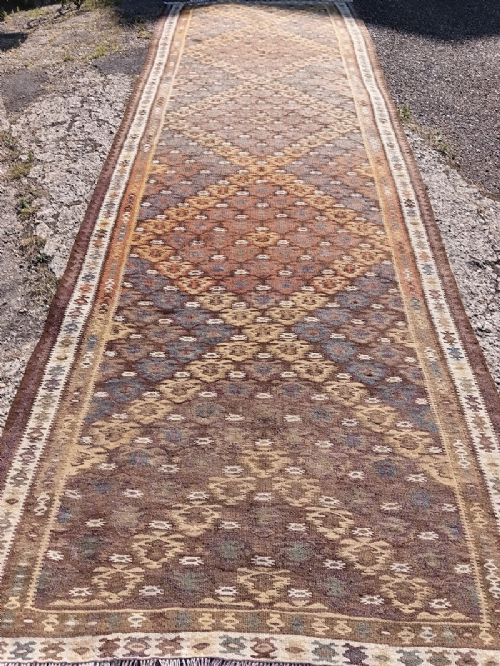
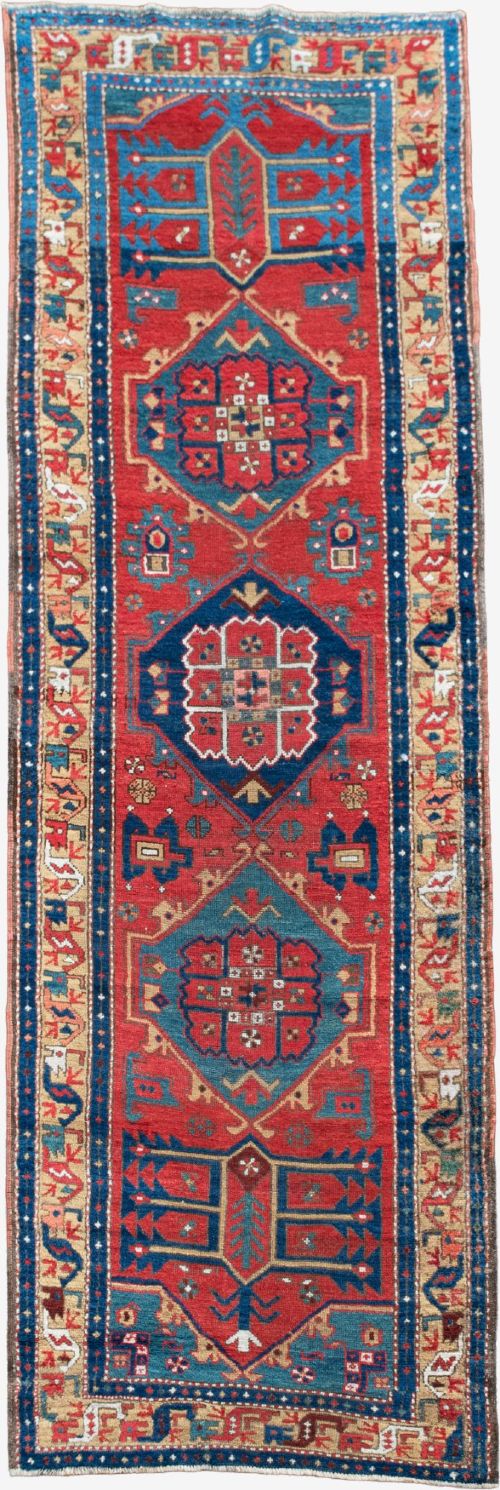
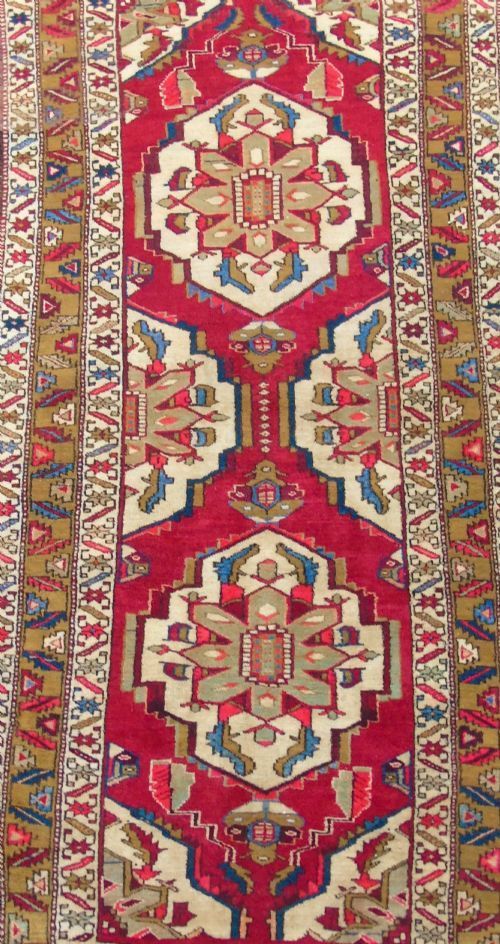
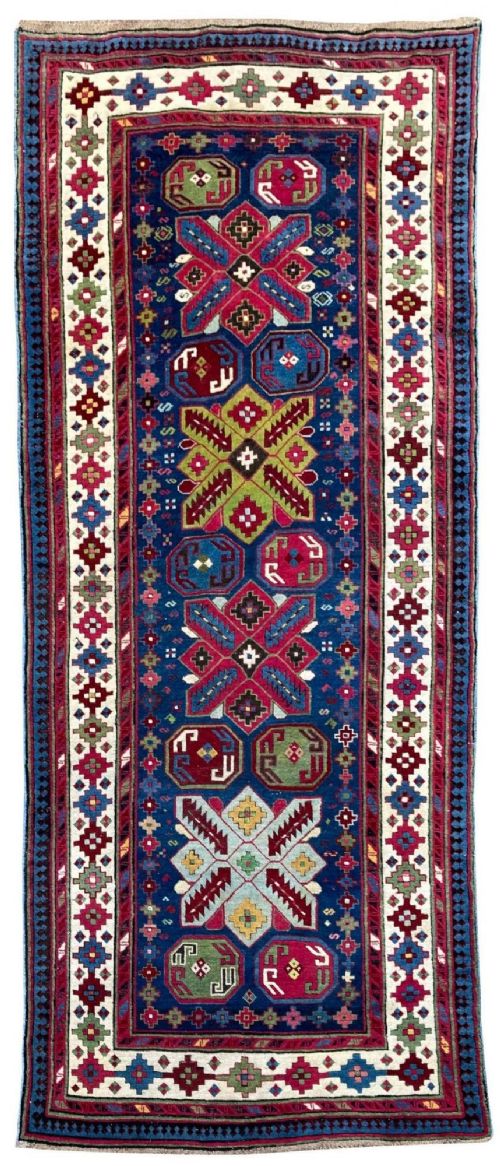
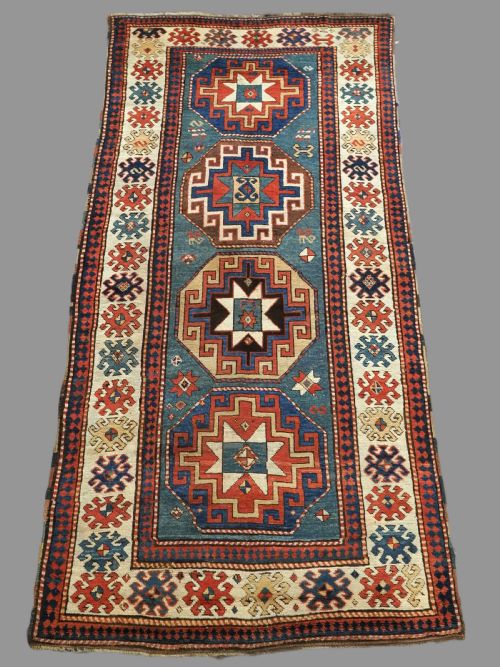
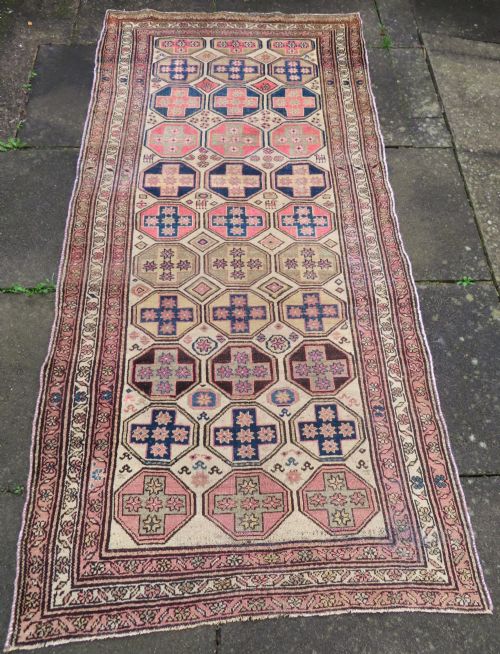
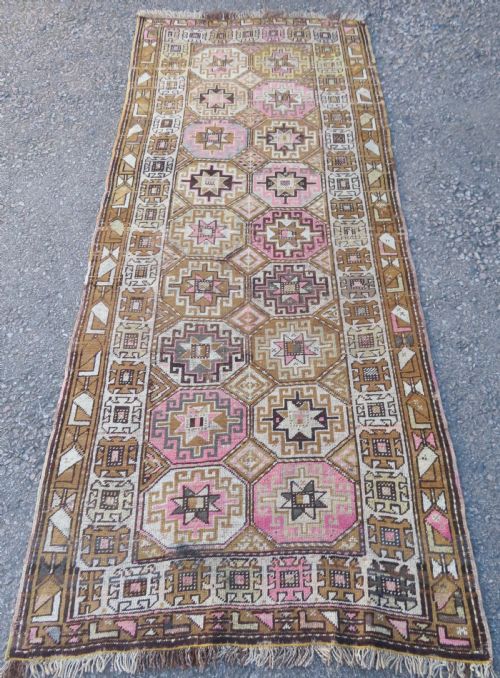
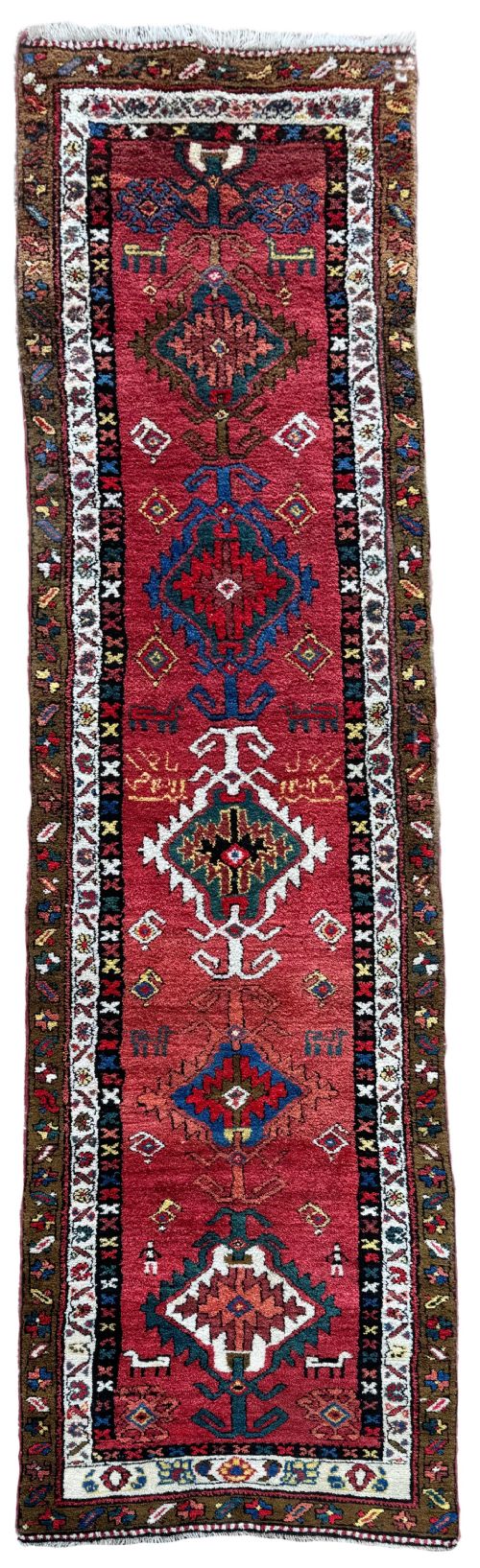
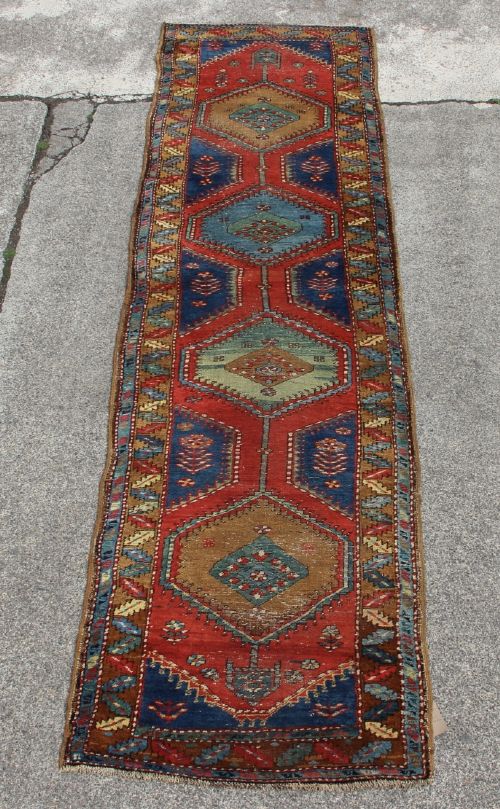
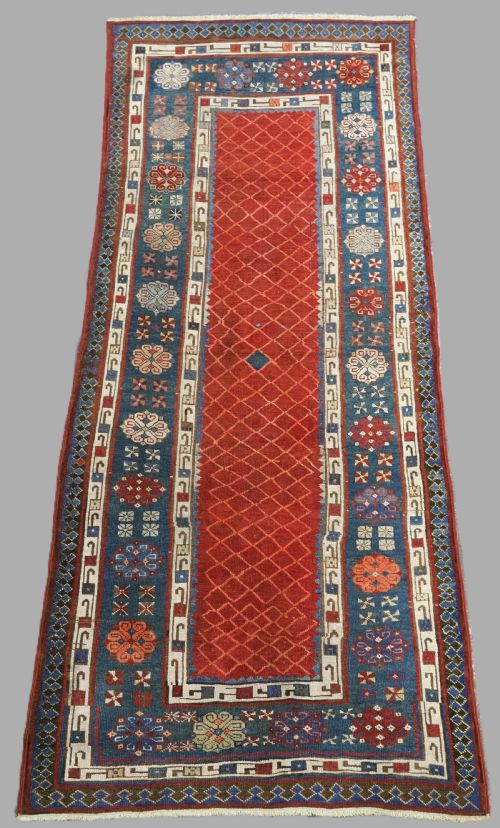
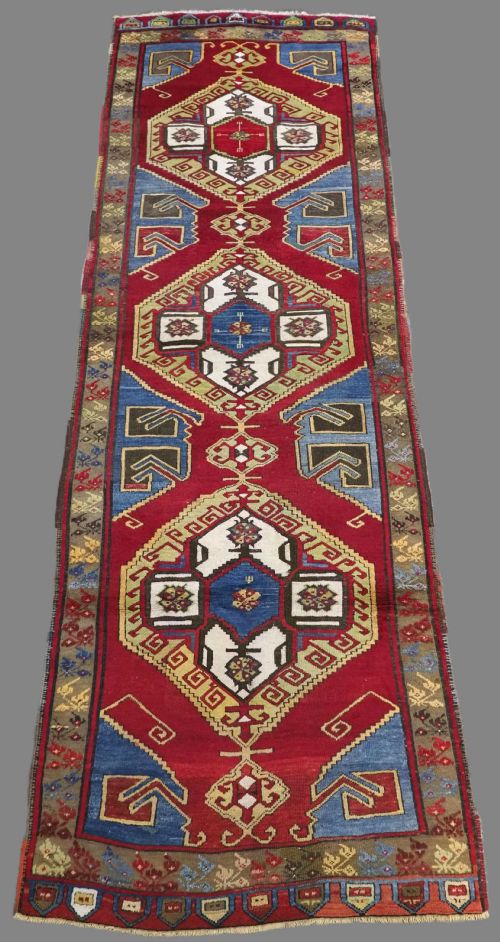
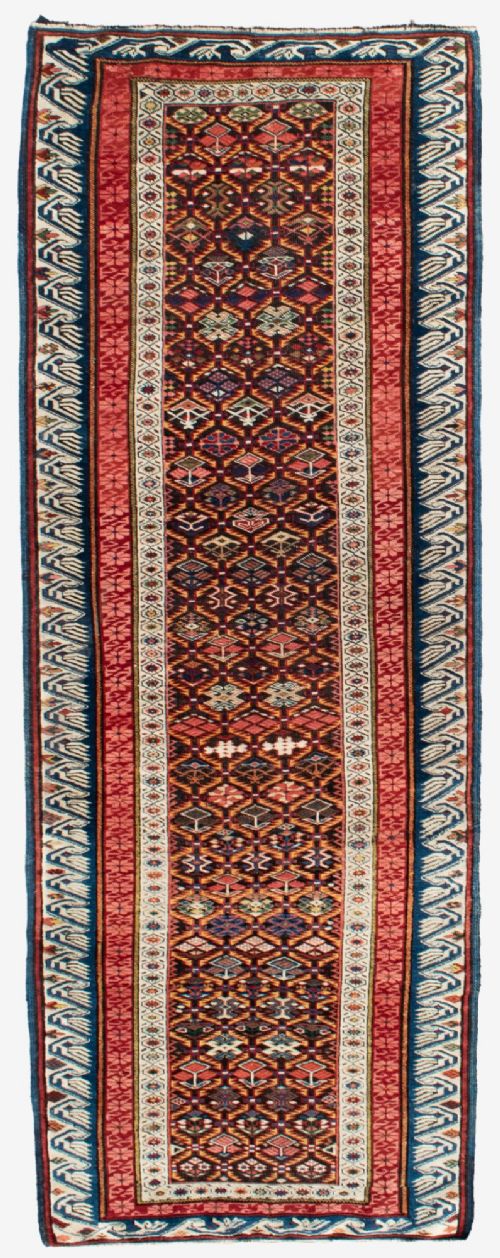
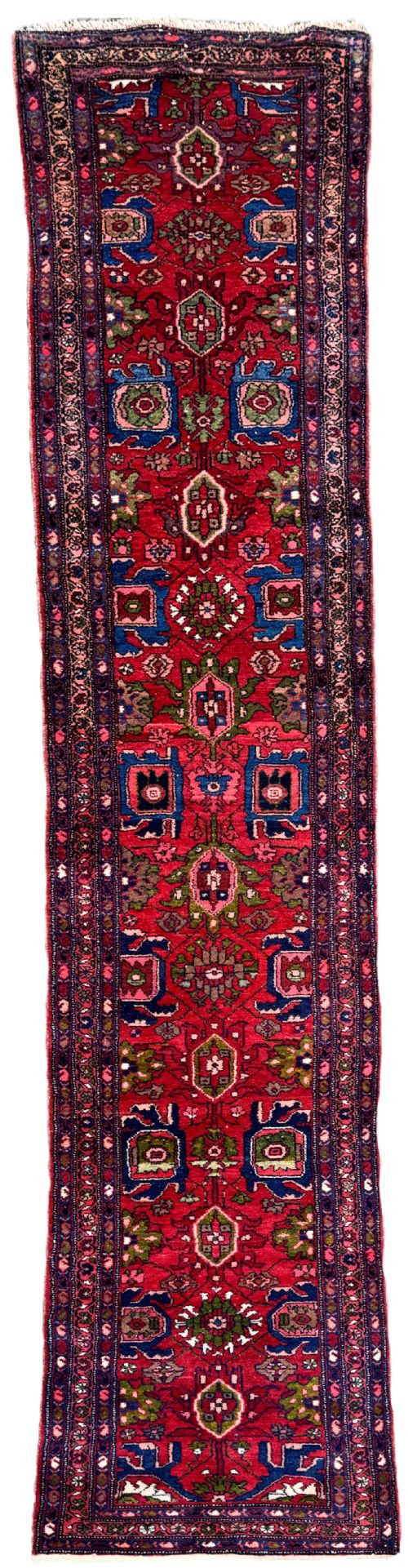
A long geometric carpet serves primarily as a runner or gallery carpet, designed to fit narrow hallways, corridors and extended floor spaces. These pieces span production from the mid-nineteenth century through the early twentieth century, originating from Persian, Caucasian, Anatolian, and Moroccan weaving traditions.
The format is characterised by an elongated rectangular proportion intended to guide movement through a room or passage. Regional subtypes such as Heriz, Kurdish, Talish, Kazak and Hamadan runners dominate the available selection, each bringing distinct tribal or village design vocabularies.
Makers utilised disciplined angular motifs, medallions and lattice patterns rather than naturalistic curves. This structured layout creates visual rhythm across substantial lengths of flooring.
Assessing Quality and Execution
Quality rests in the precision of the knotting, the handling of the wool and the depth of the dye palette. Finer examples display crisp geometric definition and balanced proportions along the entire length.
The integrity of the structural edges and the retention of original end finishes distinguish superior weaving. Wear patterns and historical repairs alter the texture but do not inherently diminish the decorative merit of a sturdy village rug.
Long Geometric Carpet Retail Price Guide 2026
Typical asking prices for long geometric carpet among the pieces listed under this phrase on Sellingantiques today, from the lower quarter to the upper quarter. They describe what is for sale here now, not the wider market.
Listings feature pieces spanning from the mid-nineteenth century through the 1930s, utilising wool, cotton and hand-spun wool.
The Long Geometric Carpet Glossary
- Runner
- A long, narrow carpet format intended for corridors, staircases and hallways.
- Kelleh
- A large rectangular carpet format intermediate in proportion between a standard rug and a full room-size carpet.
- Lattice
- A repeating grid or network pattern enclosing secondary geometric motifs across the field.
- Pile
- The upright surface yarn of a carpet, formed by knotted loops that are sheared to a uniform height.
- Warp
- The stationary vertical threads stretched on a loom that form the structural foundation of the weaving.
Long Geometric Carpet: Frequently Asked Questions
Where should I place a long geometric carpet?
These carpets suit narrow hallways, corridors, landings and galley kitchens where linear floor coverage is required. Their narrow proportions allow them to define transitional spaces without overwhelming the surrounding room.
Ensure the floor beneath is measured carefully to allow clear margins of exposed flooring around the edges of the carpet.
How do I clean an antique runner?
Gentle surface brushing and regular light vacuuming without a beater bar remove embedded grit safely. Professional textile cleaning remains necessary for deeper washing.
Avoid soaking wool carpets at home, as moisture can compromise the natural lanolin and distort the foundation.
Are these carpets durable for hallways?
Traditional village and tribal rugs were built for heavy domestic use using sturdy wool and dense knotting. They withstand regular foot traffic when paired with a quality underlay.
The natural resilience of hand-spun wool helps the pile recover from compression over time.
How do I distinguish regional styles?
Caucasian pieces tend to feature crisp, highly geometric medallions and bright palettes, while Persian Heriz runners exhibit bold architectural geometry. Kurdish and Hamadan examples often incorporate looser tribal motifs and rich saturated tones.
Examining the structure, knot density and edge finishing helps confirm the likely origin of an unmarked piece.