
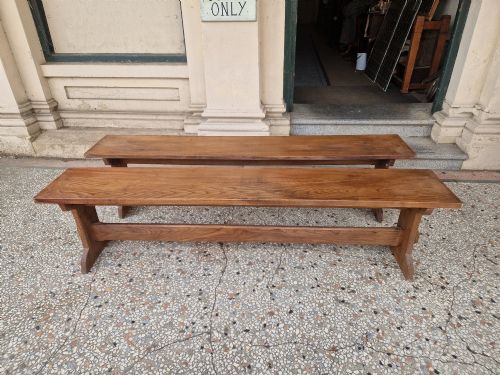


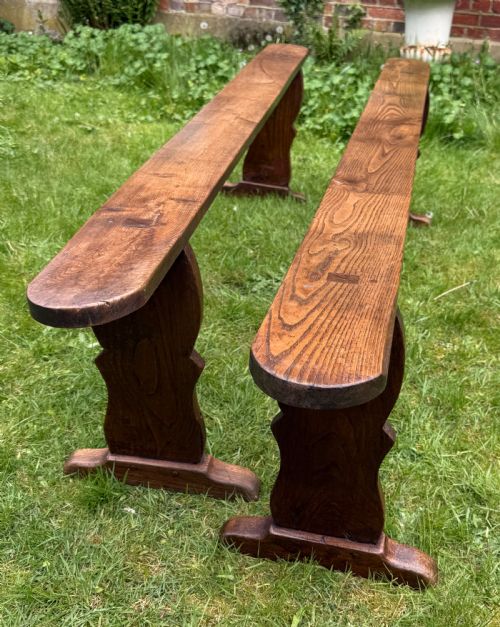
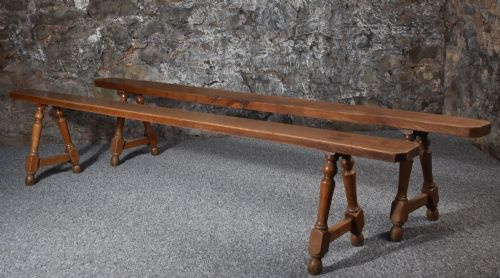
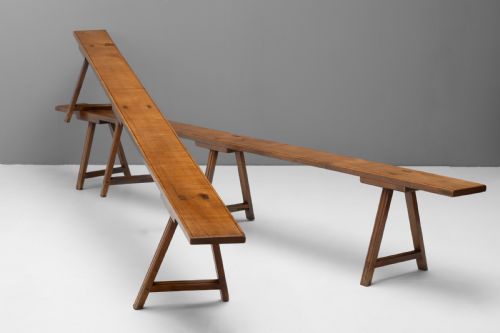
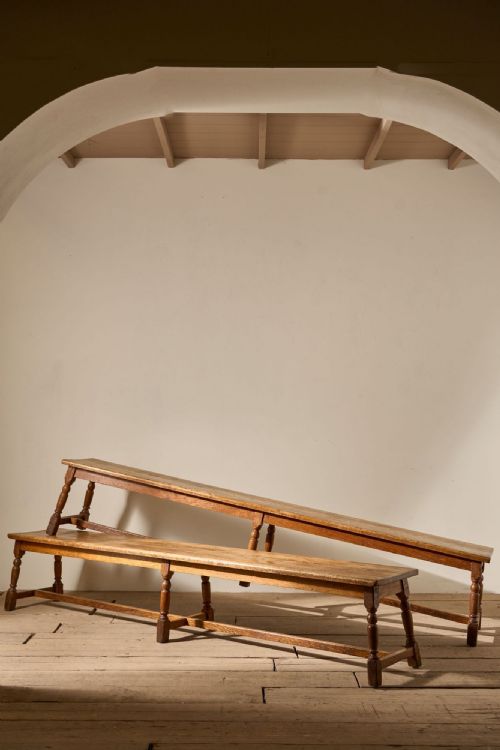


Long Dining Bench
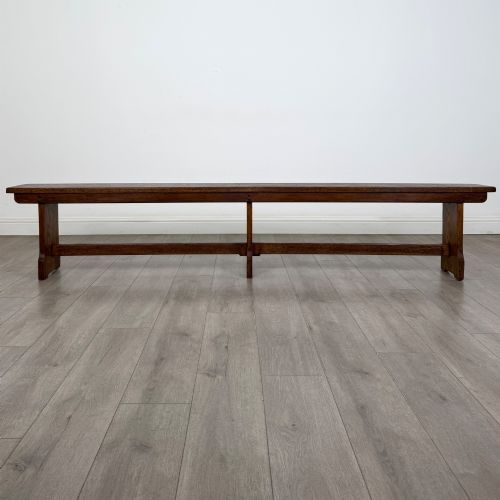
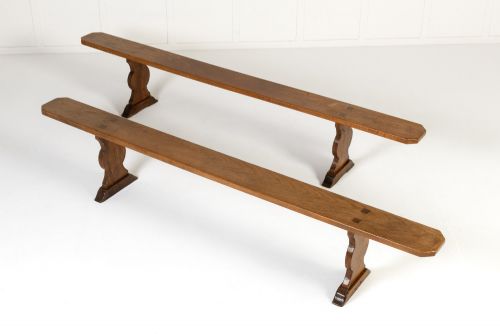
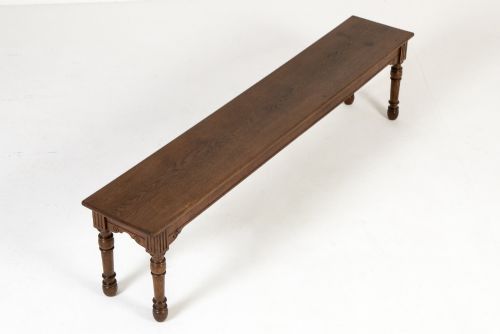
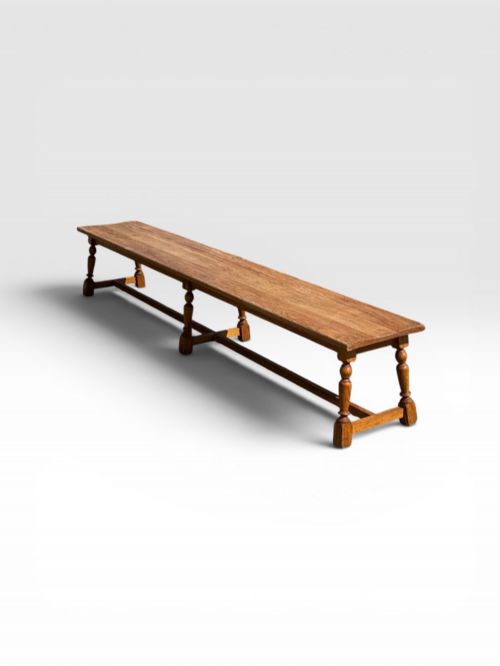
A long dining bench brings communal seating to the table, and these pieces span centuries of sturdy provincial craftsmanship in oak, pine, and fruitwood.
Long Dining Bench
A long dining bench provides practical, extended seating designed to run alongside large tables in domestic and institutional settings. When searching for a long dining bench, buyers encounter pieces originating from English, French, Welsh, and Scandinavian traditions.
The selection ranges from rustic farmhouse and country examples to formal Georgian and Victorian tavern seating. Many survive as pairs or individual lengths of considerable scale, often measuring eight feet or longer.
Plain timber forms dominate the selection, utilising vernacular designs intended for daily use in halls, refectories, and dining rooms. These functional seats reflect the regional furniture-making practices of the eighteenth, nineteenth, and early twentieth centuries.
Materials and construction methods
Solid hardwoods and softwoods form the backbone of these pieces, with oak, pine, elm, cherry wood, and fruitwood utilised according to regional availability. Timber selection dictates the structural capacity required for long spans of seating without central sagging.
Joinery methods rely on traditional pegged mortise and tenon joints to secure legs to thick top planks or rails. Some examples incorporate painted finishes or retain surface patination acquired through decades of functional use.
Regional styles span English country, French provincial, Scandinavian country, and Georgian vernacular traditions.
Markers of quality and execution
The choice of primary wood heavily influences the character and durability of a long dining bench, with dense oaks and mature fruitwoods offering superior structural integrity compared to softer pines. Grain patterns, timber thickness, and the retention of original surface patination distinguish finer examples.
Structural stability across extended lengths depends upon sound joinery and the original thickness of the seat board. Pieces that maintain their rigidity without excessive reinforcement represent the more accomplished works of regional makers.
The Long Dining Bench Glossary
- Refectory
- A long dining hall bench or table historically used in monasteries or large communal dining spaces. This term describes pieces built with substantial length to accommodate multiple diners.
- Tavern bench
- A sturdy seating form constructed for public houses and inns. These examples typically feature robust timber framing designed to withstand heavy daily use.
- Trestle
- A structural support system where a horizontal beam is supported by two vertical legs or frames. This method provides stable clearance beneath long seating surfaces.
- Patina
- The surface sheen and colour acquired by wood through age, wear, and polishing. It serves as an indicator of a piece's age and history of use.
Long Dining Bench: Frequently Asked Questions
How do I measure for a long dining bench?
Consider both the overall length of the table and the clearance needed around the room for pulling the seat out. Allow sufficient legroom beneath the table frame to accommodate the thickness of the bench top.
Matching the proportional length of the seating to the table ensures proper visual balance and functional utility within the dining space.
Are these benches sturdy enough for daily use?
Traditional construction methods utilising solid hardwoods like oak and elm provide exceptional structural strength. These forms were originally built to withstand generations of communal use in domestic and institutional settings.
Routine inspection of joints and underframing helps maintain stability for contemporary dining environments.
How do I care for antique timber seats?
Maintain the wood by applying appropriate natural waxes and avoiding placement near direct heat sources or strong sunlight. Consistent indoor humidity prevents excessive drying and splitting in old timbers.
Gentle cleaning with a soft, dry cloth preserves the historic surface patination without stripping the finish.
Can I mix different wood types together?
Mixing oak, pine, and fruitwood benches with varying dining tables is a traditional approach to country house interiors. Combining different regional styles creates a collected, layered aesthetic rather than a uniform suite.
Pay attention to overall height and proportion to ensure comfortable seating alignment.