




Living Room Centre Table
A living room centre table grounds the seating area, bringing period character and practical surface space into the heart of the home.
Living Room Centre Table
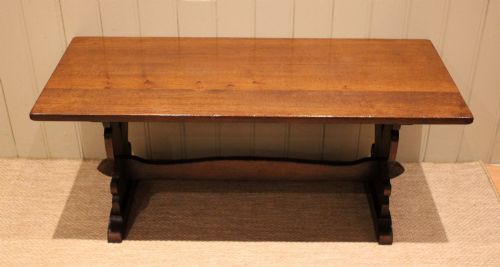
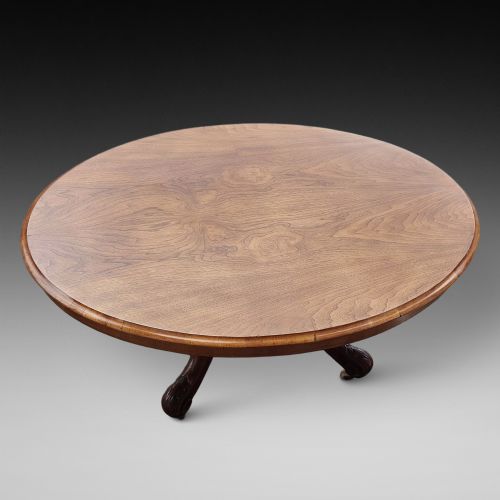
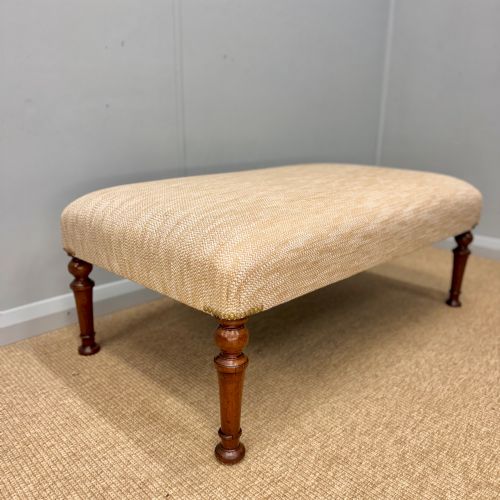
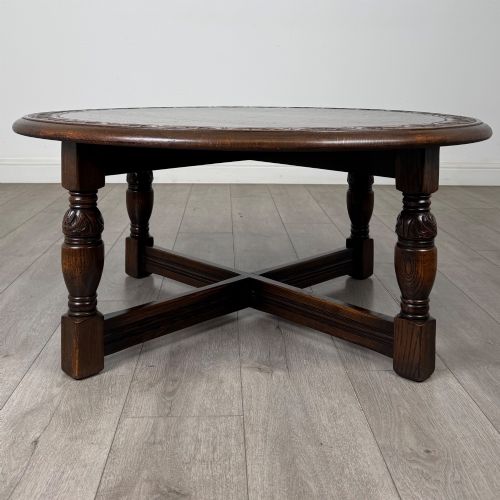
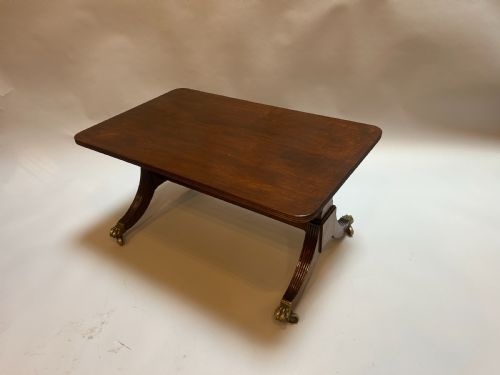
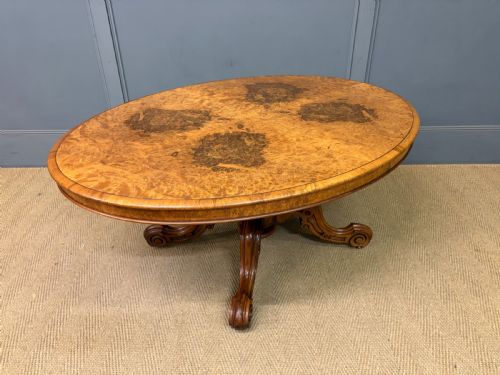
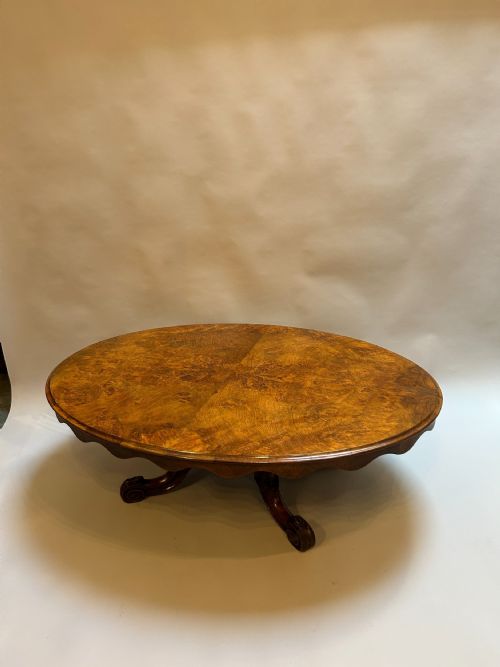
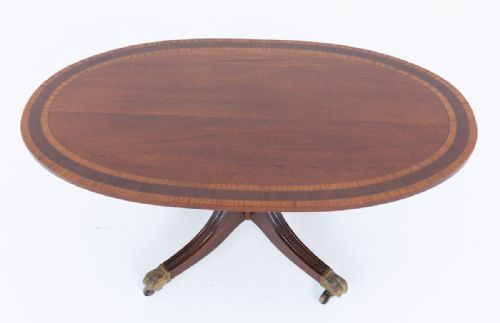
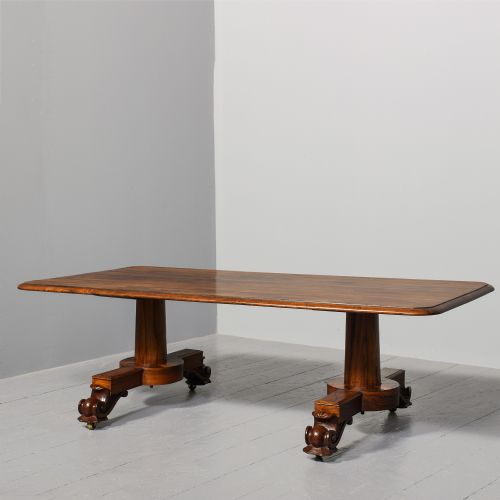
A living room centre table provides a substantial focal point for the main reception room, taking various forms from oval to rectangular shapes. Buyers seeking a living room centre table frequently encounter low coffee tables adapted from earlier forms alongside dedicated centre tables designed to sit freestanding in a room.
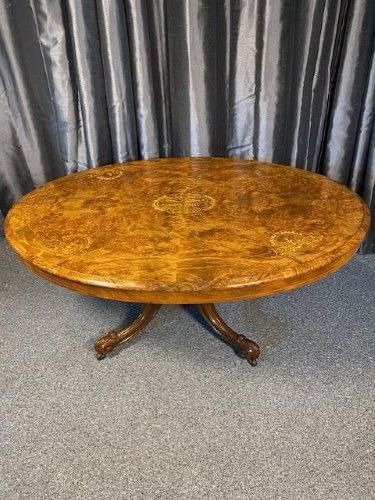
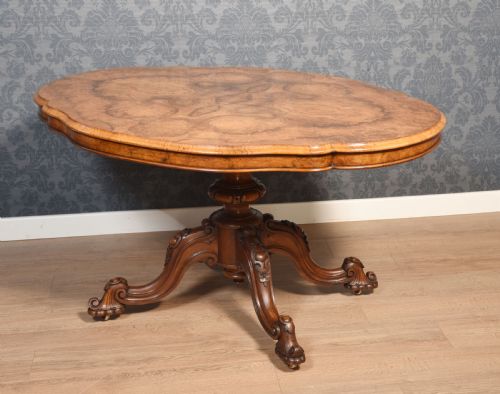
The pieces on this page span the nineteenth and twentieth centuries, taking in periods from George IV and Regency through Victorian to Art Deco. Woods such as burr walnut, mahogany, and rosewood dominate, often enhanced by decorative boxwood inlay or veneering.
Functional surface area meets decorative presence in these designs, which range from rustic farmhouse oak planks to refined Sheraton Revival ovals. The selection covers compact proportions as well as large-sized examples suited to expansive interiors.
How they were made
Cabinetmakers utilised dense hardwoods like mahogany, oak, and walnut as the structural foundation for these tables, employing solid timber alongside carefully selected veneers. Burr walnut veneers appear frequently, bringing rich grain patterns to the top surfaces.
Decorative detailing often involved contrasting stringing and boxwood inlay set into the primary timber. Metal components such as brass fittings occasionally supplement the wooden construction, particularly in pieces from the nineteenth century.
Living Room Centre Table Retail Price Guide 2026
Typical asking prices for living room centre table among the pieces listed under this phrase on Sellingantiques today, from the lower quarter to the upper quarter. They describe what is for sale here now, not the wider market.
The listings span from the nineteenth century through the Art Deco era, encompassing walnut, mahogany, oak, and rosewood.
What varies in quality
The refinement of the timber selection largely determines the standing of a piece, with figured burr walnut and rich rosewood sitting at the upper end of the scale. Subtle details like fine boxwood inlay and balanced proportions distinguish finer examples from simpler vernacular pieces.
Construction methods also separate the grades, as demonstrated by the precision of the veneering and the crispness of the revival styling. Tables exhibiting meticulous attention to grain alignment and decorative borders reflect a higher tier of workmanship.
The Living Room Centre Table Glossary
- Burr walnut
- A wood type featuring swirling, knotted grain patterns gathered from walnut tree growths. Cabinetmakers prized this material for creating highly decorative table tops.
- Boxwood inlay
- A technique where pale boxwood strips are set flush into a darker wood surface to create geometric or floral borders. It provides a sharp visual contrast on mahogany and walnut tables.
- Revival
- A stylistic movement where makers drew inspiration from earlier eras such as Queen Anne or Sheraton. These nineteenth and twentieth-century interpretations adapted historical aesthetics for contemporary homes.
- Veneer
- A thin slice of figured wood applied over a secondary timber base to create a decorative surface. This method allowed craftsmen to display expensive grains efficiently.
Living Room Centre Table: Frequently Asked Questions
Where should a centre table go?
A centre table traditionally occupies the middle of a principal room, allowing access from all sides. In modern spaces, similar proportions suit placement directly in front of a main sofa seating arrangement.
Positioning depends on room circulation and scale. Larger rectangular or oval examples require adequate clearance to function comfortably as coffee tables.
How do I identify a Victorian table?
Victorian tables often feature rich dark woods such as burr walnut and heavy proportions typical of the nineteenth century. Common decorative elements include oval shapes and substantial turned supports.
Examining the underlying construction timber alongside the style helps confirm the nineteenth-century origin.
What is burr walnut?
Burr walnut is a specialised wood veneer taken from the growth growths of a walnut tree. It displays complex, swirling grain patterns that catch the light.
Craftsmen utilised this figured wood on prominent surfaces like table tops to create visual impact.
Are these tables solid wood?
Construction varies between solid timber planks and decorative veneers applied over secondary wood foundations. Oak examples often utilise solid boards, while walnut pieces frequently employ sophisticated veneering.
Both methods reflect period cabinetmaking practices suited to the specific style and materials used.