

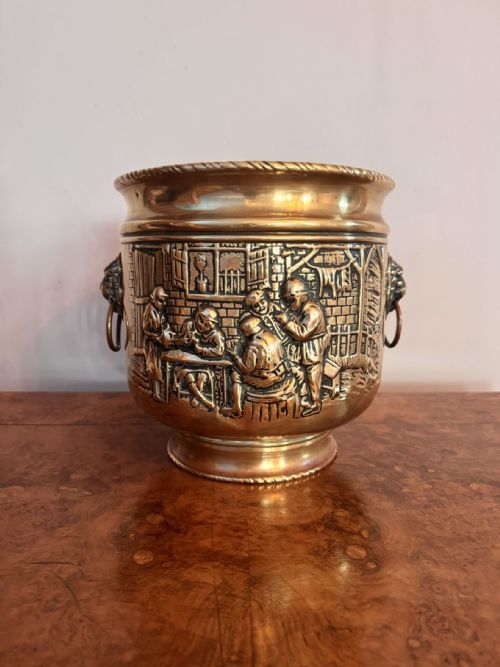
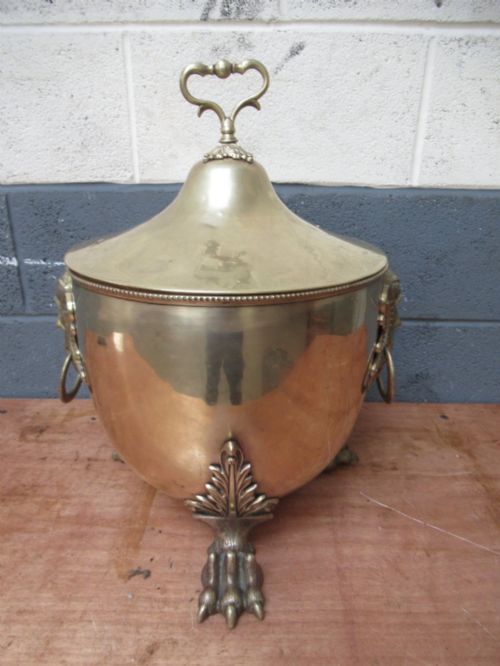



Lion Head Log Bin
A lion head log bin brings heavyweight metal and period character right to the hearth, offering a practical store for winter fuel.
Lion Head Log Bin
A lion head log bin serves as a substantial fireside store for fuel, combining practical utility with decorative metalwork. When buyers search for a lion head log bin, they encounter robust domestic vessels designed to hold logs, coal, or peat.
The selections on this page span several distinct eras, appearing in Victorian, Edwardian, Regency, and Art Nouveau styles. Common material combinations pair heavy brass or copper bodies with cast ring handles held in animal mask mounts.
How they were made
Makers shaped sheet brass and copper into cylindrical or cauldron forms, often utilising hand-beaten techniques and riveted seams. Heavy cast metal formed the lion mask attachments and drop rings secured to the sides.
Wooden elements appear alongside the metalwork, utilising pine for internal structures or ebony for decorative accents. Surface finishes range from polished golden brass to deep reddish copper patination.
Lion Head Log Bin Retail Price Guide 2026
Typical asking prices for lion head log bin among the pieces listed under this phrase on Sellingantiques today, from the lower quarter to the upper quarter. They describe what is for sale here now, not the wider market.
Every fierce brass lion mask on these bins spent decades quietly tolerating coal dust while pretending to guard the kindling.
What varies in quality
The weight and gauge of the metal define the structural integrity of each container, distinguishing substantial vessels from lighter decorative pieces. Thicker sheet metal resists dents and holds its shape through decades of heavy domestic use.
Petrus Ramus
The Lion Head Log Bin Glossary
- Dinanderie
- Brass or copper decorative objects produced by traditional metalworkers. The term originates from the Belgian town of Dinant, famous for medieval and later brassware.
- Jardiniere
- An ornamental pot or container used for holding plants or flowers. These vessels often double as fireside fuel stores in country house interiors.
- Aesthetic Movement
- A late nineteenth-century design style emphasising visual beauty over narrative subject matter. Objects from this period focus on pure form and refined surface pattern.
- Regency
- The British design period spanning the early nineteenth century. Pieces from this era often draw inspiration from classical Greek and Roman motifs.
Lion Head Log Bin: Frequently Asked Questions
How do I date a brass log bin?
Dating relies on examining the construction methods, materials, and stylistic details present in the metalwork. Hand-beaten surfaces and specific handle designs often point to Victorian or Edwardian production methods.
Consulting the listed period styles helps place each piece within its historical context, ranging from Regency to Art Nouveau.
Can I use these for actual logs?
These bins were originally manufactured to hold solid fuel like coal, logs, or peat beside a domestic hearth. Their sturdy metal construction makes them well suited for holding firewood in modern settings.
Care should be taken to protect delicate interior surfaces if loading heavy timbers directly into unlined antique copper or brass vessels.
Where were these metal bins made?
The pieces originate from various European workshops, with English, French, and general continental metalworking traditions represented. Makers utilised traditional forming techniques to shape sheet brass and copper.
Specific workshops and regional styles contributed to the diverse aesthetic range found in nineteenth and early twentieth-century fireside accessories.