





Life Pool Scoring Board
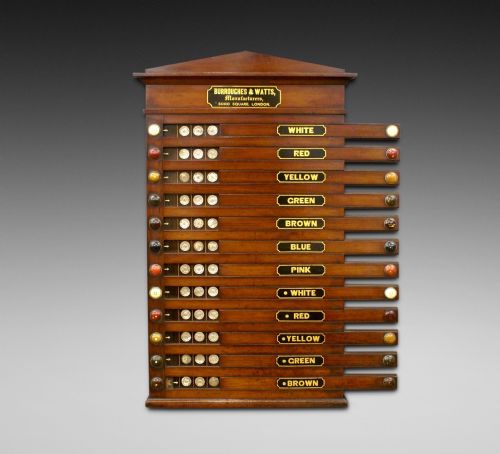
A life pool scoring board organises the wagers and points of the parlour, bringing nineteenth-century timber and brass markers to the games room wall.
Life Pool Scoring Board
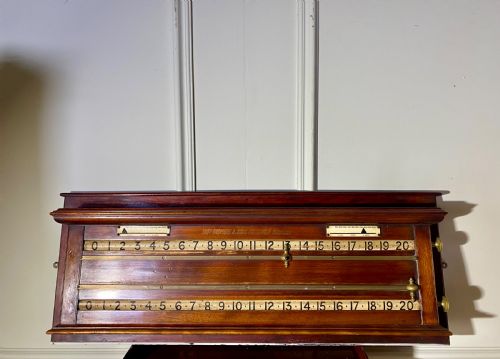
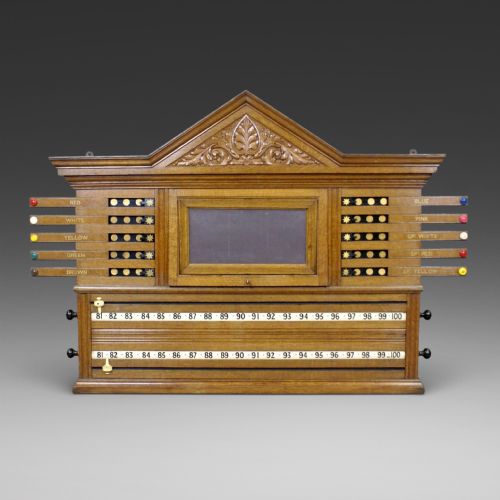
A life pool scoring board is a specialised mahogany, oak or walnut wall-mounted register used to track the complex wagers and scores of nineteenth-century cue sports. These boards date primarily from the Victorian and Edwardian periods, stretching from the mid-nineteenth century into the early twentieth.
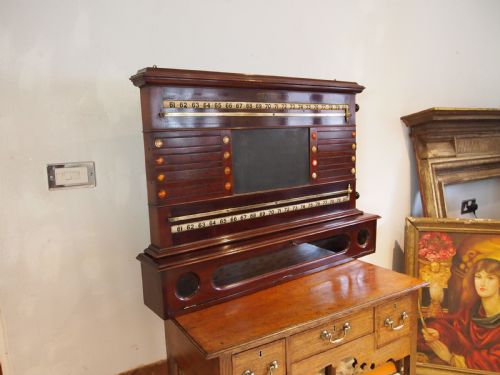
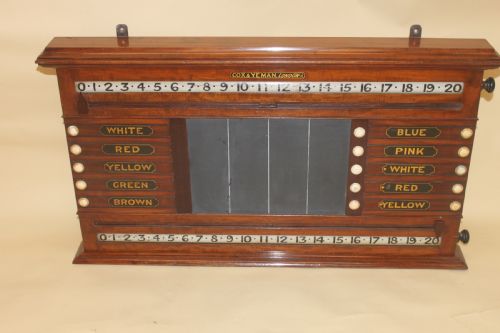
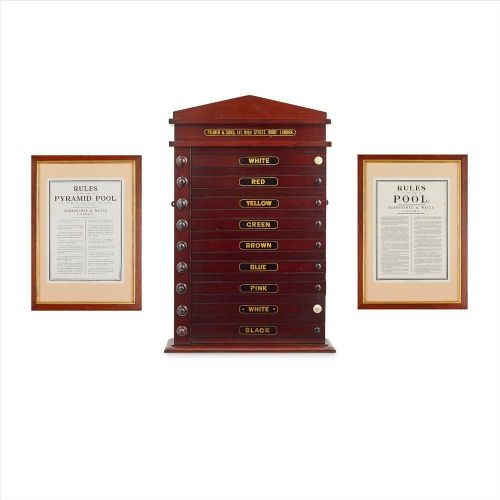
Most pieces seen here take the form of substantial wooden cabinets or flat panels fitted with sliding indicators, dials and dials numbered for complex chalking systems. The selection ranges from plain nineteenth-century timbers to large score cabinets bearing the names of prominent billiard makers.
Makers such as Orme & Sons, Thurston & Co., Cox & Yeman, and Burroughes and Watts dominate the better examples, often stamped or fitted with maker plates. These larger wall pieces frequently combine life pool and snooker scoring tracks alongside storage cupboards for related accessories.
Materials and construction
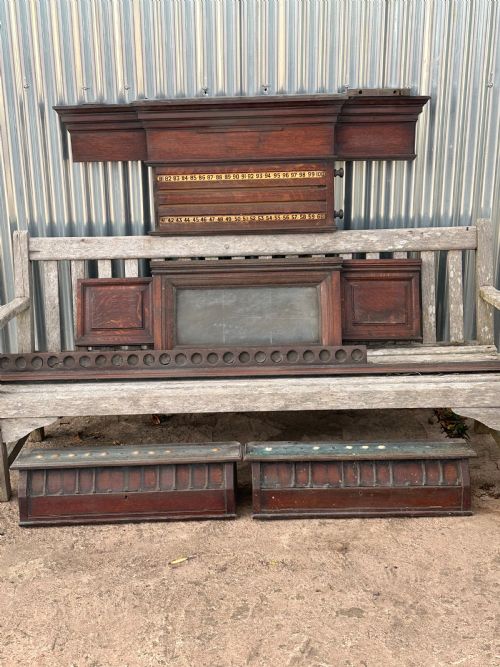
Workshops built these scoreboards using dense hardwoods including mahogany, English oak and English walnut, selected for stability and durability in domestic or club billiard rooms. These timbers were joined with traditional cabinetry techniques to house internal slate panels, brass sliding pointers and glass viewing apertures.
Makers integrated brass runner tracks, bone or celluloid scoring dials and turned wooden knobs to operate the sliding markers. Details such as raised carved panels, brass maker plaques and inset glazed doors complete the construction of the larger game room cabinets.
Life Pool Scoring Board Retail Price Guide 2026
Typical asking prices for life pool scoring board among the pieces listed under this phrase on Sellingantiques today, from the lower quarter to the upper quarter. They describe what is for sale here now, not the wider market.
Listings span the nineteenth century, Victorian era, and Edwardian period, running from 1860 up to 1900 in oak, mahogany, and walnut.
Distinctions in quality
Quality in a life pool scoring board rests on the integrity of its timber selection, the crispness of its maker attribution and the completeness of its original brass and bone fittings. Finer examples display figured walnut or heavy oak, branded maker signatures, and fully intact sliding indicators that run smoothly along their brass tracks.
Simpler boards offer utilitarian service with minimal carved detail and standard painted or stamped numerals rather than inset bone or celluloid markers. The presence of integrated cabinet storage and documented maker provenance separates standard nineteenth-century wall markers from exceptional club-grade pieces.
Orme & Sons Manchester·Thurston & Co. of London·Cox & Yeman London·Burroughes and Watts·Palmer & Sons
The Life Pool Scoring Board Glossary
- Life pool
- A nineteenth-century cue sport where each player starts with a specific number of lives represented by points on the board, losing a life when an opponent pots their ball.
- Celluloid
- An early semi-synthetic thermoplastic material utilised for scoring numbers, markers and dials on Victorian and Edwardian game accessories.
- Score cabinet
- A wall-mounted wooden housing that combines sliding point markers with enclosed shelving or cupboards for storing billiard chalk, rules and accessories.
- Bone indicators
- Natural animal bone turned or cut into dials, pointers or markers, prized for its tactile quality and durability on nineteenth-century boards.
Life Pool Scoring Board: Frequently Asked Questions
What is a life pool scoring board?
A life pool scoring board is a wall-mounted wooden panel or cabinet designed to track the complex rules, wagers and losing lives of nineteenth-century pool games. They feature sliding markers, dials and brass tracks tailored to specific cue sports.
These boards were fixtures in billiard rooms, gentlemen's clubs and large domestic homes during the Victorian and Edwardian eras. They allow players to keep a clear tally of multiple competitors simultaneously.
How do you date a scoring board?
Dating a board relies on examining the timber species, the style of the cabinetry, and the materials used for the numerals and indicators. Victorian pieces often employ heavy mahogany with brass tracks, while Edwardian examples frequently use English oak or walnut.
Maker stamps, brass plates and registration marks provide the most reliable chronological anchors. Comparing the complexity of the scoring layout also helps distinguish mid-nineteenth-century boards from later Edwardian cabinets.
Who made these scoreboards?
Major nineteenth-century billiard table and accessory manufacturers such as Thurston & Co., Orme & Sons, Cox & Yeman, and Burroughes and Watts produced the finest boards. These firms often branded their work with maker plates or stamped signatures directly into the wood.
Other pieces were manufactured by regional cabinetmakers or specialist games room outfitters without retaining an explicit maker mark. The quality of the joinery and hardware often points towards these established London and regional workshops.
How were these boards used?
Players used the sliding brass pointers and rotating dials to track scores, remaining lives and penalties during fast-moving billiard and pool matches. The integrated cabinets often held chalk, rule books and other game accessories close to the table.
Mounted at eye level on the billiard room wall, the board acted as both a functional refereeing tool and a decorative wall feature. The complex scoring tracks accommodated the specific wagering rules popular in Victorian parlour games.