


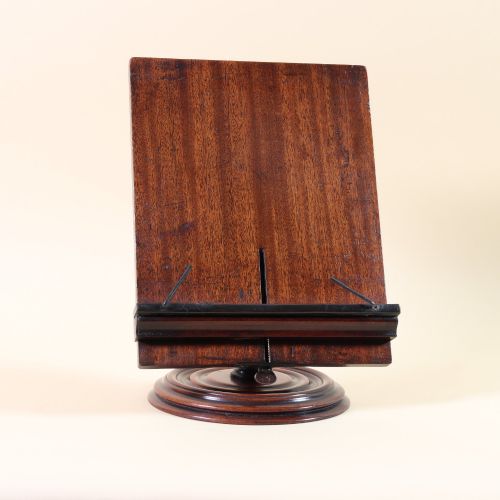

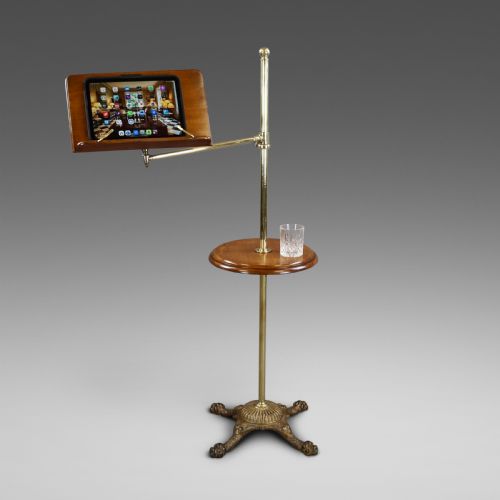


Library Book Holder
A library book holder keeps your current reading organised and upright, bringing period craft and timber into the study.
Library Book Holder
When you search for library book holder, you encounter desk rests, extending slides, troughs, and revolving stands designed to keep volumes steady and accessible. These pieces originate from the Regency, Victorian, and Edwardian eras, reflecting the domestic reading habits of the nineteenth and early twentieth centuries.
How they were made
Cabinet makers utilised dense domestic timbers such as mahogany, oak, and walnut, often selecting figured veneers like burr walnut for desk-top pieces. These woods provided the necessary weight and rigidity to support heavy leather-bound volumes without tipping.
Metal components played a structural and decorative role, with cast iron mechanisms allowing book slides to extend smoothly and brass mounts reinforcing corners and hinges. Painted wood and gilt finishes appear on specific revival pieces, adding visual contrast to the dark natural timbers.
Library Book Holder Retail Price Guide 2026
Typical asking prices for library book holder among the pieces listed under this phrase on Sellingantiques today, from the lower quarter to the upper quarter. They describe what is for sale here now, not the wider market.
Listings feature oak, mahogany, walnut, and rosewood forms spanning the Regency, Victorian, Edwardian, and 1930s periods.
What varies in quality
Quality rests upon the cleverness of the mechanism and the crispness of the joinery, whether in the smooth rotation of a revolving stand or the fluid action of an extending slide. Superior pieces integrate brass mounts and painted plaques securely into the timber frame.
The selection of timber grain defines the visual merit at the upper end, where finely figured burr walnut or rich mahogany elevates a utilitarian object into a desk ornament. Simpler constructions rely on plain oak or deal, serving a purely practical function in the home library.
The Library Book Holder Glossary
- Revolving bookcase
- A freestanding or desk-top unit mounted on a rotating pivot, allowing multiple volumes to be accessed from a single seated position. These stand upon low cruciform bases or castors.
- Book trough
- A V-shaped open receptacle for holding books with their spines facing upwards for easy title reading. They sit directly upon library tables or desks.
- Reading stand
- An adjustable lectern or desk-top rest that holds a single book at an inclined angle for reading. Some examples incorporate folding ledges and brass ratchets to alter the slope.
Library Book Holder: Frequently Asked Questions
What is a library book holder?
A library book holder is a desk accessory or small furniture piece designed to support, organise, or display books in a study or home library.
These items range from extending desk slides and troughs to revolving stands and reading tables dating from the nineteenth and early twentieth centuries.
How were revolving bookcases used?
Revolving bookcases sat beside a desk or armchair to keep a small working collection of reference books within arm's reach. The rotating mechanism allowed readers to access multiple volumes without standing up.
They became particularly popular in the Victorian and Edwardian periods as home libraries expanded and study spaces became more compact.
What woods were used for book holders?
Cabinet makers predominantly used dense hardwoods such as mahogany, oak, and walnut to build sturdy supports for heavy volumes. Figured veneers like burr walnut and rosewood appeared on finer decorative pieces.
Metal elements such as brass mounts and cast iron were integrated to strengthen moving joints and add decorative contrast.
How do I date a book stand?
Dating relies on the prevailing style, timber choice, and construction methods visible in the piece. Regency and Victorian examples often feature rich mahogany or rosewood, while Edwardian pieces frequently utilise oak or walnut.
Hardware such as extending brass brackets and the complexity of revolving mechanisms also point toward specific manufacturing decades.