

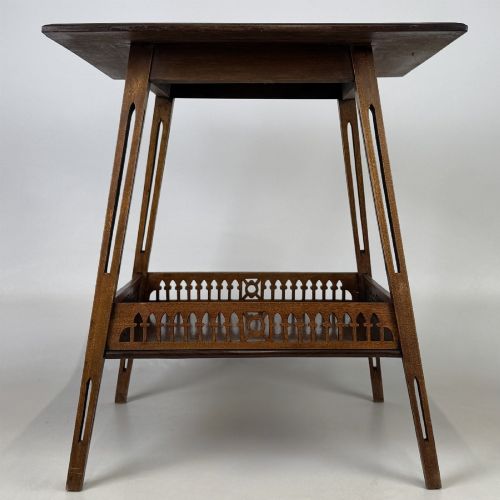
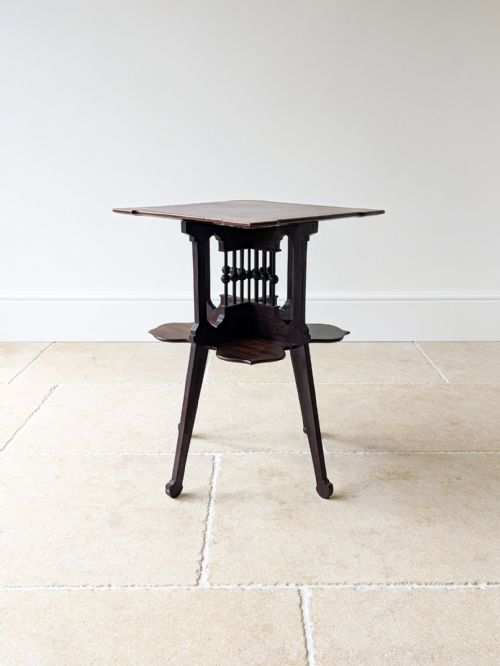
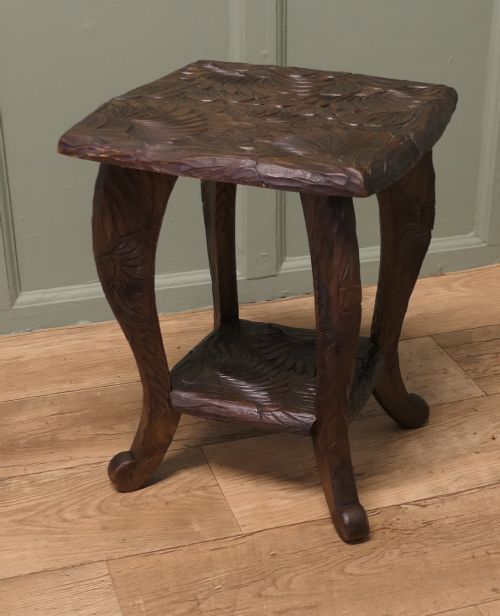
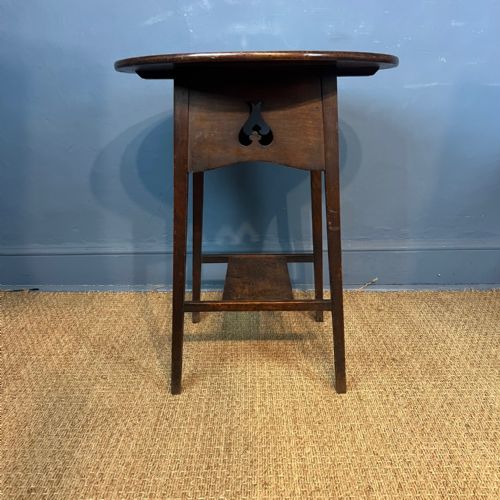


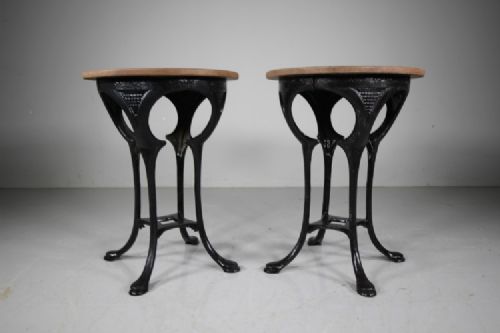

Liberty Style Plant Table
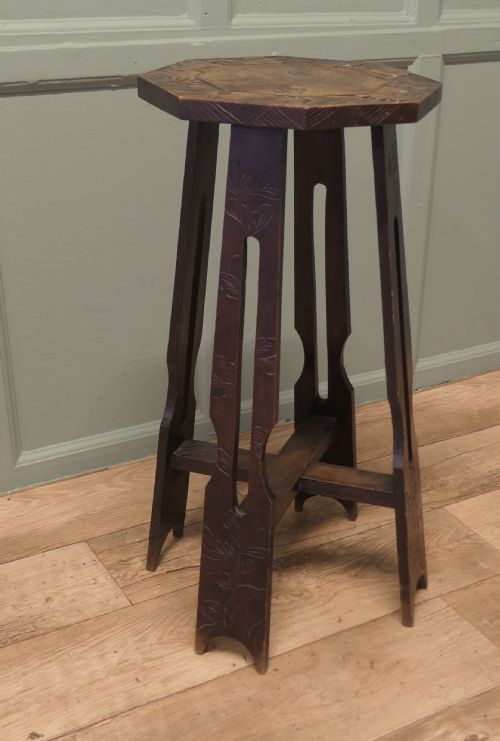
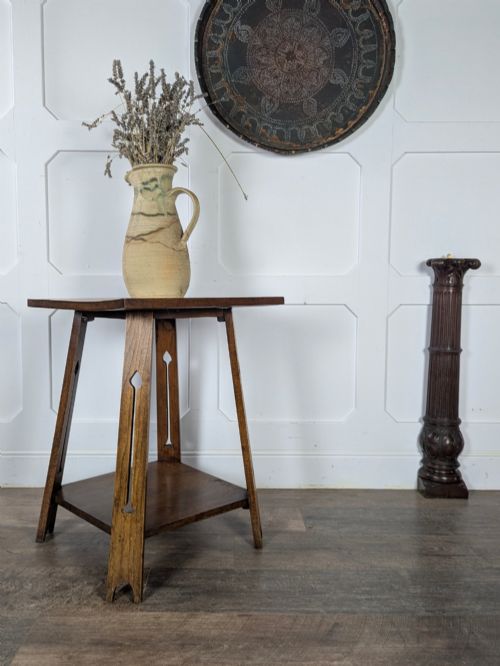
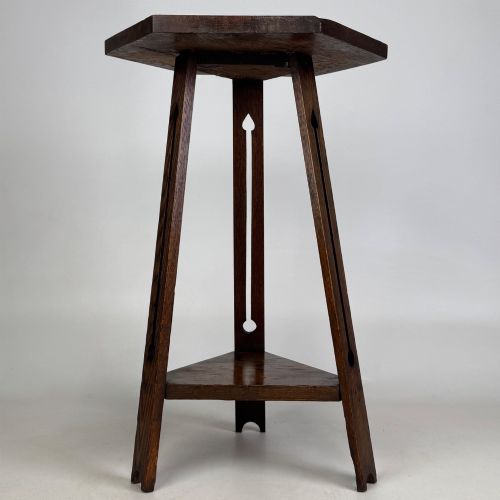
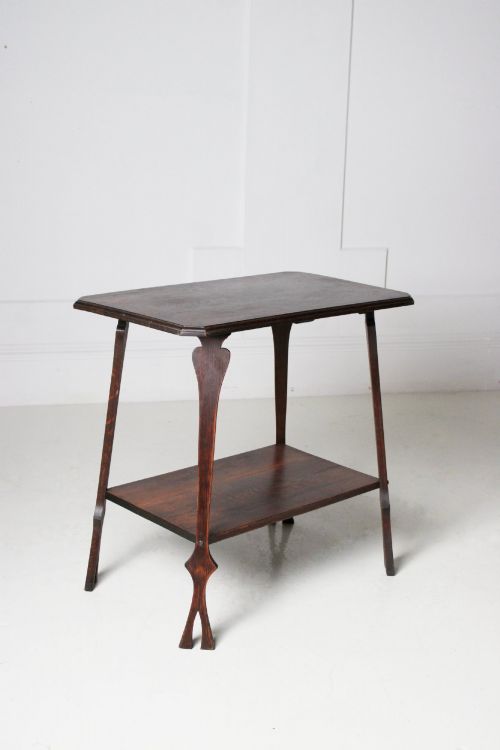
These liberty style plant table pieces bring functional Arts and Crafts design and exotic revival forms into a room with distinct historical character.
Liberty Style Plant Table
A liberty style plant table combines functional support with the characteristic aesthetic of the late nineteenth and early twentieth centuries, spanning Victorian, Edwardian, and early twentieth century periods. These pieces serve primarily as plant stands, jardiniere stands, and occasional tables designed to hold decorative flora or lamps.
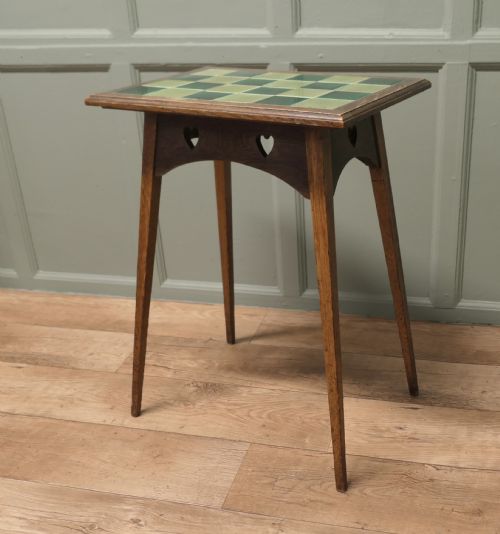
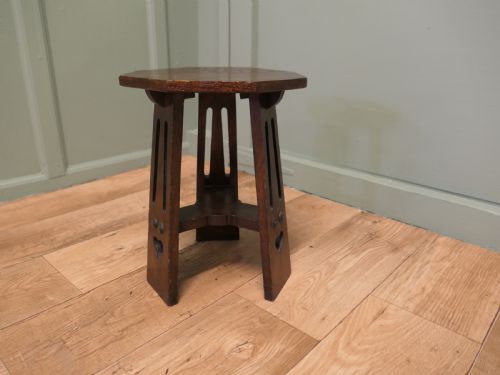
The form frequently appears as octagonal, hexagonal, or circular tables, often utilising tiered structures or integrated tile tops. Oak forms the mainstay of these offerings, supplemented by elm and accented with varied carved motifs and occasional bone inlay.
Makers and designers working within the Arts and Crafts, Moorish Revival, and Anglo-Indian traditions produced these sturdy domestic furnishings. Buyers encounter variations ranging from simple carved octagonal stands to complex tiled surfaces and Moorish geometric woodwork.
How They Were Made
Makers utilised solid oak and elm to build the structural framework of these tables, employing traditional joinery alongside hand-carved ornamentation. Timber selection prioritised strong grain patterns that suited the honest construction methods of the Arts and Crafts movement.
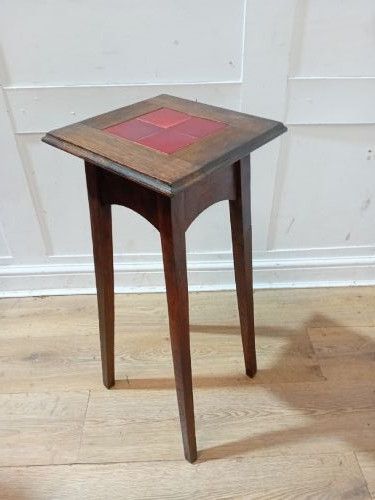
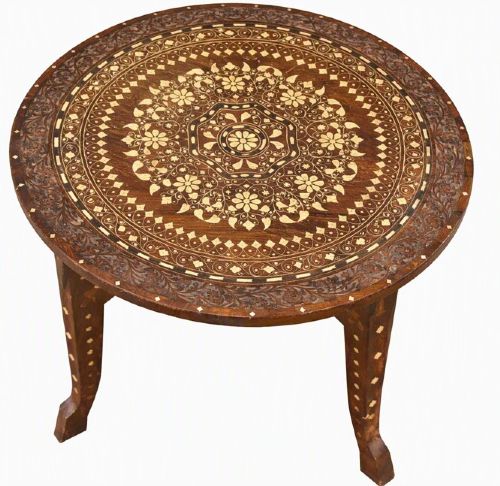
Surface decoration frequently incorporated ceramic tiles set directly into the wood top, alongside intricate fretwork and relief carving. Anglo-Indian and Moorish influences introduced detailed bone inlay and geometric woodwork into the construction repertoire.
Cast iron components also appear in specific designs, providing alternative structural framing for side tables and stands. Artisans finished the wood surfaces to highlight natural tones, maintaining the emphasis on material honesty.
Liberty Style Plant Table Retail Price Guide 2026
Typical asking prices for liberty style plant table among the pieces listed under this phrase on Sellingantiques today, from the lower quarter to the upper quarter. They describe what is for sale here now, not the wider market.
Some tables double as botanical stages, proving that Victorian ferns deserved their own bespoke architecture.
What Varies in Quality
The refinement of the hand-carving and the crispness of geometric fretwork distinguish finer examples from standard production pieces. Superior items display deep, deliberate chisel work rather than shallow mechanical stamping.
Material selection and the integration of specialist elements such as intact ceramic tiles or precise bone inlay elevate a piece's execution. The cohesion of distinct stylistic influences, whether Arts and Crafts simplicity or complex Moorish revival geometry, determines the success of the design.
Liberty & Co·Liberty London·Baillie Scott·Archibald Knox
The Liberty Style Plant Table Glossary
- Arts and Crafts
- A design movement originating in the late nineteenth century that championed traditional craftsmanship, simple forms, and natural materials over mass production. This style forms the foundation for the majority of these tables.
- Moorish Revival
- An architectural and decorative style incorporating Islamic architectural elements, geometric patterns, and intricate woodwork. Pieces featuring this style often display complex octagonal geometries and arched details.
- Jardiniere Stand
- A tall table specifically constructed to hold a heavy plant pot or floral container. These stands prioritise a stable, elevated platform for display purposes.
- Bone Inlay
- A decorative technique where small pieces of bone are set flush into recesses carved in the wood surface to create contrasting geometric patterns. This method appears on Anglo-Indian inspired occasional tables.
- Octagonal Top
- A table surface possessing eight distinct sides, a geometric shape frequently utilised in Moorish and Arts and Crafts occasional furniture to create dynamic angles.
Liberty Style Plant Table: Frequently Asked Questions
Where should I place a plant table?
These tables find a natural home beside seating or in corners designated for greenery and floral displays. Their compact footprints allow them to occupy hallway spaces or act as display pedestals.
Positioning them near a light source supports the plants they were originally built to hold. Avoid damp locations that might compromise the timber construction and surface inlays.
How do I care for the wood surface?
Maintain the timber by dusting regularly with a dry cloth and avoiding harsh chemical polishes. Natural wax applications help nourish older oak and elm surfaces over time.
Protect the top from moisture by using saucers under plant pots to prevent water rings. Keeping the table away from direct heat sources prevents the wood from drying and splitting.
What is a tiled top table used for?
The ceramic tile inset provides a practical, waterproof surface specifically designed to withstand water splashes from watering plants or moisture from plant pots. It combines decorative colour with everyday utility.
These tables transitioned easily into occasional use for holding drinks or decorative objects. The tiles introduce distinct artistic patterns characteristic of the period.