


Liberty Style Jewellery
Liberty style jewellery brings together the distinctive decorative forms of the early twentieth century, combining worked silver, coloured enamel and pearls.
Liberty Style Jewellery
When you search for liberty style jewellery, you encounter pieces that reflect the aesthetic movements of the late nineteenth and early twentieth centuries. These works include pendants, necklaces and bracelets produced during the Edwardian period and around 1900.
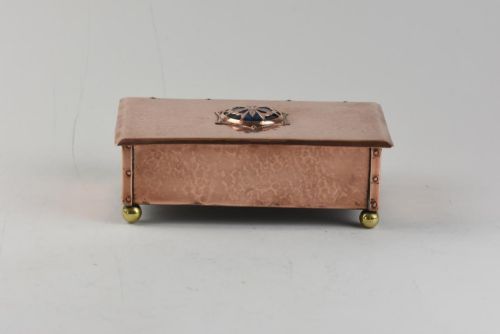
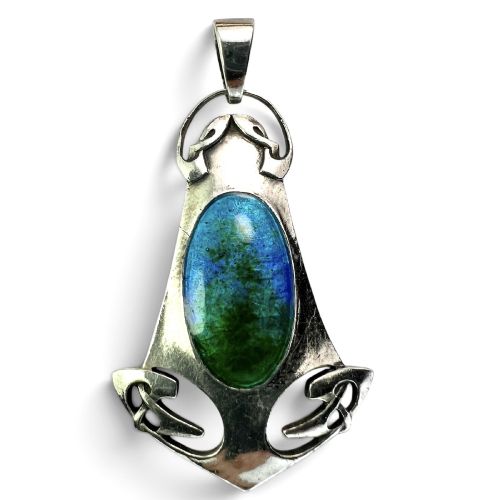
The objects frequently combine silver, copper or pewter with enamel cabochons, pearls and opals. Many of these items align with the Arts and Crafts style, presenting hand-worked metals and natural stones.
You are likely to find necklaces and pendants featuring vitreous enamel alongside precious or semi-precious stones such as tourmaline, chrysoprase and citrine. Alongside wearable ornaments, the selection includes decorative boxes and display cabinets from the same period.
How they were made
The construction relies heavily on silver and copper, shaped into pendants, boxes and bracelets with visible craftsmanship. Artisans utilised sterling silver and base metals, mounting them with enamel panels and stone overlays.
Enamel work forms a central technique, often appearing as vibrant vitreous enamel cabochons set within metal frames. Stones such as pearls, opals and citrine are incorporated directly into the metalwork, sometimes augmented by delicate drops.
Object forms include necklaces, pendants, bracelets, trinket boxes, and display cabinets.
What varies in quality
Quality in these pieces rests upon the precision of the metalwork and the depth of the enamel. Finer examples display deliberate craftsmanship in the mounting of stones and the handling of the silver or copper elements.
The distinction between standard production and superior work often lies in the collaboration between notable designers and workshops. Pieces bearing specific attributed maker marks or model numbers show greater refinement in design.
Murrle Bennett·Archibald Knox·Liberty and Co·WH Haseler
The Liberty Style Jewellery Glossary
- Cabochon
- A gemstone shaped and polished rather than faceted. This smooth, rounded style highlights the natural colour of materials like opal and chrysoprase.
- Vitreous enamel
- Glass fused to a metal surface through high-temperature firing. This technique produces durable, glossy coloured panels used widely in period pendants.
- Festoon necklace
- A necklace featuring a curved drape of chains, links or drops across the chest. These pieces often incorporate pearls and coloured stones.
- Bijouterie cabinet
- A small display case designed for holding jewellery and small decorative items. Edwardian examples often feature inlaid woodwork matching Arts and Crafts interiors.
Liberty Style Jewellery: Frequently Asked Questions
What periods do these pieces come from?
The items originate mainly from around 1900, 1910, and the Edwardian era. These dates align with the height of the Arts and Crafts movement.
Production methods from this time emphasise hand-finished metals and distinctive enamel work rather than mass-produced uniformity.
How do I wear an antique pendant?
Antique pendants typically hang from fine silver chains, often featuring pearl or stone drops below the main setting. You can wear them on shorter necklines to showcase the enamel and metalwork.
Care should be taken with delicate stone settings and vitreous enamel panels during daily wear.
What materials are most common?
Silver, copper, and enamel appear frequently across necklaces, bracelets, and boxes. Stones such as pearls, opals, citrines, and chrysoprase provide colour and contrast.
Precious metals are often paired with semi-precious gems to achieve the characteristic look of the period.
How do I identify a maker's mark?
Maker marks and model numbers are typically stamped onto the reverse of pendants or the bases of boxes. Specific numbers correspond to workshop records from firms like Liberty.
Examining these stamps helps connect individual pieces to known designers and makers of the era.