



Leather Toy Horse
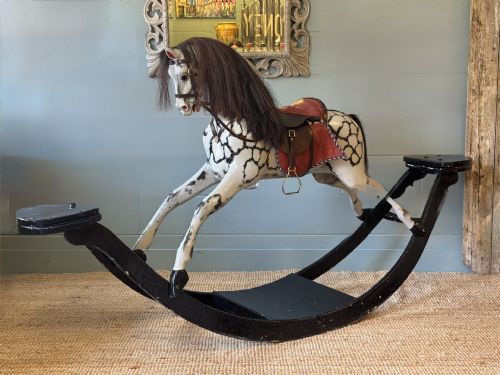
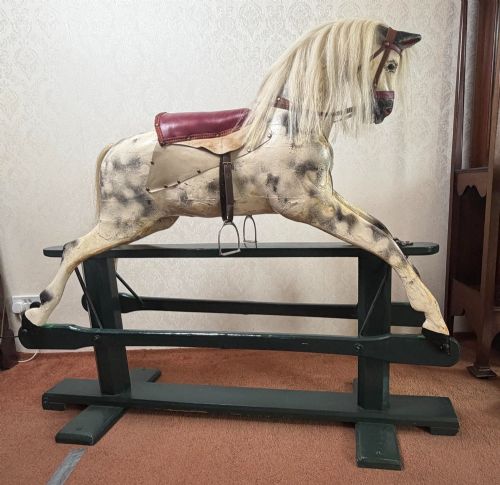
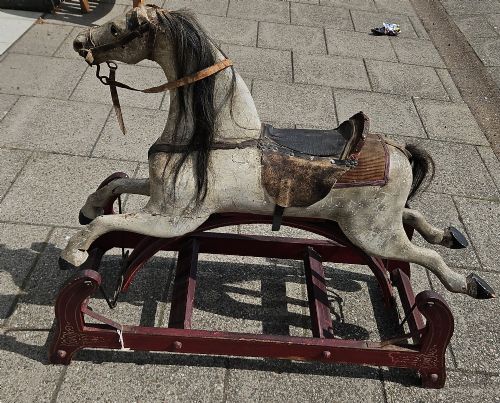
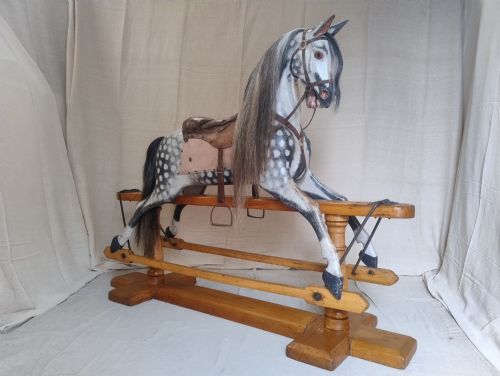
These leather toy horse pieces are tactile survivors of nursery floors, bringing handcrafted charm and physical presence into a modern room.
Leather Toy Horse
The evidence shows examples spanning the late nineteenth century through to the mid twentieth century, including pieces from the Edwardian period and the decades that followed. Formats range from large carved wooden rocking horses on curved rockers to smaller pull along toys intended for younger children.
Makers and origins recorded in the inventory point to both British workshops and American examples. The physical presence of these toys reflects the shift in children's playthings from the Victorian era into the twentieth century.
How they were made
Construction relies primarily on carved wood, pine, and structural metal or iron, providing a solid internal foundation for the toy. Skilled makers shaped these materials into the dynamic forms of horses, often mounting them on original wooden rockers.
Surface finishes and details incorporate leather, horsehair, and glass, adding realistic texture to the head and mane. Paint finishes such as dappling were applied over the carved bodies to complete the illusion of a real horse.
Leather Toy Horse Retail Price Guide 2026
Typical asking prices for leather toy horse among the pieces listed under this phrase on Sellingantiques today, from the lower quarter to the upper quarter. They describe what is for sale here now, not the wider market.
The listings span from the Victorian period through to the 1940s, incorporating pine, leather, metal, and horsehair.
What varies in quality
The distinction between ordinary and exceptional examples lies in the depth of the carving and the scale of the piece. Larger horses with detailed anatomical shaping and original stands demonstrate greater ambition in the workshop.
Preservation of original materials such as the leather covering, horsehair manes, and glass eyes dictates the character of each piece. Surviving on their original rockers rather than later replacements elevates the historical integrity of the toy.
G & J Lines of London·F.H.Ayres
The Leather Toy Horse Glossary
- Rocking Horse
- A toy horse mounted on curved wooden rockers or a safety stand designed for a child to ride. These objects form the majority of the larger pieces found in this category.
- Pull Along Horse
- A smaller toy horse mounted on a wooden platform with wheels, allowing a child to pull it along the floor. These date back to the late nineteenth century.
- Dappled
- A painted surface finish imitating the spotted coat pattern of a grey horse. This technique was widely used on Victorian and Edwardian rocking horses.
- Horsehair
- Natural hair utilised for the mane and tail of the toy horse. Its survival adds authenticity to older pieces.
- Carved Pine
- The primary timber used for the body of the horse before finishing and painting. It provides a lightweight yet durable core for the structure.
Leather Toy Horse: Frequently Asked Questions
How were rocking horses used?
These toys served as playthings for children in Victorian and Edwardian nurseries, providing both physical exercise and imaginative play. Children would sit astride the horse and rock back and forth on the wooden base.
Over time, these pieces transitioned from active nursery toys into decorative objects for the home. Today they are frequently placed in living spaces or children's rooms as statements of antique craftsmanship.
What materials make up these horses?
The core structure is typically built from carved wood, pine, and internal metal or iron supports. Surfaces are finished with leather, horsehair for the manes, and glass for the eyes.
Paint and dappled finishes complete the exterior appearance of the animal. Each material contributes to the tactile and visual character of the antique toy.
How do I date a toy horse?
Dating relies on observing construction techniques, materials, and stylistic markers recorded across different periods. Pieces from the late nineteenth century often feature heavy wooden rockers and distinct carving styles.
Later examples from the twentieth century introduce variations in size and manufacturing methods. Comparing the form against documented maker styles helps narrow down the era of production.
How do I live with one?
These horses require stable floor space and careful placement away from direct heat sources to protect the wood and leather. Their substantial size makes them natural focal points in a room.
Maintenance involves gentle dusting of the leather and horsehair surfaces. They integrate well into both traditional interiors and modern spaces as sculptural objects.