

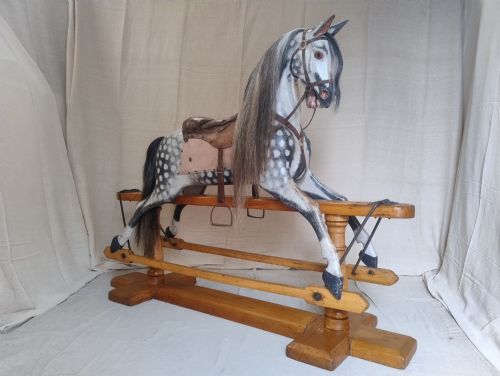


Leather Saddle Horse
These leather saddle horse pieces bring tangible equestrian character into a room, combining traditional craftsmanship with historical charm.
Leather Saddle Horse
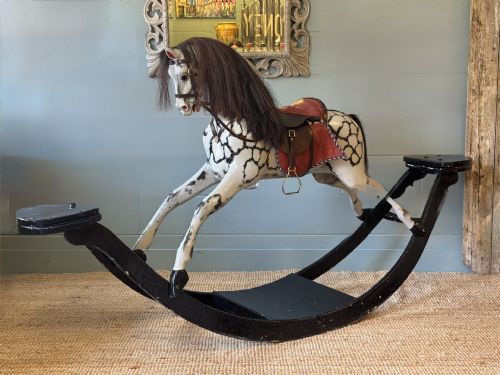
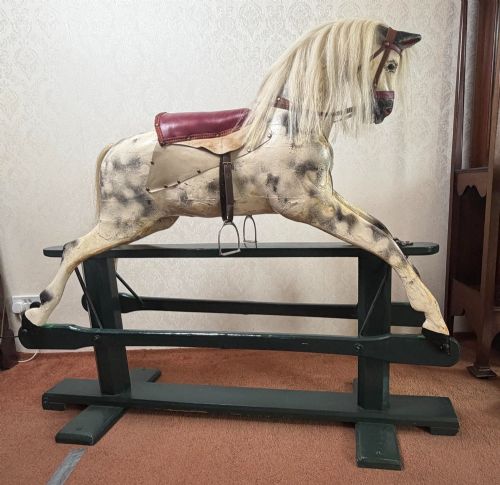
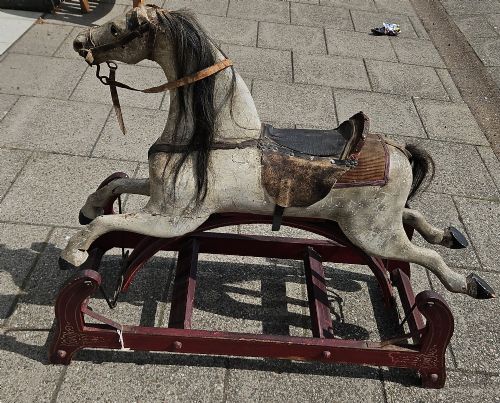
When searching for a leather saddle horse, collectors encounter a diverse range of objects spanning the nineteenth and twentieth centuries. These pieces primarily encompass carved wooden rocking horses, decorative animal sculptures, antique toys, and traditional equestrian equipment including saddlebags.
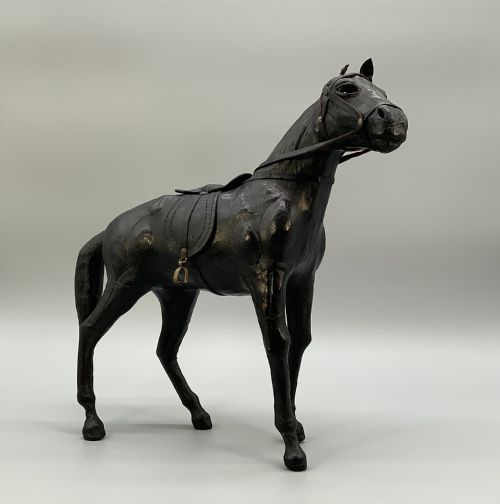
The items found here reflect various distinct eras such as the Victorian and Edwardian periods, alongside mid-century and vintage British designs. Buyers most frequently meet large carved wooden rocking horses mounted on original rockers, as well as distinctively bound leather horse sculptures.
Originating from traditional workshops and makers, these pieces showcase a rich historical range from the late nineteenth century through to the mid-twentieth century. The selection bridges the gap between children's playthings of the past and sculptural decorative art.
Materials and construction
The construction of these pieces relies heavily on carved wood and pine as a foundational material, shaped to form the bodily structure of the horses. Metal, iron, and steel components provide necessary internal reinforcement and functional hardware for rocking mechanisms and pull-along toys.
Outer surfaces are traditionally finished with leather and horsehair, lending a realistic texture to the sculptures and rocking horses. Glass is occasionally utilised for realistic eyes, while textile saddlebags incorporate traditional woven materials from nomadic regions.
Leather Saddle Horse Retail Price Guide 2026
Typical asking prices for leather saddle horse among the pieces listed under this phrase on Sellingantiques today, from the lower quarter to the upper quarter. They describe what is for sale here now, not the wider market.
Listings span from the Victorian era through the 1940s, combining carved pine, iron hardware, glass eyes, and horsehair.
Assessing quality and craftsmanship
Quality in these pieces is dictated by the depth of anatomical carving and the original integrity of the wooden frames and rockers. Finer examples display meticulous attention to painted dapple patterns and the secure attachment of genuine leather and horsehair.
The presence of maker attribution, particularly from established workshops, elevates the standing of a piece significantly. Superior construction ensures that structural elements like curved wooden rockers remain robust and true to their period.
G & J Lines of London·F.H.Ayres·Liberty & Co
The Leather Saddle Horse Glossary
- Rocking horse
- A toy horse mounted on curved wooden rockers designed for children to ride. These objects form a major category within nineteenth and twentieth-century listings.
- Horsehair
- Natural hair from the mane or tail of a horse utilised for stuffing or creating realistic manes and tails on sculptures.
- Rockers
- The curved pieces of wood attached to the base of a rocking horse that facilitate the rocking motion. Original rockers significantly enhance the historical integrity of the piece.
- Heybe
- A traditional Turkish or Anatolian nomadic saddlebag woven with distinct tribal patterns. These textile pieces relate to the broader equestrian category.
- Pull-along horse
- A toy horse mounted on a platform with wheels or small runners designed to be pulled by a child. These items date back to the late nineteenth century.
Leather Saddle Horse: Frequently Asked Questions
Are these rocking horses meant for children to ride?
While originally built as functional toys for children in the Victorian and Edwardian eras, many surviving examples are now treated as decorative antiques. Their structural stability varies depending on age, past use, and restoration history.
Buyers intending regular use by children should assess the sturdiness of the joints and rockers carefully. Most collectors prefer to house them as static display sculptures in period interiors.
What is the difference between antique and vintage horses?
Antiques generally refer to pieces created more than a century ago, encompassing Victorian and late nineteenth-century productions. These often feature hand-carved pine and traditional gesso finishes.
Vintage items typically point towards mid-century interpretations, such as leather-bound decorative sculptures from the nineteen-fifties. These later pieces often lean more towards interior design objects than traditional children's toys.
How should I care for leather and wood?
Maintaining these materials requires stable room temperatures and protection from direct sunlight to prevent the leather from drying and cracking. Gentle dusting with a dry cloth preserves the wooden surfaces and painted details.
Avoid using harsh chemical cleaners on antique finishes or painted dapple patterns. Leather conditioner may be applied sparingly to supple elements if recommended by a professional conservator.