



Leather Coffee Table Chest
These leather coffee table chest examples combine practical storage with substantial surfaces for daily use, drawing collectors seeking distinctive historical character.
Leather Coffee Table Chest
A leather coffee table chest serves as a dual-purpose furnishing, offering deep internal storage alongside a sturdy top surface suitable for living spaces. The selection ranges from robust campaign trunks to refined ottomans and camphor chests adapted for modern interiors.
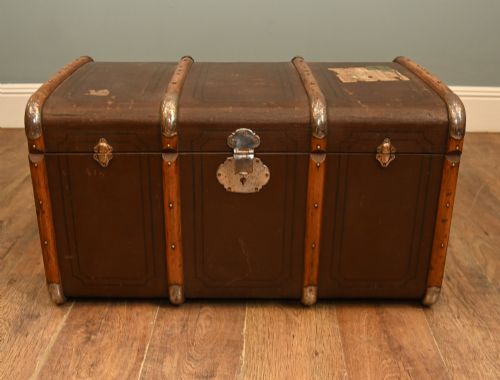
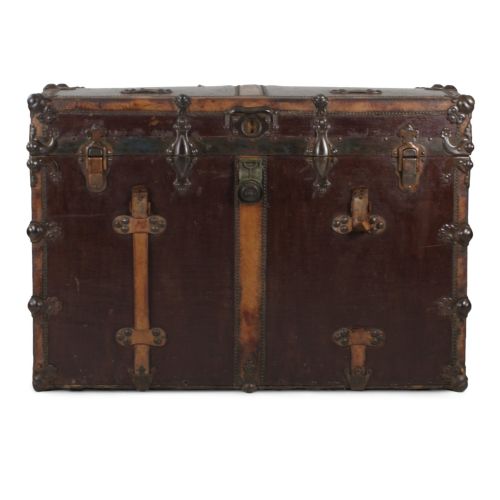
Buyers encountering this leather coffee table chest category will frequently find Victorian coaching trunks, Edwardian steamer luggage, and early twentieth-century travel pieces. These items often feature reinforced corners and durable hides chosen originally for transit.
Periods represented stretch from the Regency era through to the 1920s, encompassing styles such as Art Deco, Belle Epoque, and traditional English designs. Each form reflects the travel and storage needs of its original era, repurposed today as a central room table.
Materials and construction methods
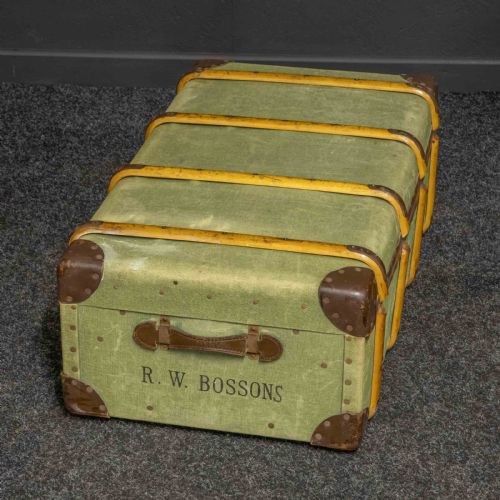
Construction relies heavily on hardwood framing, mahogany, and camphor wood, clad in leather, pig skin, or canvas. These durable substrates provided the necessary rigidity for long journeys before finding new life in domestic settings.
Metal components such as brass bindings, locks, and studs secure the edges and corners, fastened tightly to withstand heavy handling. Hand-dyed finishes and black lacquered treatments complete the exterior protection of the wood and hide.
Leather Coffee Table Chest Retail Price Guide 2026
Typical asking prices for leather coffee table chest among the pieces listed under this phrase on Sellingantiques today, from the lower quarter to the upper quarter. They describe what is for sale here now, not the wider market.
Materials documented across the collection include leather, brass, mahogany, camphor wood, canvas, and pig skin.
Distinguishing quality across examples
Quality differences often manifest in the grade of leather used and the complexity of internal fittings, such as original compartments or travel trays. Rich hand-dyed patination and intact brass hardware elevate certain pieces above simpler utility trunks.
The integrity of the underlying hardwood or camphor wood structure dictates the longevity and stability of the table top. Finer examples display meticulous metal-bound detailing and preserved manufacturer markings from notable makers.
Aux Etats Unis
The Leather Coffee Table Chest Glossary
- Campaign trunk
- A portable storage chest designed for military or travel use, typically featuring brass corners and recessed carrying handles. These sturdy items were built to endure arduous journeys across empires.
- Camphor wood
- An aromatic hardwood valued for its insect-repellent properties, frequently utilised for maritime chests and trunks. The distinct scent helps protect stored textiles and papers.
- Steamer trunk
- A lower-profile luggage chest engineered to fit beneath a passenger ship cabin berth during early twentieth-century ocean travel. They often incorporate lightweight materials and fitted internal trays.
- Ottoman
- A low, upholstered seat or footstool lacking a back, sometimes adapted from trunk forms to serve dual functions. They provide both soft surface utility and hidden storage.
- Coach trunk
- A heavy-duty leather or canvas luggage piece secured to the exterior of horse-drawn carriages or early motor cars. Their thick hides resisted rain and dust during transit.
Leather Coffee Table Chest: Frequently Asked Questions
How do I use a chest as a coffee table?
These chests offer a flat, stable surface ideal for displaying books and objects while keeping clutter hidden inside. Ensure the height matches your seating arrangements for comfortable daily access.
Protective trays or coasters help preserve the historic leather or canvas top from beverage rings and spills. The internal space accommodates extra blankets, cushions, or household items.
Were these chests originally used for travel?
Many examples began as steamer luggage, coaching trunks, or military campaign chests designed for transit by ship, train, or carriage. Their robust construction protected belongings over long distances.
Over time, travellers relied on fitted compartments and durable brass bindings to secure personal items. Today, that same travel heritage provides the structural durability needed for daily domestic life.
How do I care for antique leather?
Historic leather benefits from occasional light conditioning to prevent dryness and maintain its natural suppleness. Avoid placing pieces in direct sunlight or near heat sources to protect the finish.
Regular dusting with a soft, dry cloth keeps the surface clean without damaging the patina. Specialist leather balms can be applied sparingly if the hide appears dry.
How do I date an antique trunk?
Dating relies on examining construction techniques, materials, hardware styles, and any maker signatures or labels present. Victorian pieces often display heavier brass work and mahogany framing, while 1920s examples incorporate steamer formats.
Stylistic cues such as Art Deco influences or traditional English forms help narrow the production era. Comparing the locking mechanisms and interior linings provides further historical context.