



Leather Button Sofa
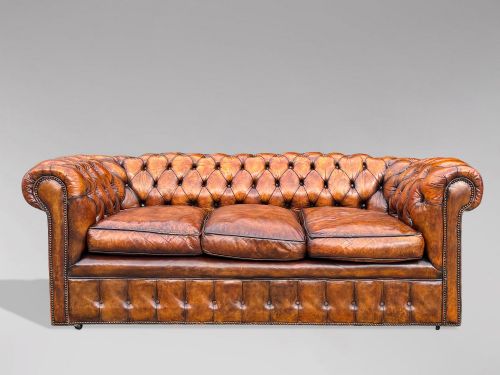
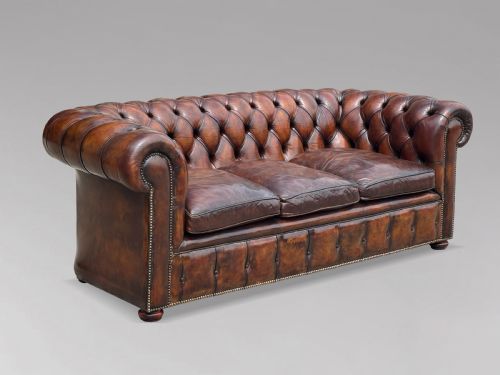
A leather button sofa brings deep seating and rolled arms into a room, anchored by traditional Victorian forms and rich hides.
Leather Button Sofa
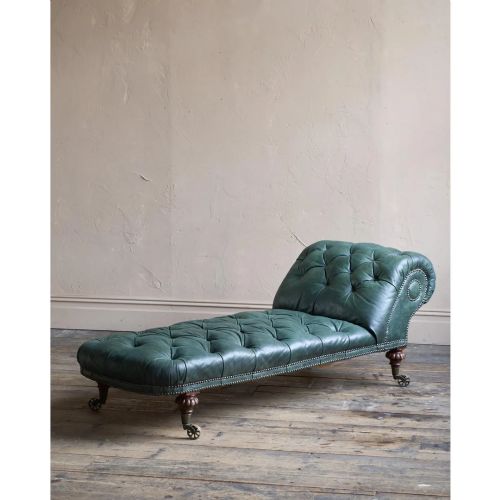
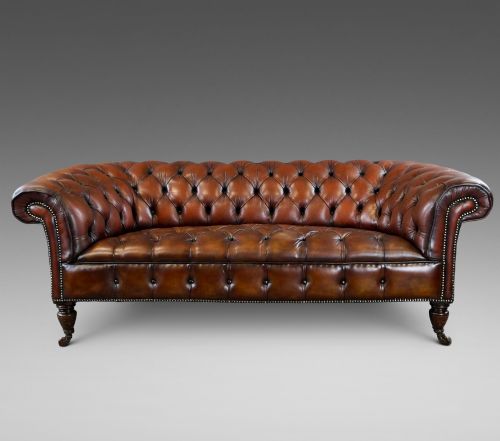
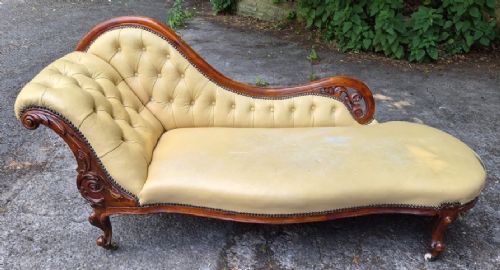
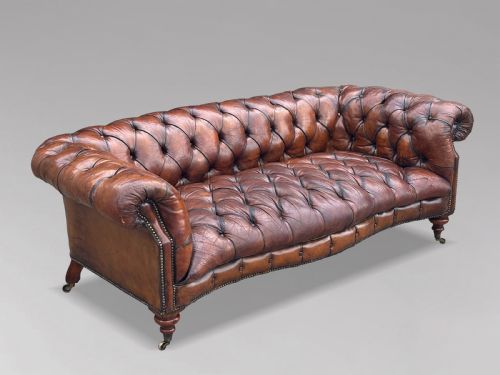
When searching for a leather button sofa, buyers encounter deep-seated Chesterfields, scroll-end settees, and chaise longues primarily dating from the Victorian period through the early twentieth century. These seating pieces combine substantial timber frames with upholstered hide, frequently presenting tufted backrests secured by buttons.
The most common examples on this page are nineteenth-century brown leather Chesterfields and button-back settees. Alongside traditional brown finishes, pieces appear in whiskey tones, red, green, and aubergine leathers.
Variations extend to corner sofas, wing-back designs, and substantial show-frame models with carved mahogany or walnut structures. Pieces span from un-restored original surfaces to hand-dyed finishes and fully restored frames.
How they were made
Construction relies on sturdy hardwood and mahogany timber frames that support internal coil springing and traditional stuffing materials. Makers utilised horsehair filling to shape the deep seats and rolled arms before securing the upholstery.
Outer covers utilise leather fixed with brass tacks, incorporating deep buttoning techniques across the backrests and seat platforms. Frames often feature hand-carved wooden details, particularly on Victorian show-frames and scroll-end settees.
Leather Button Sofa Retail Price Guide 2026
Typical asking prices for leather button sofa among the pieces listed under this phrase on Sellingantiques today, from the lower quarter to the upper quarter. They describe what is for sale here now, not the wider market.
One sofa arrives upholstered in Alfa Romeo leather, uniting traditional buttoning with motoring history.
What varies in quality
Quality rests upon the integrity of the timber frame and the depth of the original upholstery work, including hand-tied coil springing. Heavier, substantial frames with intact internal stuffing outlast lighter builds.
The character of the leather separates pieces, distinguishing untouched patinated hides from modern re-upholstery. The precision of the button tufting and the execution of carved wooden details indicate the standard of workshop production.
Howard & Sons·Robert Strahan & Co·Hampton & Sons of Pall Mall
The Leather Button Sofa Glossary
- Chesterfield
- A traditional sofa style characterised by low seating and rolled arms of the same height, featuring deep button tufting.
- Horsehair gilled
- An internal stuffing method using natural horsehair to pack and shape the upholstery.
- Show frame
- An exposed wooden structural frame, often carved in mahogany or walnut, surrounding the upholstered sections.
- Scroll end
- A sweeping, curved arm or end design found on nineteenth-century settees and chaise longues.
- Button back
- An upholstery method where buttons are pulled deep into the padding to create a diamond tufted pattern.
Leather Button Sofa: Frequently Asked Questions
What is a leather button sofa?
A leather button sofa is a traditional seating piece, most commonly a Chesterfield or settee, featuring deep button tufting across the backrest and arms.
These pieces combine robust wooden frames with sprung seats and upholstered hide, originating primarily from the Victorian era and early twentieth century.
How do I care for antique leather?
Antique leather benefits from regular dusting and occasional applications of appropriate leather balms to maintain the hide's suppleness.
Keep these sofas away from direct heat sources and strong sunlight to prevent the leather from drying out or fading.
Are these sofas comfortable for daily use?
Many nineteenth-century and early twentieth-century designs utilise deep coil springing and horsehair stuffing, offering firm and supportive seating.
Because seat depths and heights vary across Victorian and Edwardian examples, physical testing helps confirm suitability for lounging.
How do I identify a Victorian Chesterfield?
Victorian Chesterfields are identified by heavy hardwood frames, hand-tied coil springs, and traditionally stuffed horsehair padding beneath the leather.
They frequently display low backs, uniform rolled arms, and deep button tufting secured with brass detailing.