
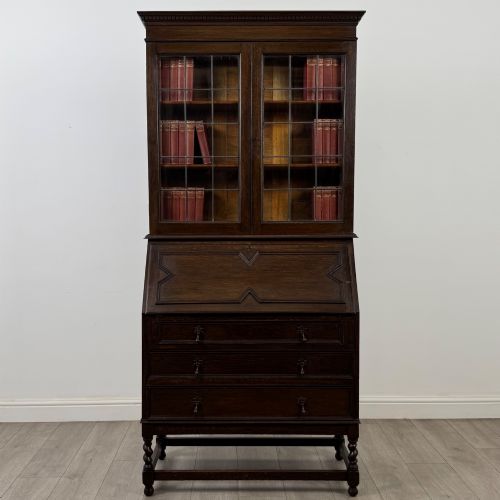


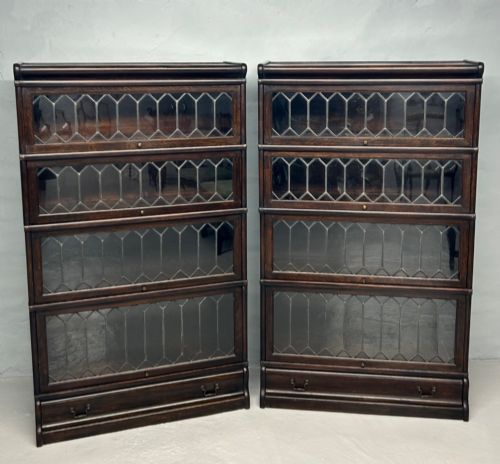

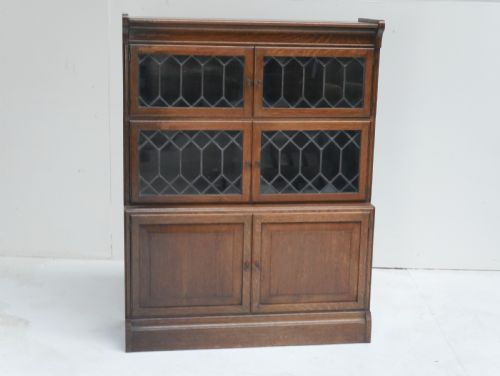


Leaded Door Cabinet
A leaded door cabinet brings together glass, lead, and timber to hold books or display objects while catching the light.
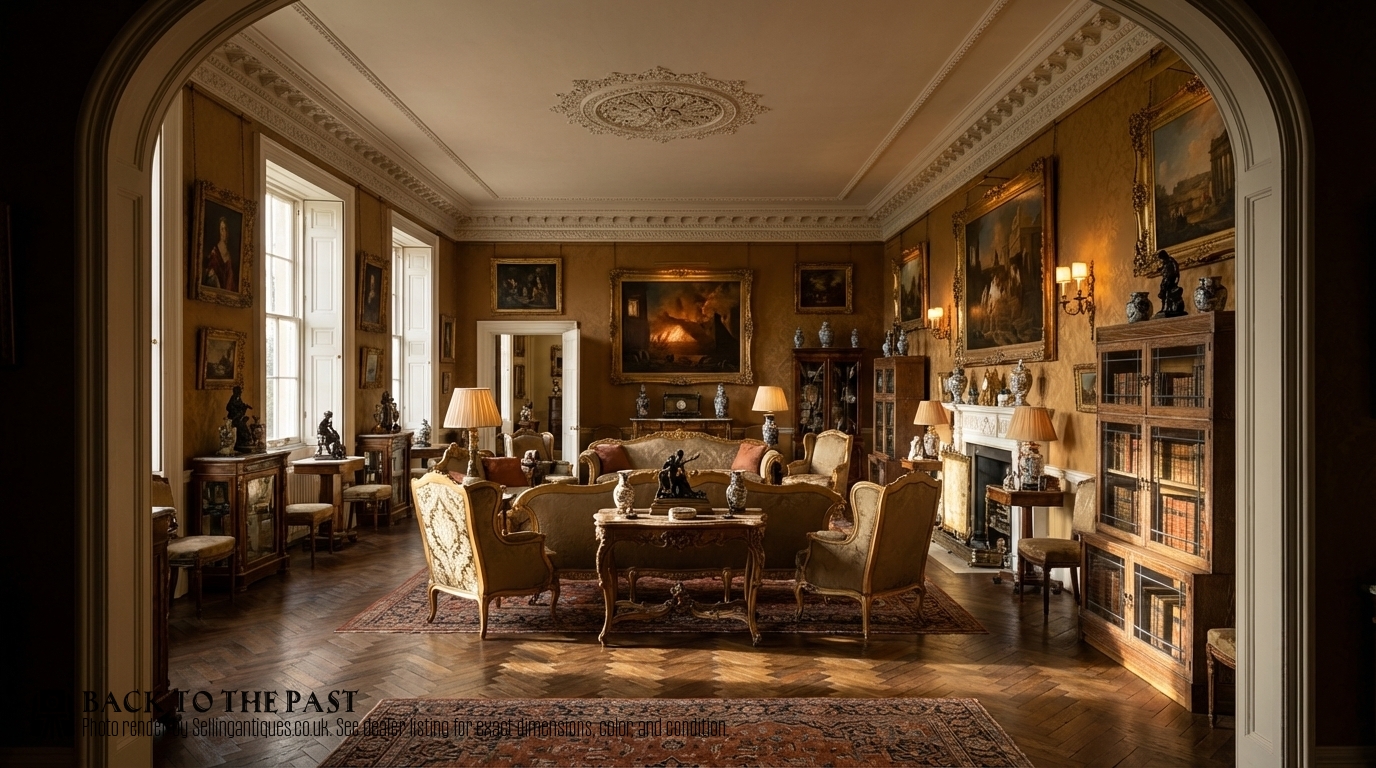
Leaded Door Cabinet
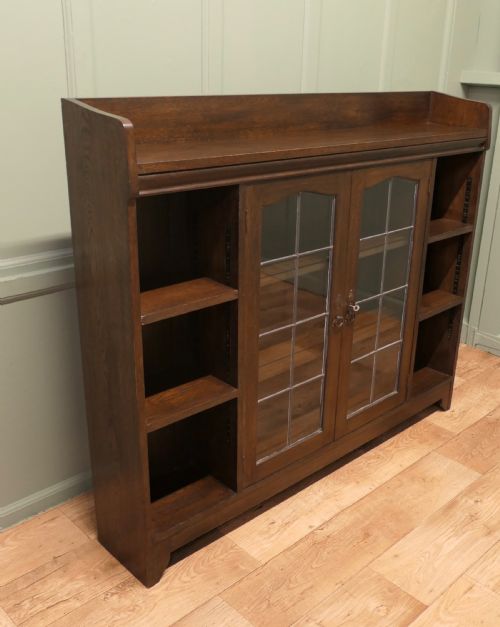
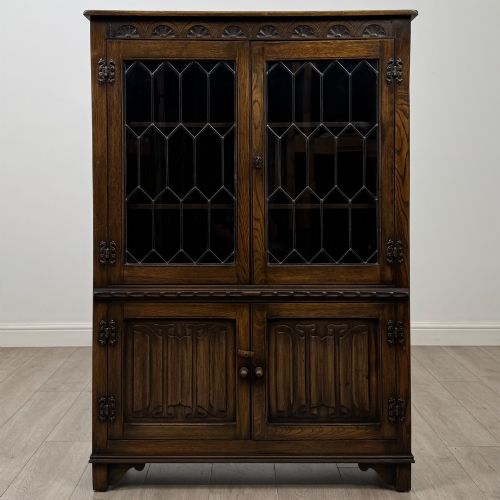
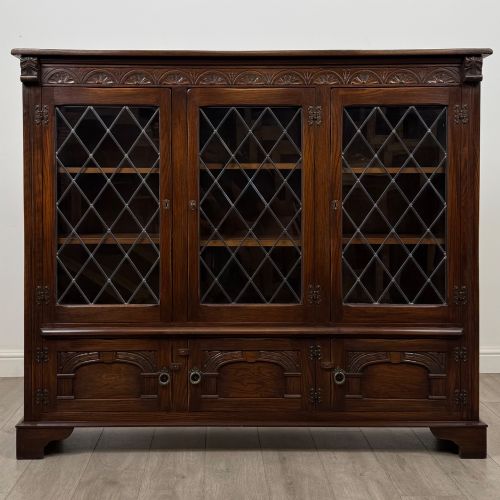
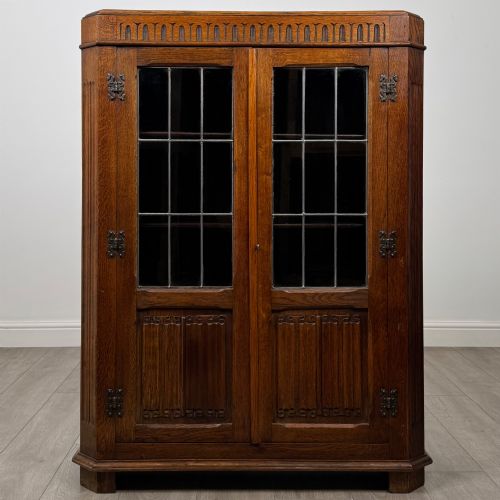
A leaded door cabinet groups together upright storage pieces designed with small panes of glass held in place by lead cames, frequently taking the form of bookcases, display cabinets, and stacking sections. When buyers search for a leaded door cabinet, they encounter designs that range from sturdy Edwardian and 1920s oak pieces to Arts and Crafts creations.
The pieces appearing on this page span the late nineteenth century through to the nineteen-thirties, covering Victorian, Edwardian, and later revival styles. Oak forms the primary structural timber, alongside mahogany and walnut, while leaded glass and brass fittings complete the construction.
What varies in quality
The distinction between standard commercial storage and finer examples rests in the selection of timber and the precision of the leadwork. Heavier oak construction and well-figured mahogany or walnut indicate more ambitious workshop production.
Detailing in the carved ornamentation and the complexity of the leaded glass patterns separate ordinary utility cupboards from significant Arts and Crafts or Edwardian cabinets. Original brass hardware and intact, tight lead cames preserve the integrity of the piece.
Storage forms span modular stacking sections, narrow bookcases, and large display cabinets fitted with brass hardware.
Globe Wernicke·Minty·Lambs of Manchester
The Leaded Door Cabinet Glossary
- Came
- The slender lead strip with an H-shaped profile used to hold individual panes of glass together in a leaded window or door. These channels provide structural flexibility while securing the glass.
- Arts and Crafts
- A design movement originating in the late nineteenth century that emphasised traditional craftsmanship, simple forms, and honest use of materials. Pieces from this tradition often feature plain oak and handcrafted metalwork.
- Globe Wernicke
- A modular stacking bookcase system where individual glazed sections lift and slide back into the cabinet. This design allowed owners to add units vertically as their book collections grew.
- Edwardian
- The architectural and decorative style spanning the reign of King Edward VII, characterised by lighter proportions and revivals of earlier historic designs. Cabinets from this period frequently utilise solid oak.
- Jacobean Revival
- A furniture style that imitates the heavy, carved forms of the early seventeenth century. Surviving examples often feature dark oak, turned supports, and panelled doors.
Leaded Door Cabinet: Frequently Asked Questions
What is a leaded door cabinet?
A leaded door cabinet is a storage piece featuring glass panes united by lead cames within the door frame. These items function primarily as bookcases or display cabinets.
They appear across various periods, most notably in oak during the Edwardian era and the nineteen-twenties.
How do I date an oak cabinet?
Dating relies on examining the timber, construction methods, and stylistic cues present in the hardware and carving. Edwardian and later pieces often display machine-planed boards and simpler revival motifs.
Earlier nineteenth-century examples show hand-tool marks and heavier proportions indicative of Victorian workshop practices.
Are stacking bookcases stable?
Stacking bookcases utilise interlocking modular sections that sit securely one atop another without permanent fixings. This design provides structural stability while allowing the units to be separated for transport.
They remain practical for modern interiors where modular flexibility is useful.
How do I care for leaded glass?
Leaded glass requires gentle cleaning with a soft cloth and mild solution to avoid disturbing the fragile lead cames. Pressing too firmly against the glass can bend the lead and loosen the individual panes.
Keeping the timber conditioned helps maintain the overall stability of the door frame holding the glass.