

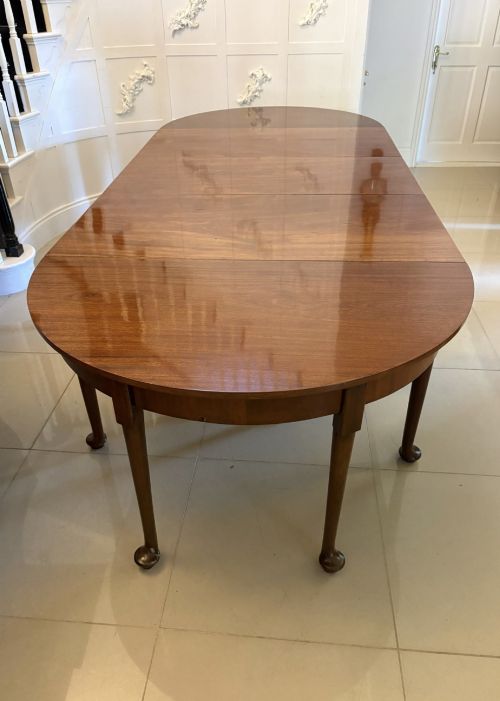


Large Wooden Drop Leaf Table
A large wooden drop leaf table provides a versatile dining surface that folds away when space is required.
Large Wooden Drop Leaf Table
A large wooden drop leaf table serves as a substantial surface for dining and entertaining, expanding to seat large numbers of guests when the flaps are raised. These pieces originate from various periods including the seventeenth, eighteenth, and nineteenth centuries, reflecting domestic needs across generations.
Buyers seeking a large wooden drop leaf table frequently encounter mahogany and oak examples, often constructed as gateleg or Pembroke forms. The selection encompasses Georgian and Victorian designs alongside French provincial styles.
Proportions vary from kitchen tables in pine to formal dining tables in figured mahogany, accommodating both rustic interiors and period reception rooms. Extending mechanisms and folding leaves define the practical nature of these objects.
Materials and construction
Carpenters utilised solid timber and veneers such as mahogany, oak, walnut, pine, and fruitwood to build these tables. Grain selection and timber density determined both the weight and the durability of the surface.
Structural support relied on hinged leaves and pivoting legs, including gateleg actions and bobbin turned supports. Brass fittings frequently appeared on drop leaf Pembroke tables and extending mechanisms.
Large Wooden Drop Leaf Table Retail Price Guide 2026
Typical asking prices for large wooden drop leaf table among the pieces listed under this phrase on Sellingantiques today, from the lower quarter to the upper quarter. They describe what is for sale here now, not the wider market.
Listings feature woods such as mahogany, oak, walnut, pine, and fruitwood spanning the seventeenth to the twentieth centuries.
Assessing quality and craftsmanship
Superior examples display careful timber matching across the leaves and top, alongside refined patination built up over centuries. Finer execution shows in the stability of the gateleg action and the precision of the joinery.
The choice of primary wood heavily influences the character of the piece, with figured mahogany and solid walnut representing more formal commissions compared to simpler pine kitchen tables.
The Large Wooden Drop Leaf Table Glossary
- Gateleg table
- A table with hinged leaves supported by legs that swing outward like a gate. This design provides sturdy support for the dropped flaps.
- Pembroke table
- A small rectangular table with two hinged leaves on opposite sides. These often feature a single drawer and slender legs.
- Patina
- The surface sheen and colour developed by wood through age and use. A faded patina indicates long periods of handling and exposure.
- Drop leaf
- A hinged flap attached to a fixed table top that can be raised and supported to increase the surface area. This allows the table to occupy less space when not in use.
- Metamorphic table
- Furniture engineered to transform into different forms or functions. These pieces alter their configuration to serve as consoles or large dining surfaces.
Large Wooden Drop Leaf Table: Frequently Asked Questions
How many people can sit at a large drop leaf table?
Many of these tables are designed to seat eight to twelve guests when fully extended with the leaves raised.
Smaller gatherings utilise the table with one or both leaves dropped against the central frame to save floor space.
What is the difference between a gateleg and a Pembroke table?
Gateleg tables utilise pivoting legs that swing out to support large folding leaves, making them suitable for substantial dining.
Pembroke tables feature smaller drop leaves and often incorporate drawers, traditionally serving as lighter occasional or breakfast furniture.
How do I care for antique wood surfaces?
Maintaining the finish involves keeping the timber away from direct heat sources and sudden humidity changes that cause movement in the wood.
Regular dusting with a dry cloth preserves the historic patina without stripping the surface oils.
How are different periods identified?
Stylistic clues such as bobbin turned legs point towards seventeenth-century oak furniture, while straight tapered legs often indicate later Georgian designs.
Timber choice and construction methods provide further evidence of the era in which the table was built.