





Large Walnut Refectory Table
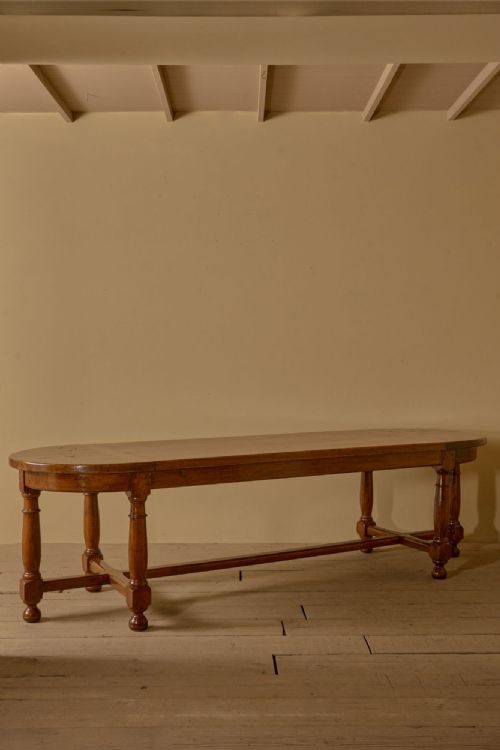
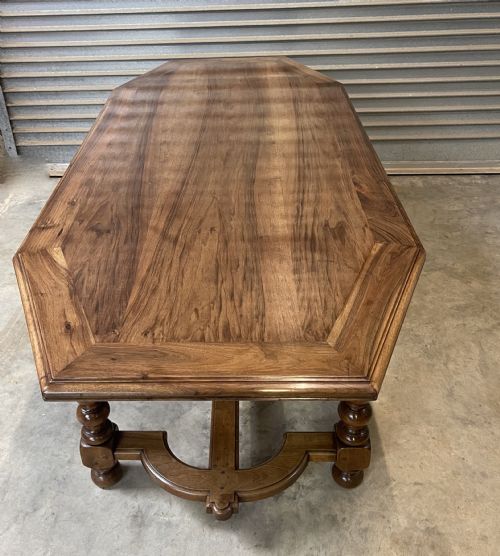
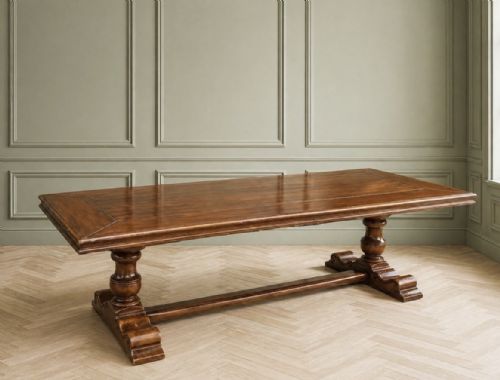
A large walnut refectory table anchors a room with timber weight and age, offering long boards and steady construction.
Large Walnut Refectory Table
A large walnut refectory table serves as a substantial dining surface, drawing on traditions from French, Spanish, and Italian provincial design. These pieces appear across several periods, stretching from the seventeenth century through the Victorian era and into the nineteen-twenties and nineteen-thirties.
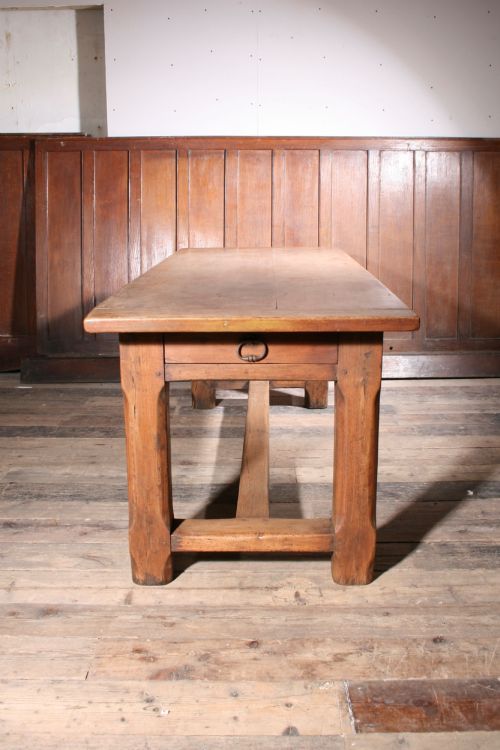
The version most commonly met on this page is the farmhouse or refectory style in walnut, sometimes paired with oak or wrought iron details. Forms range from trestle and H-stretcher bases to monastery tables and carved nineteenth-century designs.
Buyers seek these tables for their generous proportions and timber character, which suits large dining rooms and kitchens alike. The selection covers provincial styles alongside Gothic and Renaissance influences.
How they were made
Construction relies primarily on walnut timber, occasionally joined with oak or supported by wrought iron elements. Makers utilised heavy boards for the top and sturdy trestle or stretcher frames underneath to bear the immense weight.
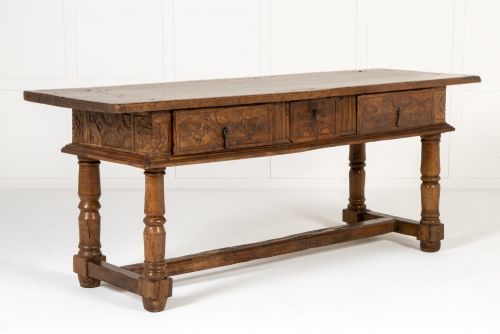
Carpentry techniques include carved bases and H-stretcher configurations designed to steady long dining surfaces. Surfaces show the grain of the timber, shaped by period joinery methods appropriate to Spanish Baroque, French Provincial, and Italian Renaissance styles.
Large Walnut Refectory Table Retail Price Guide 2026
Typical asking prices for large walnut refectory table among the pieces listed under this phrase on Sellingantiques today, from the lower quarter to the upper quarter. They describe what is for sale here now, not the wider market.
Walnut was so prized by seventeenth-century cabinet makers that some tables outlasted the dynasties that commissioned them.
What varies in quality
Quality rests on the depth of the timber grain, the weight of the walnut used, and the ambition of the base carving. Tables featuring substantial seventeenth-century Spanish or Italian origins display different sculptural weight compared to later nineteenth-century or Edwardian interpretations.
The integration of the stretcher and the proportion of the top boards dictate the visual balance of the piece. Finer examples retain an integrity of form across provincial and Renaissance styles that distinguishes them from simpler utilitarian boards.
The Large Walnut Refectory Table Glossary
- Refectory table
- A long dining table originally built for monastic dining halls. These pieces provide extended surfaces suitable for large gatherings.
- H-stretcher
- A horizontal beam connecting the legs of a table in the shape of the letter H. This timber brace adds structural support to the base.
- Trestle table
- A table featuring a board top supported by two or more vertical uprights connected by a horizontal beam. This construction leaves legroom along the length.
- Monastery table
- A heavy timber dining table associated with religious houses, similar in scale to refectory forms. They utilise solid wood tops and robust framing.
- Spanish Baroque
- An ornate artistic style marked by dramatic carving and solid proportions. Pieces from this tradition display rich walnut surfaces and structural weight.
Large Walnut Refectory Table: Frequently Asked Questions
What is a refectory table?
A refectory table is a long, narrow dining table originally designed for monastic dining halls and large communal spaces. These pieces provide ample seating down both lengths.
They appear in various timber traditions, offering sturdy surfaces suited to modern dining rooms and kitchens.
How do I style a large walnut table?
A large walnut table works well as the centrepiece of a spacious dining room or farmhouse kitchen. Pair it with benches or mixed dining chairs to complement its timber weight.
Keep surface decoration simple to let the natural grain and period construction remain the visual focus of the room.
Are these tables suitable for daily use?
These tables were built for heavy daily use in dining rooms, monasteries, and farmhouses. Their solid walnut construction provides the necessary durability for everyday meals and gatherings.
Proper care for the timber top preserves the finish against daily wear while maintaining the character of the wood.
How do I tell periods apart?
Distinguishing periods relies on observing the carving style, base construction, and timber characteristics. Seventeenth and eighteenth-century examples often display Spanish or Italian Renaissance and Baroque influences.
Victorian, Edwardian, and twentieth-century pieces introduce simpler farmhouse forms or specific stretcher configurations like the H-stretcher.