



Large Tiered Crystal Light
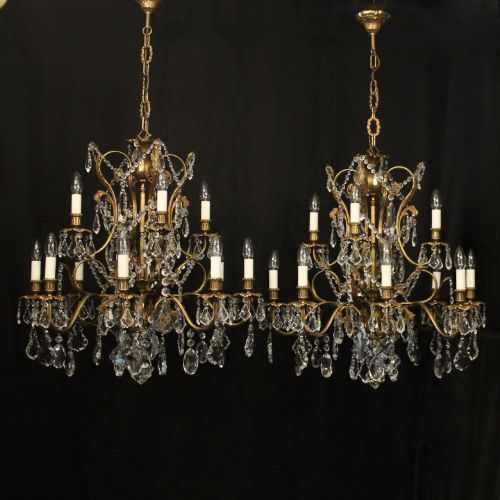
A large tiered crystal light transforms a high ceiling into a focal point, catching and scattering daylight long before the candles or bulbs are lit.
Large Tiered Crystal Light
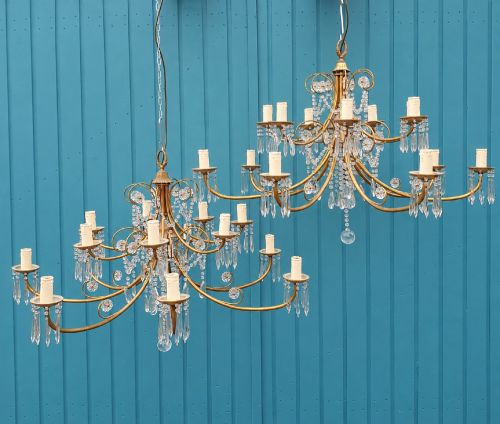
When you search for a large tiered crystal light, you encounter substantial multi-branch fixtures designed for grand rooms. These pieces originate from the nineteenth and early twentieth centuries, spanning styles from French Empire and Florentine to Art Deco.
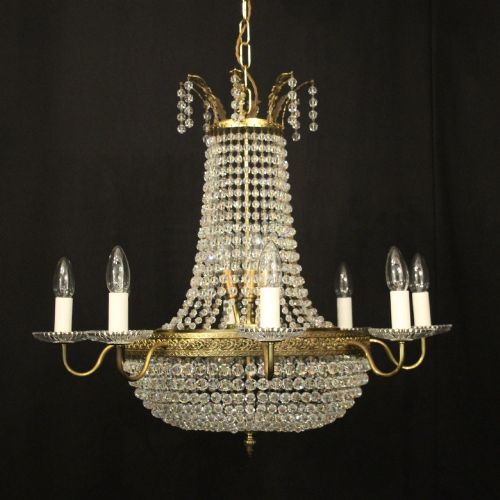
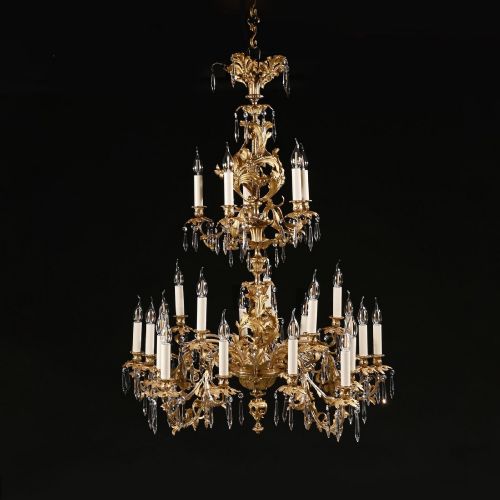
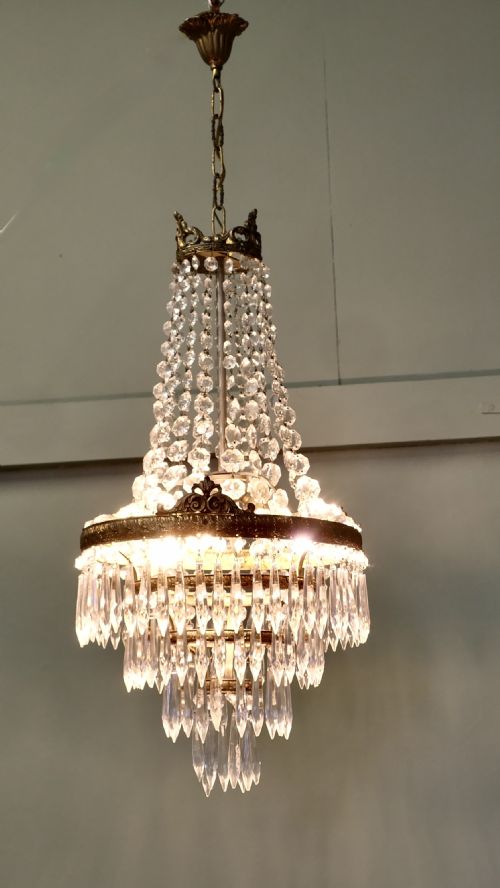
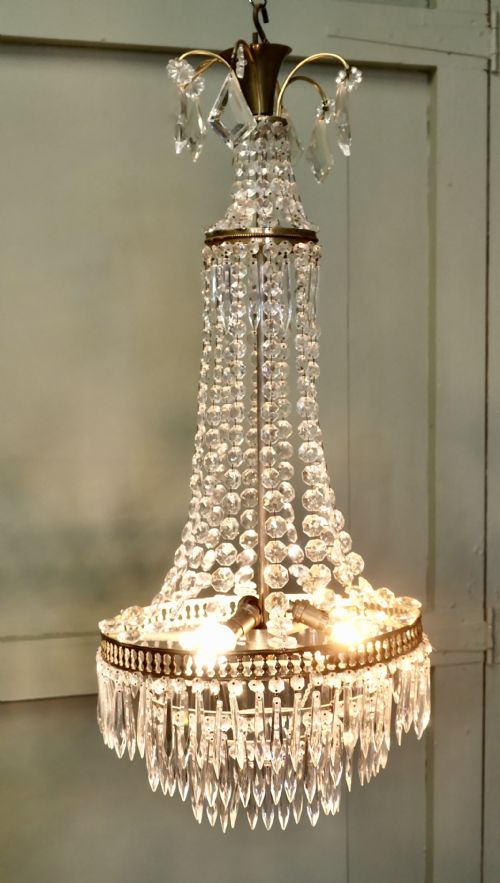
The most common examples on this page are multi-tier chandeliers featuring cascading drops and beads. They combine metal frames with brass or gilt finishes to support numerous branches and tiers of cut glass.
Venetian, Bohemian, English, and French workshops dominate the origins of these fittings. They appear primarily as massive ceiling lights and chandeliers rather than smaller domestic lamps.
How they were made
The structure relies on robust metal frameworks cast in bronze, brass, or gilt metal to bear the heavy weight of numerous glass branches. Frames often feature dark finishes or gilt applications that complement the reflective surfaces.
Cut glass and lead crystal elements are suspended from the tiers using wire pins or metal links. Craftsmen faceted these drops and beads by hand to maximise the refraction of light across the room.
Large Tiered Crystal Light Retail Price Guide 2026
Typical asking prices for large tiered crystal light among the pieces listed under this phrase on Sellingantiques today, from the lower quarter to the upper quarter. They describe what is for sale here now, not the wider market.
Materials span plain glass, lead crystal, brass, gilt bronze, and dark framed metal.
What varies in quality
The distinction between tiers of quality rests upon the density and purity of the crystal elements. Superior pieces utilise heavy lead crystal with sharp, clean facets that scatter light prisms cleanly, while simpler works use lighter glass.
The intricacy of the metal framework and the quality of the gilt or bronze casting determine the visual depth of the fixture. Heavier brass and bronze armature supports multi-branch structures securely without warping over time.
Baccarat
The Large Tiered Crystal Light Glossary
- Waterfall
- A cascading arrangement of glass drops or beads arranged in overlapping tiers. This formation creates a continuous sheet of shimmering crystal from the upper ring down to the lower crown.
- Tent and waterfall
- A specific configuration where an upper conical section of strung beads sits above a cascading lower tier. This dual arrangement defines many classical French Empire fixtures.
- Electrolier
- A large overhead lighting fixture designed specifically for electricity rather than conversion from gas or candles. These units often appear in monumental scales suitable for public buildings and ballrooms.
- Spike
- A central vertical element or pendant hanging beneath the lower tier of a chandelier. It adds downward visual weight and terminates the composition neatly.
Large Tiered Crystal Light: Frequently Asked Questions
How do I hang a heavy tiered chandelier?
These substantial fixtures require professional installation into structural ceiling joists using rated fixings to support the considerable combined weight of metal and crystal.
Electrical wiring must also be inspected to ensure the junction box can safely handle multi-bulb fittings with twenty or more lights.
How do I clean a large crystal light?
Regular maintenance involves dusting the drops in situ with a specialist long-handled wand or microfibre cloth while the fixture is switched off and cool.
For thorough cleaning, individual drops can be washed gently in warm soapy water and dried completely before being rehung on the frame.
Where should these chandeliers be placed?
Their substantial scale suits high-ceilinged entrance halls, formal dining rooms, and spacious reception spaces where they command the proportions of the interior.
Sufficient vertical clearance is essential so people can walk freely underneath the lowest tier or hanging spike.
How do I date a crystal chandelier?
Dating relies on examining the metal casting techniques, frame construction methods, and the style of the cut glass drops. Earlier nineteenth-century examples often feature heavier bronze work, while 1920s pieces frequently show Art Deco geometric influences.