



Large Table Centrepiece
A large table centrepiece commands the dining room, anchoring the table with silver plate, porcelain, or crystal raised high above the cloth.
Large Table Centrepiece
When you search for a large table centrepiece, you encounter grand dining table ornaments designed to draw the eye at formal meals. The examples on this page span the eighteenth, nineteenth, and early twentieth centuries, encompassing periods from Georgian and Regency to Victorian, Edwardian, and Art Nouveau.
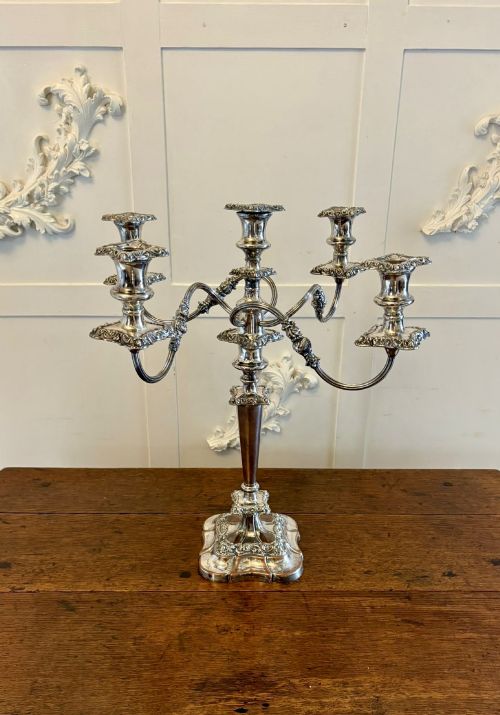
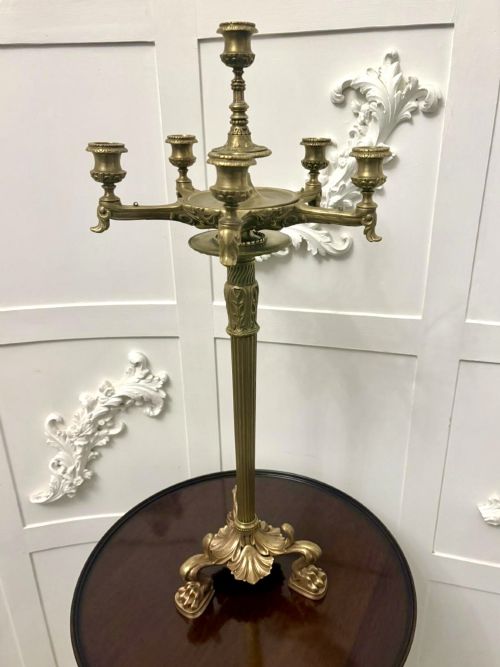
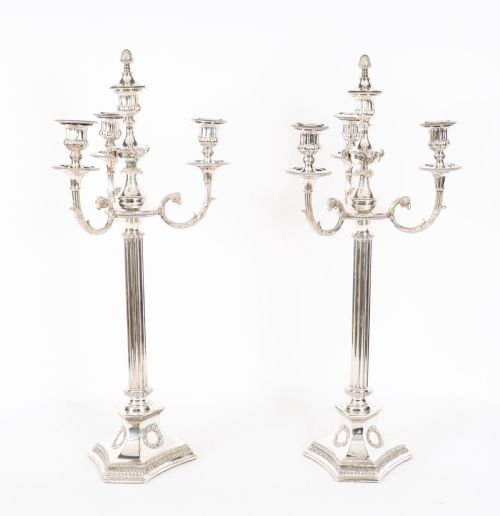
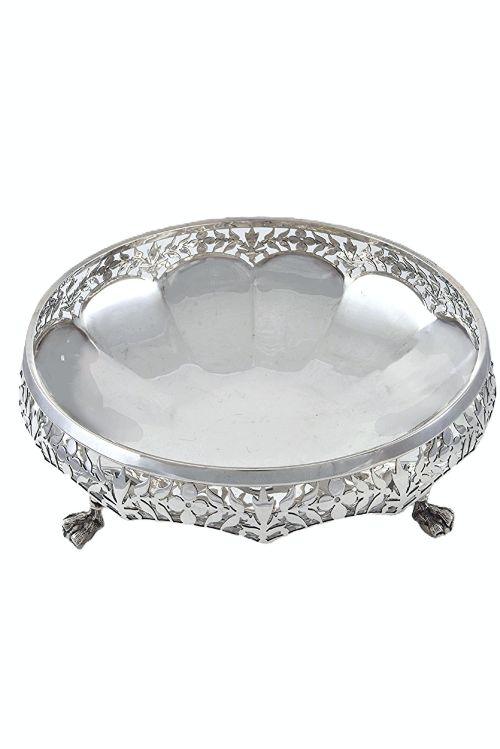
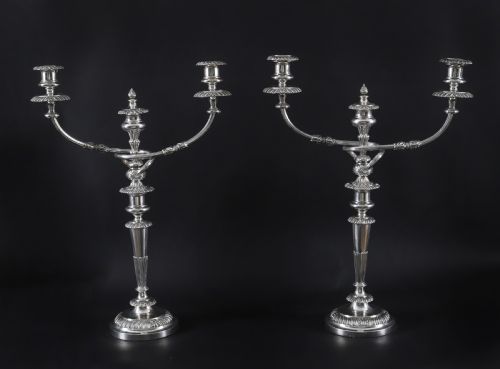
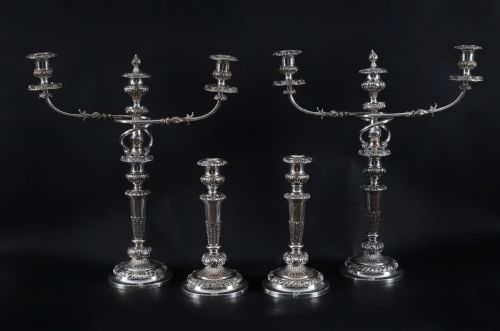
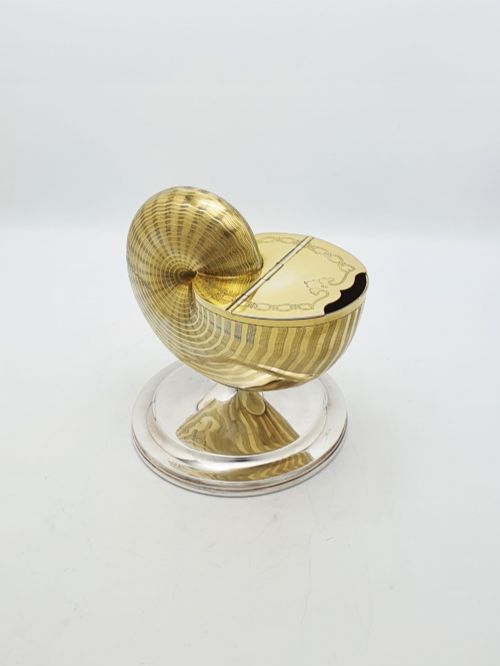
You will most frequently meet multi-branch candelabra, heavy silver-plated or sterling silver bowls, and porcelain figure groups. These items range from towering brass candelabra stands to elaborate German porcelain centrepieces and heavy silver pedestal dishes.
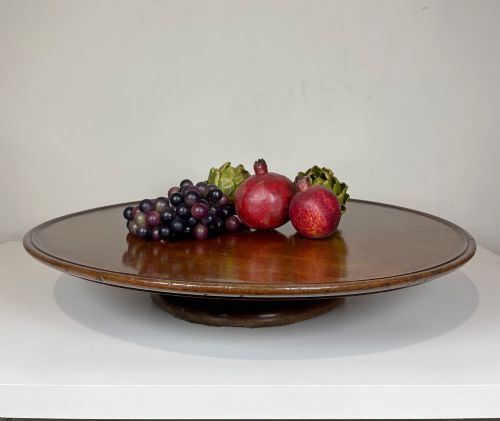
Makers utilised various forms to decorate the middle of the dining table, including punch bowls, epergnes, lazy susans, and comport dishes. Each type reflects the formal dining habits of past centuries, often incorporating matching pairs or suites.
How they were made
Silversmiths and manufacturers worked with sterling silver, Old Sheffield plate, and later silver plate over base metals, often casting branches and mounts in heavy relief. Brass, copper, and gilt-brass formed the structural frames for candelabra and table lustres, sometimes accented with patinated bronze or ormolu.
Potteries shaped soft-paste porcelain, hard-paste porcelain, and ceramic bodies into elaborate figural groups, musical putti, and decorative bowls, painting them by hand and adding gilt accents. Glassworks blew crystal bowls, layering them with gold enamel decoration or pairing them with pierced silver holders and glass liners.
Large Table Centrepiece Retail Price Guide 2026
Typical asking prices for large table centrepiece among the pieces listed under this phrase on Sellingantiques today, from the lower quarter to the upper quarter. They describe what is for sale here now, not the wider market.
Listings feature 19th Century, Victorian, Edwardian, and 18th Century periods across silver plate, sterling silver, porcelain, brass, copper, and mahogany.
What varies in quality
The distinction between ordinary and superior items lies in the crispness of the casting and the depth of the detail in motifs such as cherubs, scrolling foliage, and rococo Revival ornamentation. Heavier gauge metals and solid sterling silver demonstrate a substantial weight and structural rigidity that lighter plated wares lack.
Artistic execution sets the finer porcelain and glass pieces apart, particularly hand-painted enamel work, finely modelled figures, and the integration of cabochons into copper pedestals. Maker attribution to established houses like Matthew Boulton, Elkington, or St Louis glassworks indicates superior workshop standards.
Matthew Boulton·Joseph Rodgers·Plaue Schierholz·St Louis glassworks·Josiah Williams And Co·Elkington·Royal Dux
The Large Table Centrepiece Glossary
- Candelabra
- A branched candlestick holding multiple lights. These items often form the focal point of a large table centrepiece arrangement.
- Epergne
- An ornamental centrepiece featuring a central dish surrounded by smaller hanging baskets or dishes. They serve fruit, sweetmeats, or flowers.
- Old Sheffield Plate
- A method of fusing a thin sheet of sterling silver to a thicker copper base before rolling and shaping. This technique creates durable antique wares with characteristic warmth.
- Comport
- A shallow dish or bowl raised on a high foot or pedestal. They sit centrally on dining tables for serving fruit or confections.
- Putti
- Depictions of chubby male infants, frequently winged, modelled in porcelain or cast in metal. They populate rococo and Victorian decorative pieces.
- Sconces
- The detachable nozzles or drip pans fitted into the arms of a candelabrum. They catch melting wax during use.
Large Table Centrepiece: Frequently Asked Questions
How were large table centrepieces used?
These pieces occupied the middle of the dining table during formal meals to display fruit, sweetmeats, or floral arrangements. Candelabra provided ambient lighting alongside their decorative function.
Heavier bowls held punch, iced water, or multiple glass bottles, while epergnes allowed hosts to present various delicacies across suspended tiers.
How do I clean silver plated centrepieces?
Maintenance requires gentle cleaning with a soft cloth and a reputable silver cream specifically formulated for plated items. Avoid harsh abrasive dips that strip the thin silver layer from the base metal.
Take care around cast relief details and soldered joints, applying polish sparingly to preserve any original patination or gilding.
How can I tell Victorian pieces apart from Edwardian ones?
Victorian centrepieces, spanning the mid to late nineteenth century, often display heavy ornamentation, rococo Revival curves, and dense naturalistic floral chasing. Brass and silver plate dominate these robust items.
Edwardian pieces from the early twentieth century lean towards lighter pedestal forms, cleaner Neo-Classical lines, and graceful Art Nouveau silhouettes with stylised plant motifs.
Can I use antique candelabra for modern dining?
These candelabra accommodate standard taper candles, making them practical for modern dining rooms. Ensure you measure the socket diameters if you purchase antique tapered candles.
Place protective mats underneath heavy silver, brass, or bronze stands to protect polished wood dining tables from heat and weight.