




Large Silver Bowl
A large silver bowl commands the table, offering substance and historical weight across Victorian, Edwardian, and mid-century forms.
Large Silver Bowl
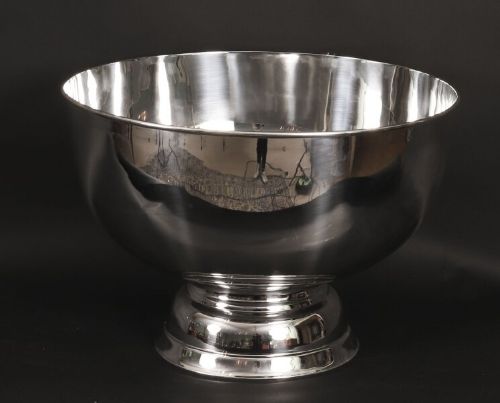
A large silver bowl spans diverse domestic functions, appearing as centrepiece vessels, punch bowls, Monteiths, and presentation pieces intended for display or ceremonial use.
Buyers encounter sterling silver and silver plate pieces originating from British silversmiths alongside continental workshops and Indian colonial makers.
The selection ranges from ornate Victorian repoussé designs and fluid Art Nouveau contours to geometric Art Deco forms and restrained Edwardian pedestal dishes.
Materials and construction
Construction relies primarily on sterling silver and silver plate, occasionally incorporating copper cores, cobalt blue glass inserts, cut glass, and enamel details.
Silversmiths shaped these large vessels through hammering, spinning, or casting, frequently applying repoussé floral and bird decoration by hand to the exterior surfaces.
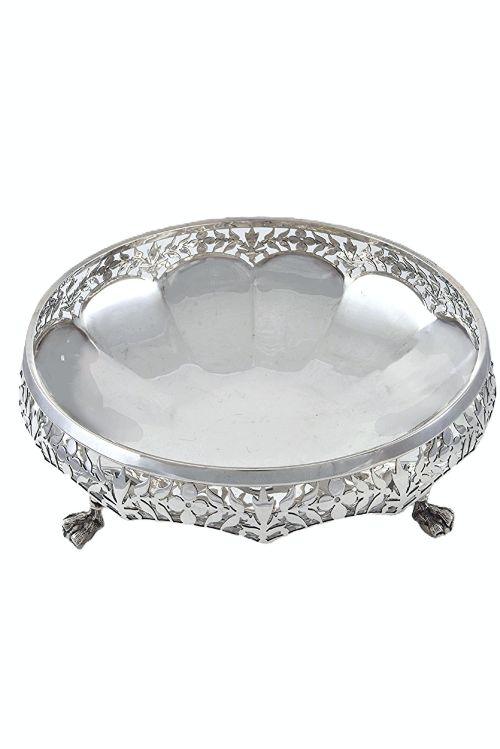
Piercing and chasing techniques create intricate openwork rims and detailed panels, while makers combined metals with glass or wood to achieve contrasting textures.
Large Silver Bowl Retail Price Guide 2026
Typical asking prices for large silver bowl among the pieces listed under this phrase on Sellingantiques today, from the lower quarter to the upper quarter. They describe what is for sale here now, not the wider market.
Forms range from traditional punch bowls and Monteiths to pedestal dishes, wine coolers, and bread baskets.
Evaluating craftsmanship and distinction
Quality rests upon the crispness of the hand-worked repoussé decoration and the structural integrity of footed bases, handles, and applied rims.
Weight and gauge of the metal indicate the substantial nature of the piece, distinguishing heavy solid silver from plated wares where wear reveals the underlying base metal.
The prominence of the maker and the clarity of hallmarks provide historical validation, distinguishing standard commercial production from bespoke silversmithing.
Nathan and Hayes·Mappin and Webb·Barker Ellis·Joseph Rodgers·Alexander Clarke and Co·S Kirk and Son Company·Whiting Co
The Large Silver Bowl Glossary
- Repoussé
- Metalwork technique where the design is hammered into relief from the reverse side. This method creates tactile, three-dimensional floral and figurative scenes.
- Monteith
- A type of large bowl featuring a scalloped removable rim designed to hold wine glasses by the stem. Originating in the late seventeenth century, it remained popular for grand hospitality.
- Quaich
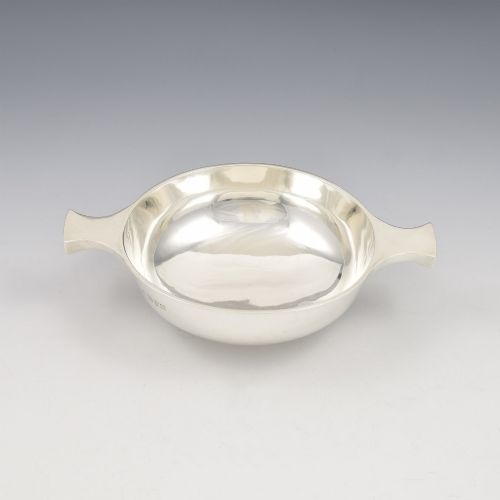
- A traditional shallow two-handled drinking vessel of Scottish origin. These are adapted in larger sizes for decorative or presentation purposes.
- Comport
- A raised dish or bowl standing on a foot or pedestal, used for serving fruit or sweets. They elevate table arrangements to create visual hierarchy.
- Hallmark
- Official stamps applied to precious metals indicating purity, maker, and assay office. These marks authenticate the origin and silver standard of the vessel.
Large Silver Bowl: Frequently Asked Questions
How were large silver bowls used?
These vessels served functional roles at dining tables and grand social gatherings, holding punch, wine, fruit, or flowers during formal meals. Presentation pieces commemorated achievements and were displayed prominently on sideboards.
Over time, their roles shifted from active hospitality equipment to decorative focal points within interior spaces, retaining their sculptural presence.
How do I care for silver bowls?
Maintenance requires gentle cleaning with specialised silver polish and soft cloths to preserve the surface without wearing down thin plating or fine chasing. Regular dusting prevents tarnish accumulation in recessed repoussé details.
Avoid abrasive materials and harsh chemical dips, storing pieces in stable humidity away from direct sunlight to protect integrated glass or enamel components.
How do I date a silver bowl?
Dating relies heavily on official hallmarks stamped into the metal, which record the assay office, standard of silver, and specific year letter code. Stylistic indicators like Art Nouveau whiplash lines or Art Deco geometry also point to specific eras.
Maker marks help narrow down the operational window of the silversmithing firm responsible for the creation.
What is the difference between sterling and plate?
Sterling silver denotes a solid metal alloy containing a fixed high proportion of pure silver, ensuring the material remains uniform throughout the entire piece. Silver plate involves a thin layer of silver bonded over a base metal such as copper, brass, or nickel.
Solid pieces carry full hallmarks indicating their silver content, whereas plated items often display manufacturer marks denoting the plating technique.