

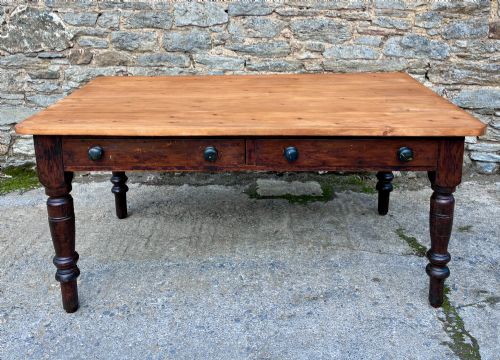
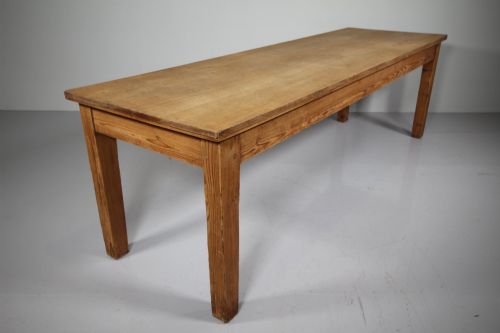
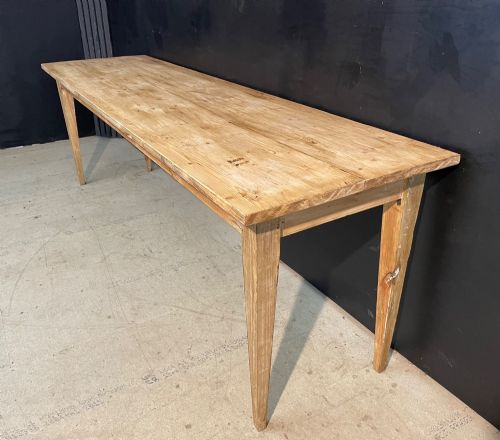
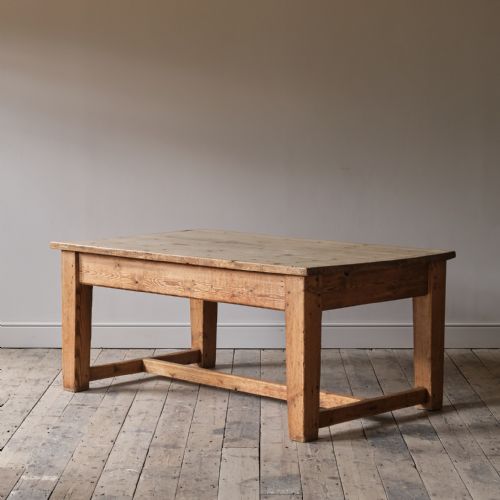
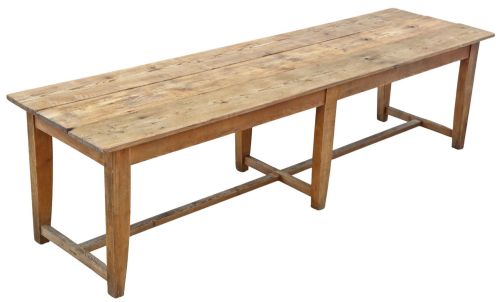
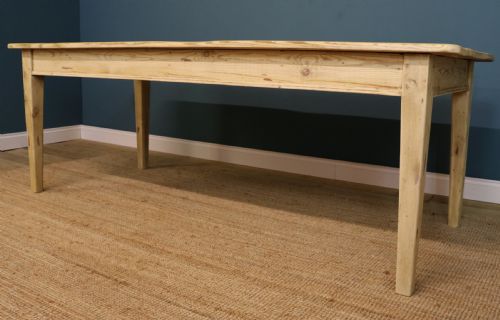


Large Scrubbed Pine Table
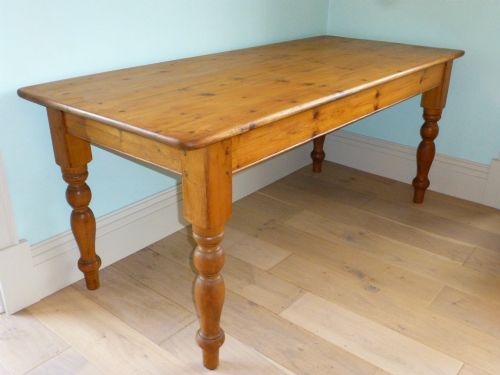
A large scrubbed pine table anchors a kitchen with honest utility and years of working life etched into the timber.
Large Scrubbed Pine Table
A large scrubbed pine table serves as a robust centrepiece for country kitchens and dining rooms alike, offering generous proportions for daily use. When you search for a large scrubbed pine table, you encounter substantial dining tables, refectory pieces, and work tables designed for heavy domestic labour.
Most examples hail from the nineteenth century, including Victorian, Edwardian, and specific regional country styles from England, France, Sweden, and Italy. These utilitarian objects transitioned from working kitchens and workshops into domestic dining spaces, retaining their functional character.
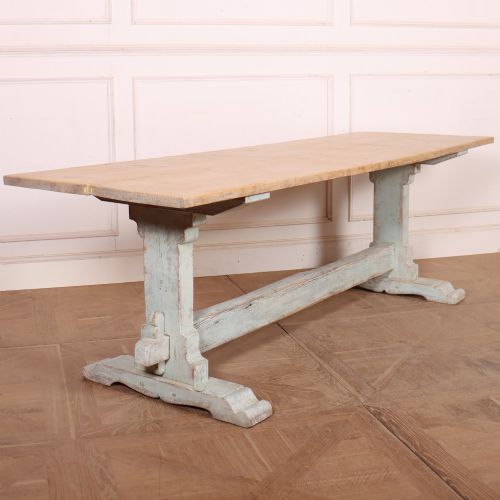
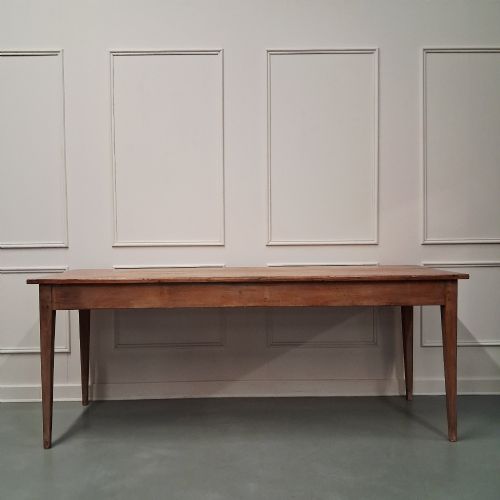
Forms vary from straightforward square section supports and trestle bases to long refectory formats capable of seating large numbers of guests. Occasional dresser bases and console hybrids also appear alongside traditional dining configurations.
How they were made
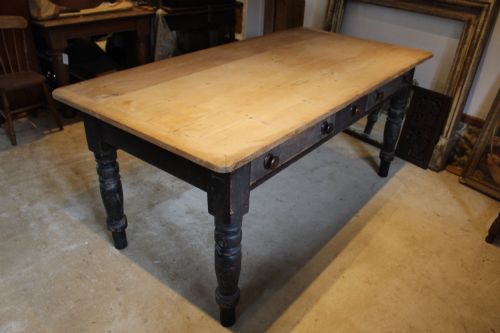
Construction relies heavily on solid pine and pitch pine, selected for accessibility and structural resilience in working environments. Some pieces incorporate oak alongside pine, whilst others feature historic painted surfaces or bleached finishes.
Carpenters utilised straightforward joinery methods suited to utilitarian furniture, such as trestle frames and robust square section supports. Surfaces were repeatedly scrubbed during their working lives, wearing away softer grain to leave a distinctive textured top.
Large Scrubbed Pine Table Retail Price Guide 2026
Typical asking prices for large scrubbed pine table among the pieces listed under this phrase on Sellingantiques today, from the lower quarter to the upper quarter. They describe what is for sale here now, not the wider market.
Some tables retain historical paint splatters, recording centuries of kitchen projects and domestic industry.
What varies in quality
Quality rests in the balance of proportions and the integrity of the timber, distinguishing honest workspace survivors from lesser constructions. Grain depth and the character developed through generations of scrubbing set superior tops apart.
The stability of the underframe and the original joinery dictate the daily utility and longevity of the piece. Regional variations in style, from Scandinavian country lines to English refectory formats, introduce distinct subtleties in craftsmanship.
The Large Scrubbed Pine Table Glossary
- Scrubbed pine
- Timber tops cleaned thoroughly through repeated washing and scrubbing over decades, removing surface finishes to expose the raised grain. This process creates the pale, tactile surface characteristic of these utilitarian tables.
- Refectory table
- A long, narrow dining table originally built for communal dining halls and monastic refectories. In later country furniture, the term describes any elongated table with substantial length relative to its width.
- Trestle table
- A table supported by two or more upright frames connected by a horizontal beam or stretcher. This design allows maximum legroom along the length of the table.
- Pitch pine
- A durable softwood variety known for its high resin content and distinct grain pattern. It offers greater hardness and longevity than standard white pine.
- Dresser base
- A low cabinet or sideboard surface historically used for food preparation and storage in country kitchens. They frequently share the robust proportions and timber construction of large farmhouse tables.
Large Scrubbed Pine Table: Frequently Asked Questions
How do I clean a scrubbed pine table?
Maintenance requires mild soap and warm water applied gently with a soft brush along the grain. Avoid harsh chemical cleaners that strip the natural character from the timber.
Allow the wood to dry naturally after cleaning. Occasional application of suitable wax helps protect the surface from stubborn spills.
Are these tables suitable for daily family use?
These tables were originally built for heavy domestic labour and active kitchens, making them exceptionally resilient for modern family life. Their robust timber construction withstands daily dining, working, and gathering.
Existing marks and knocks form part of the history of the piece rather than structural liabilities. Normal use simply adds another layer to their established patina.
How do I tell Victorian pine from earlier pieces?
Dating relies on observable construction methods, tool marks, and timber selection visible across the frame. Nineteenth-century pieces often display hand-planed surfaces and traditional joinery techniques.
Later Victorian and Edwardian examples may show more standardised machining whilst retaining the classic country farmhouse proportions. Comparing leg supports and underside construction provides clearer chronological clues.
Can I seat many people at a refectory table?
Refectory formats provide exceptional length without obstructive corner legs, accommodating numerous chairs comfortably along both sides. Their narrow width also encourages conversational dining among guests.
Swedish and English refectory variants offer generous seating capacities well suited to large dining rooms. Measuring the clearance beneath the side stretchers ensures your dining chairs slide in properly.