



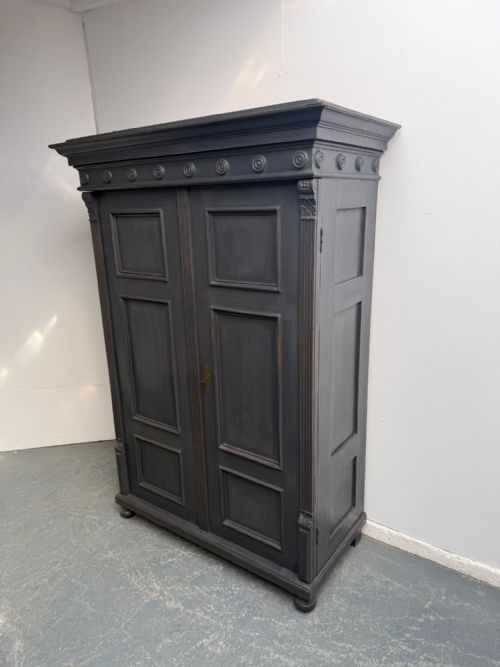


Large Pine Freestanding Cupboard
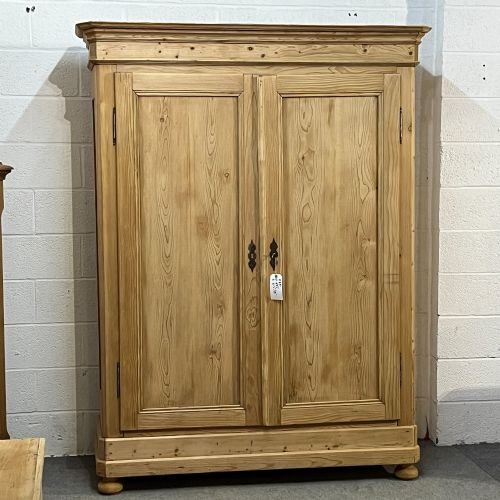
A large pine freestanding cupboard is a substantial storage piece built to anchor a room, bringing immediate character and utility.
Large Pine Freestanding Cupboard
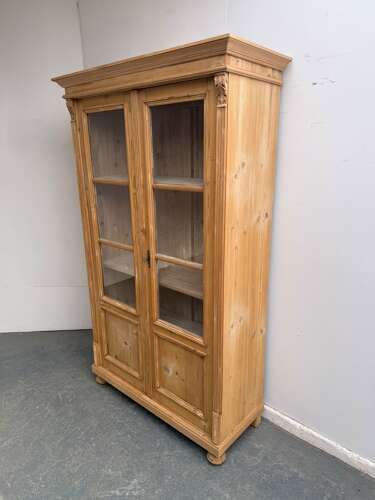
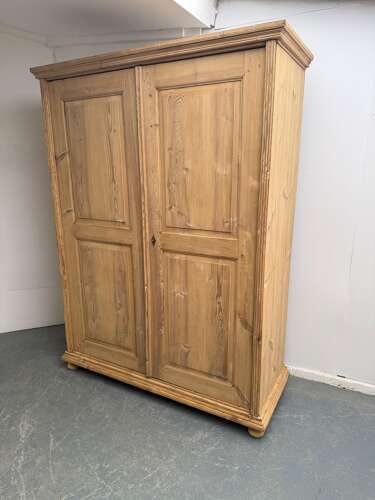
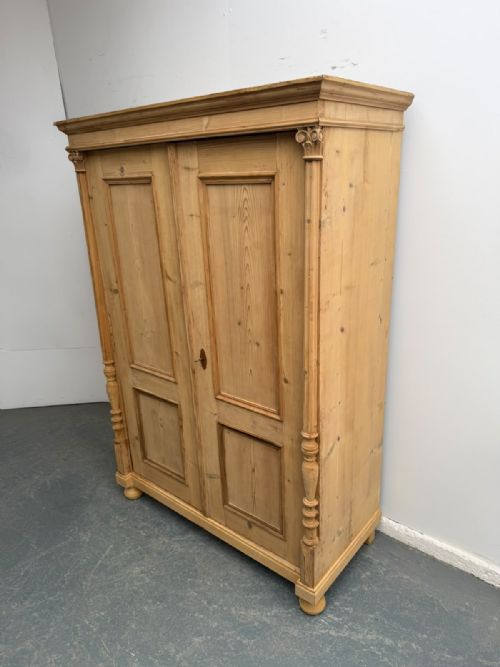
A large pine freestanding cupboard encompasses major household storage forms such as housekeeper cupboards, wardrobes, kitchen dressers, and large multi-door cabinets. These pieces emerge across several periods, spanning Georgian, Victorian, and early twentieth-century eras, reflecting various country traditions.
The versions most commonly met on this page are substantial Victorian and nineteenth-century pieces, often featuring multiple doors or knockdown construction for practical transport. They appear in natural wax finishes, stripped pine, or retaining original paint and grey surface treatments.
Origin and regional styles vary widely, ranging from English and French country workshops to Hungarian and general European country designs. Buyers encounter everything from tall corner cupboards and breakfront dressers to school cupboards and deep linen storage units.
How they were made
Construction relies heavily on solid pine, shaped into beaded panels, breakfront frameworks, and knockdown carcasses designed for assembly on site. Cabinet makers utilised straightforward joinery to build these large storage units for domestic and institutional settings.
Hardware and surface finishes define the construction details, incorporating iron hinges, brass fittings, wire mesh inserts, and glass doors. Many pieces retain original paint or specific finishes like wax, while others await treatment to suit modern interiors.
Object forms include wardrobes, housekeepers cupboards, kitchen dressers, corner cupboards, bookcases, and general storage cabinets originating from English, French, Hungarian, and European country traditions.
What varies in quality
The distinction between standard utility storage and finer examples rests on structural complexity, such as breakfront proportions, four-door configurations, and intricate beaded detailing. Pieces built with knockdown capability show clever carpentry designed for large furniture to move between rooms.
Surface integrity and originality heavily influence the character of each piece, distinguishing between those retaining original paint finishes and those prepared for waxing. The balance of proportion across tall wardrobes and housekeepers cupboards determines visual weight and presence.
The Large Pine Freestanding Cupboard Glossary
- Knockdown
- A piece of furniture constructed to dismantle into major sections for easier transport and installation. This method was particularly useful for massive wardrobes and cupboards in older houses.
- Housekeeper's cupboard
- A large storage cabinet traditionally used for linens, dry goods, and household provisions. These units typically feature multiple doors and internal shelving or hanging space.
- Breakfront
- A cabinet design where the central section projects forward from the side sections. This configuration adds depth and architectural interest to large dressers and cupboards.
- Scullery cupboard
- A utilitarian storage piece originating from the working areas of a country house. They are built for heavy everyday use and practical organisation.
- Scumbled
- A paint technique applied to imitate the grain of finer woods or to create an aged decorative surface. It appears on various country painted pieces.
Large Pine Freestanding Cupboard: Frequently Asked Questions
How do I date a pine cupboard?
Dating relies on construction methods, hardware types, and distinct stylistic markers from the Georgian, Victorian, or early twentieth-century periods. Examining the backboards, fixings, and timber preparation helps place the piece in its era.
Evidence from regional styles and original paint finishes also offers clues to the workshop origins and the decade of manufacture.
Are knockdown cupboards difficult to assemble?
Knockdown furniture was originally designed so large wardrobes and storage units could navigate tight staircases and doorways. The structural cleverness allows the main carcass sections to fit together securely without permanent glue joints.
Taking care with the original iron or brass fixings during setup ensures the piece stands square and steady.
What is the difference between a wardrobe and a housekeeper cupboard?
Wardrobes are primarily designed for hanging garments, often featuring deep internal space behind large double doors. Housekeeper cupboards focus on linen storage and provisions, frequently combining shelves, drawers, and smaller compartments.
Both serve as major freestanding storage anchors within a room.
Should I keep original paint or wax the pine?
Deciding on the finish depends on whether the piece retains a significant historic surface, such as original grey paint or an authentic country finish. Preserving original paint maintains the historical character and untouched surface integrity.
Alternatively, pieces stripped to bare pine or prepared for waxing offer a warm, traditional timber tone suited to various interior styles.
How do I fit a large cupboard into a modern room?
Measuring both the ceiling height and floor clearance is essential before introducing a massive cupboard or dresser to a space. Knockdown designs simplify the process of moving large pieces through tight architectural routes.
Allowing sufficient clearance around breakfront cornices and opening doors ensures the furniture functions properly in its new setting.