
Large Pedestal Table
A large pedestal table anchors a room with timber and balance, offering extendable seating or centred surface space rooted in Georgian and Victorian craftsmanship.
Large Pedestal Table
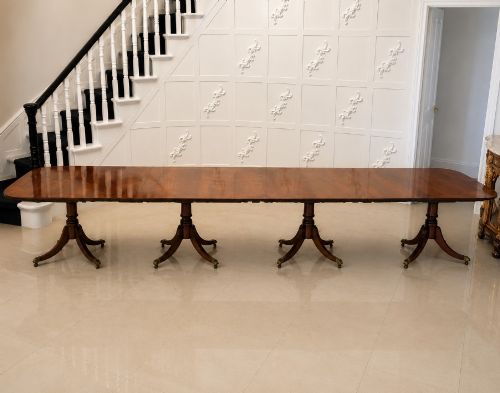
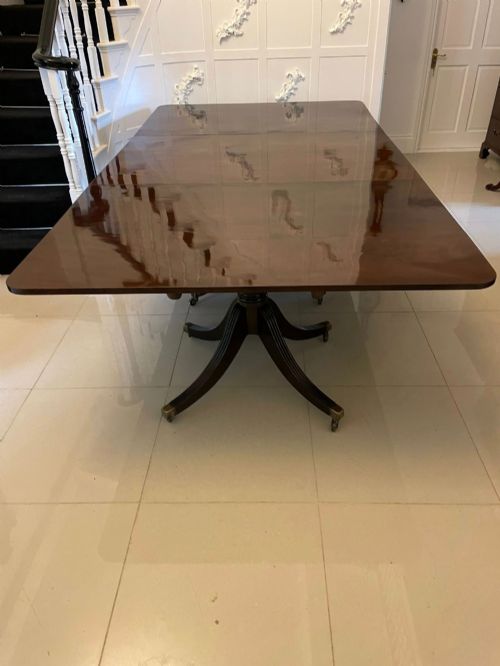
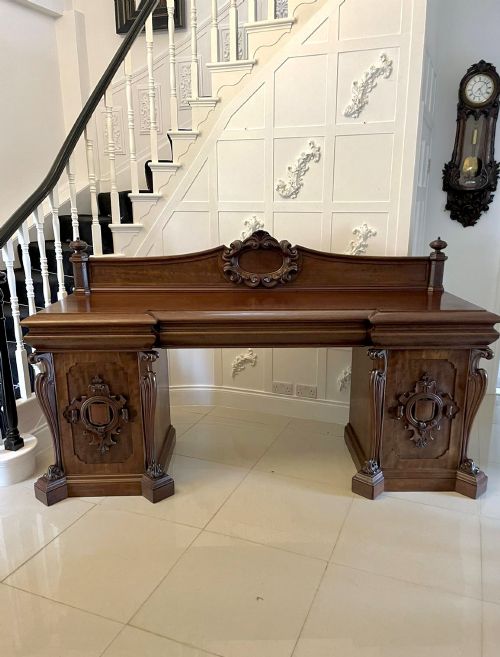
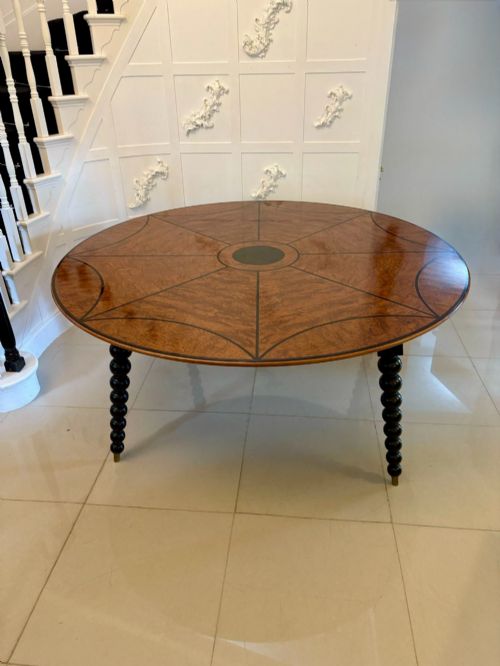
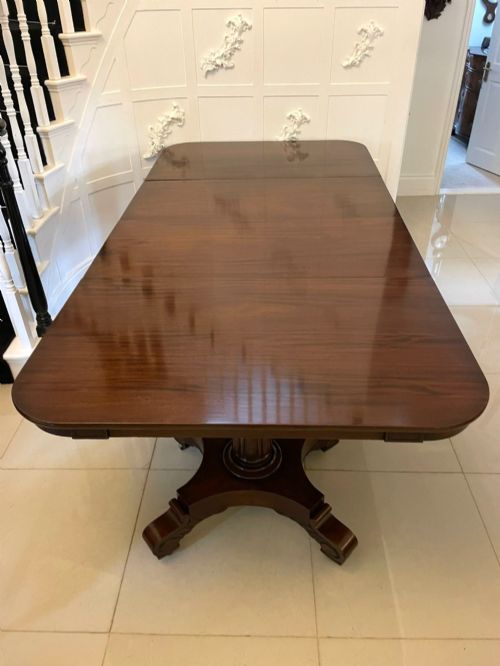
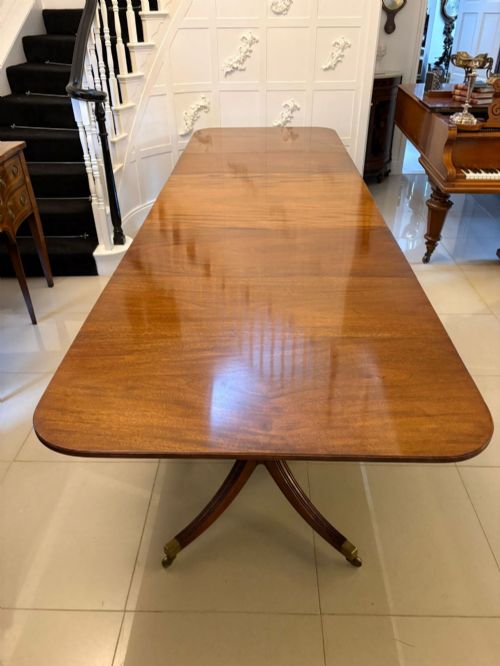
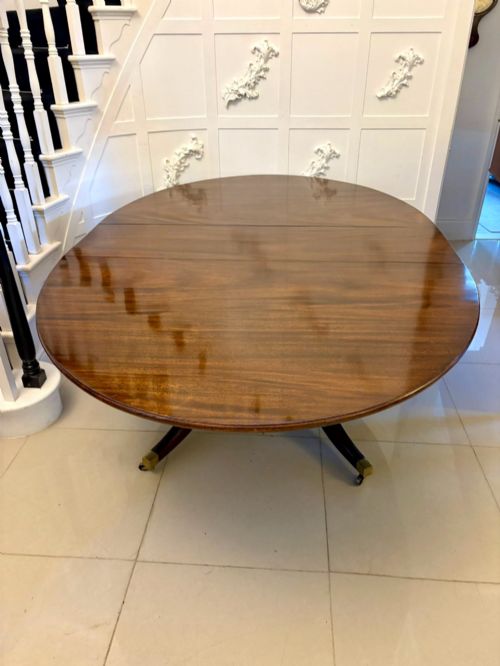
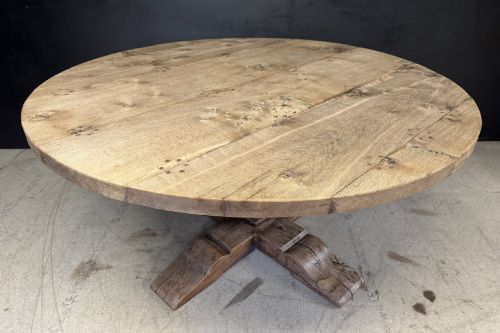
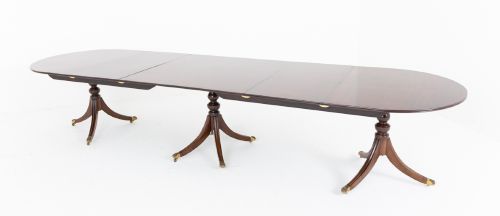
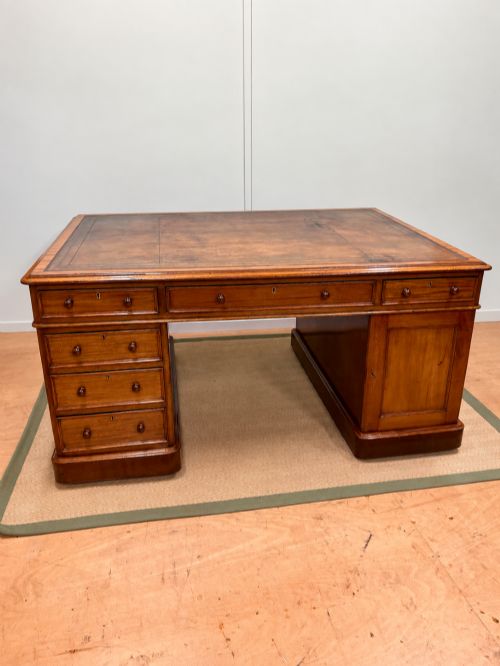
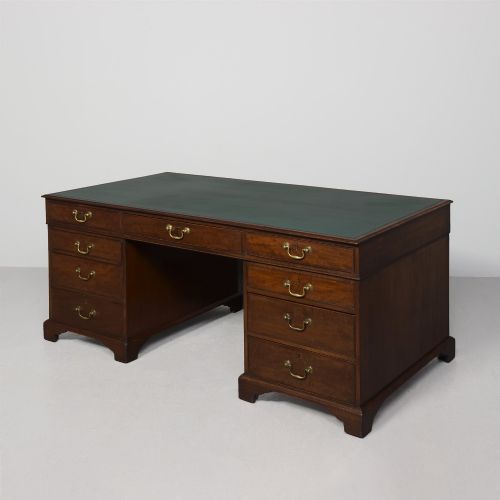
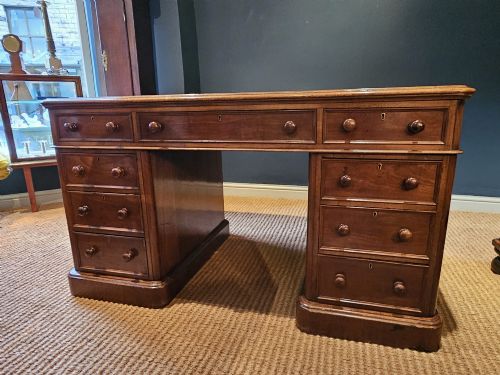
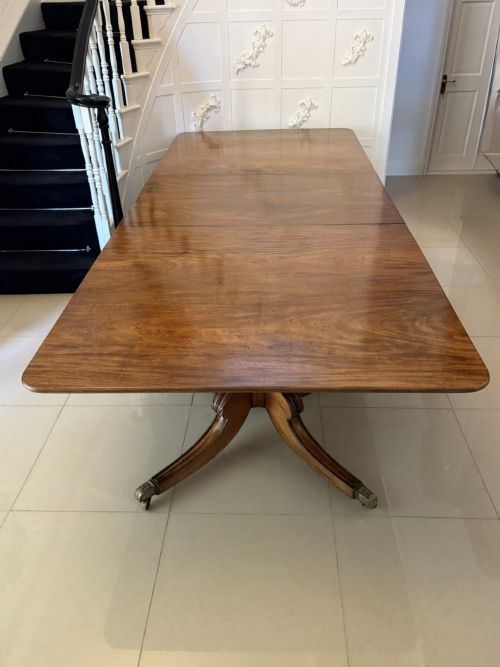
A large pedestal table functions primarily as an extending dining surface or a substantial partners desk, resting on pillars rather than four corner legs. Buyers seeking this phrase encounter multi-pillar formats designed to seat ten to twenty-eight people, alongside round centre tables and boardroom furniture.
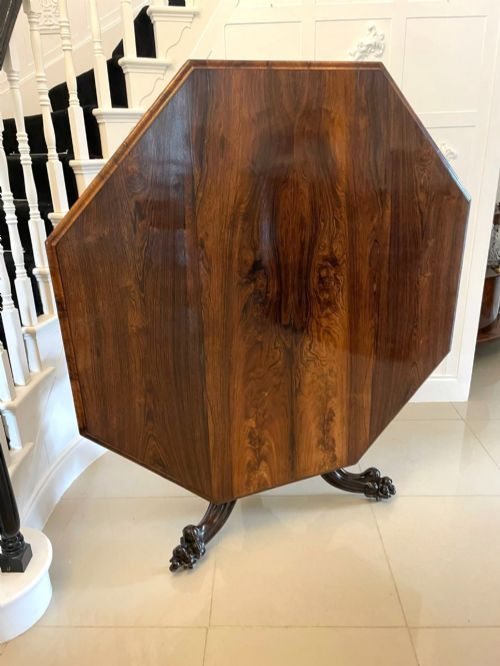
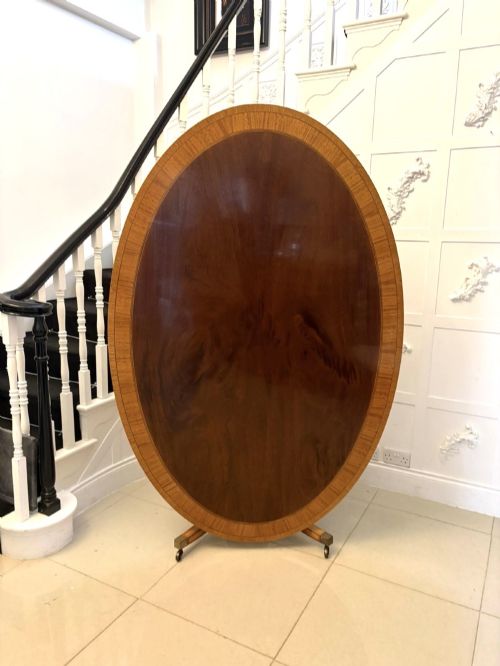
The material record spans mahogany, oak, walnut, rosewood, and burr pollard oak, reflecting periods from the 18th century through to the Edwardian era and the 1920s. Regency, George III, and William IV styles dominate the listings, bringing crossbanded satinwood and carved details to the domestic interior.
How they were made
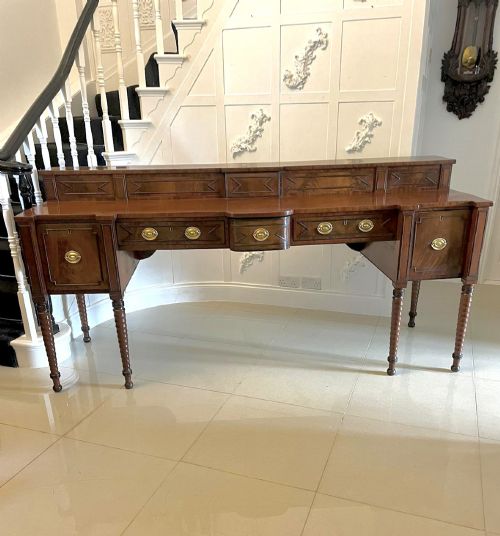
Cabinet makers utilised solid timbers and figured veneers, laying mahogany, walnut, and rosewood over secondary woods to create balanced table tops and desk surfaces. Brass mechanisms, castors, and leather inserts appear frequently in the construction of extending dining tables and partners desks.
Joinery techniques include drop-leaf hinges, marquetry inlays, ebony stringing, and satinwood crossbanding to frame the grain of the timber. Pillar supports often feature carved tripod or quadruped bases resting on heavy brass claw castors.
One lonely milk jug from 1780 sits among dozens of towering dining tables and partners desks.
What varies in quality
The standard of a large pedestal table depends on the choice of timber figure, such as figured mahogany or burr pollard oak, and the precision of the cabinet work in the extending pillars. Tables that retain matching grain patterns across multiple removable leaves demonstrate superior initial construction.
Makers such as Gillows or Charles Andrea Nosotti represent the upper tier of execution, where secondary woods, original leather inserts, and structural stability remain intact across large expanses.
Gillows·Charles Andrea Nosotti·Stalker & Mitchison
The Large Pedestal Table Glossary
- Pedestal table
- A table supported by one or more central pillars rather than standard corner legs. These pillars often divide to support extending dining leaves.
- Partners desk
- A large double-sided desk designed for two people to work opposite each other, featuring drawers and cupboards on both faces.
- Crossbanding
- A strip of veneer applied around the border of a table top with the grain running perpendicular to the central panel. This technique frames the primary timber.
- Marquetry
- Decorative patterns created by fitting different wood veneers and materials into a timber surface. Walnut and exotic woods frequently display this method.
- Extending dining table
- A table designed with internal runner tracks and removable leaves to adjust the overall seating capacity from ten up to twenty-eight guests.
Large Pedestal Table: Frequently Asked Questions
How many people can a large pedestal table seat?
Tables listed with three or four pillars accommodate ten to twenty-four guests, depending on the number of inserted leaves.
Longer formats reach up to twenty-eight seats for larger dining rooms and boardrooms.
What is the difference between a twin pillar and a triple pillar table?
A twin-pillar table uses two central pedestals and generally suits rooms requiring a ten to twelve-seater capacity.
Adding a third or fourth pillar provides the structural support needed for extending lengths past sixteen seats.
How do partners desks differ from standard desks?
Partners desks feature working drawers and pedestals on both sides, allowing two people to sit opposite each other.
They appear in mahogany, walnut, and oak from the Georgian and Victorian periods.
Which woods are most common in these tables?
Mahogany forms the majority of the dining tables and desks, appearing in figured, flame, and plain varieties.
Walnut, oak, rosewood, and pollard oak appear alongside satinwood crossbanding and brass details.