

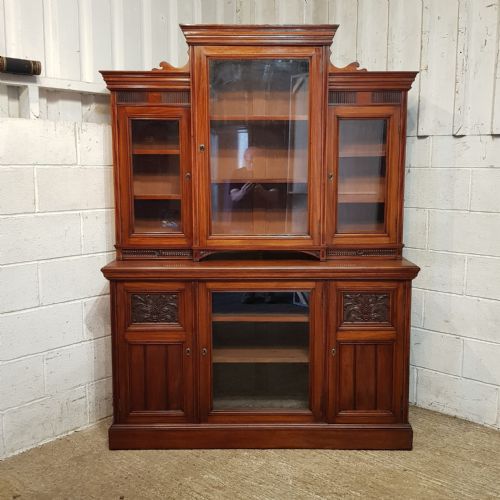
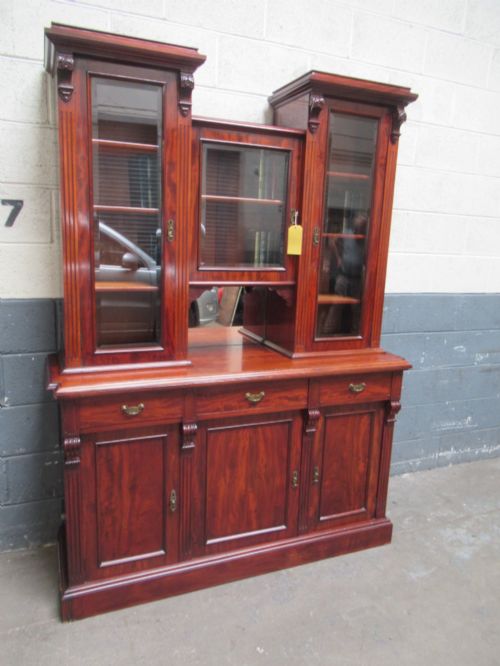
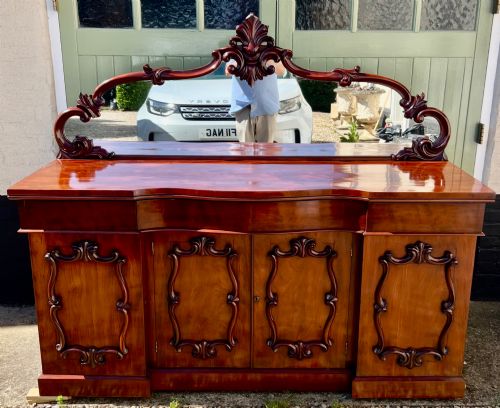


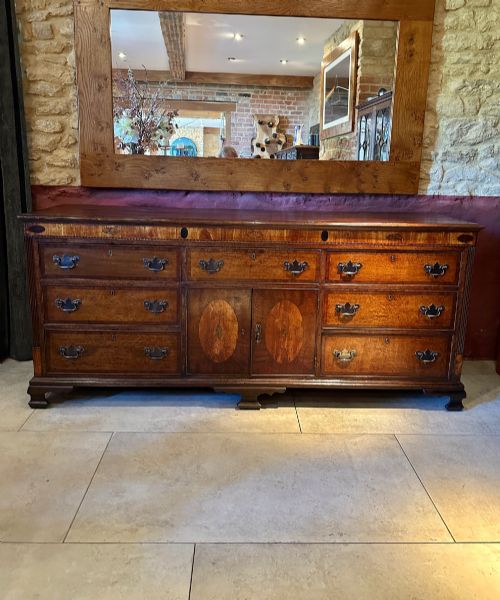


Large Mahogany Sideboard Cabinet
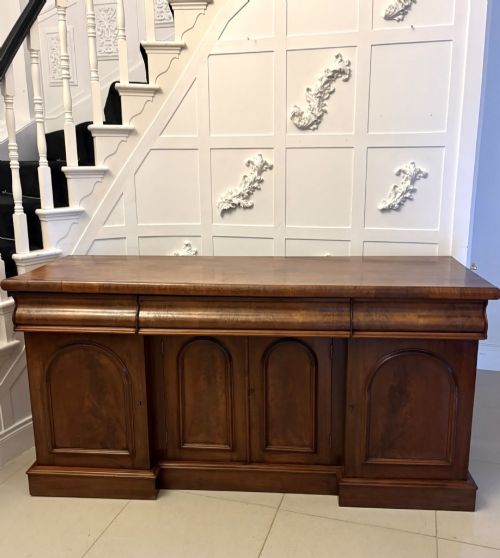
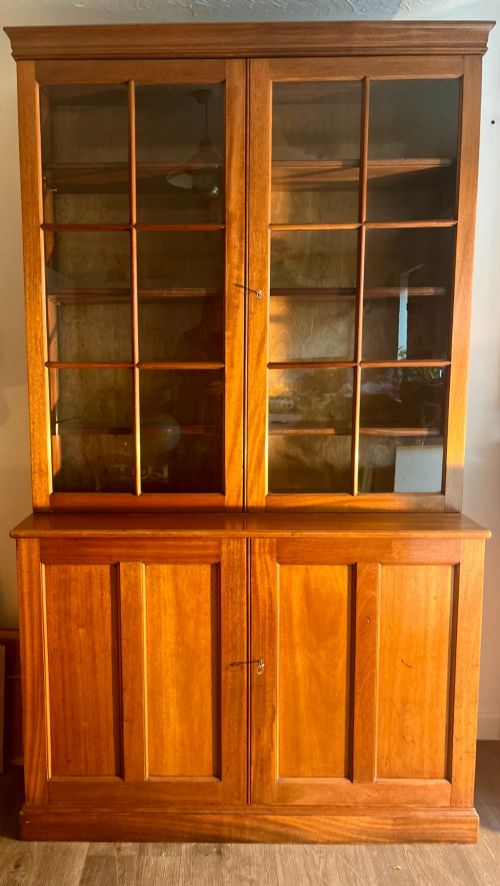
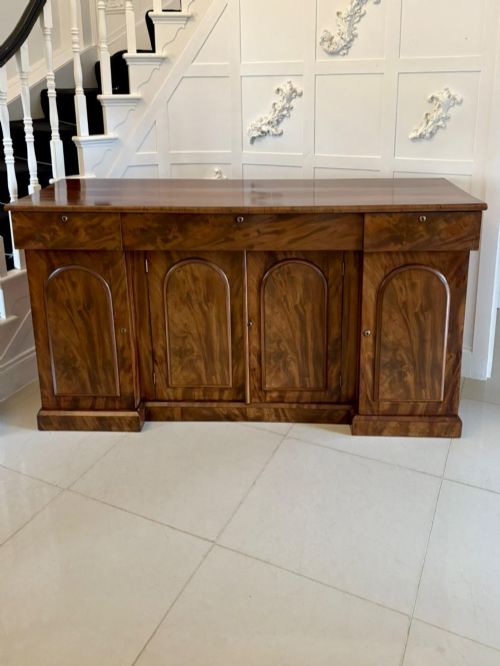
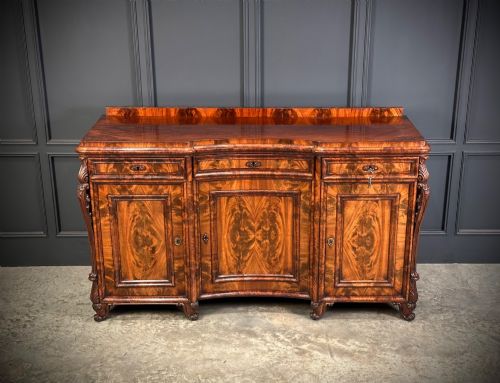
A large mahogany sideboard cabinet grounds a formal dining room with substantial presence and deep timber grain.
Large Mahogany Sideboard Cabinet
A large mahogany sideboard cabinet is a substantial dining room piece designed for serving food and storing silver, linen, or glassware. You will most frequently meet Victorian and George III examples stretching across a wall with multiple doors and deep drawers.
These items take various forms, from pedestals and breakfronts to chiffoniers with mirror backs and server units. They anchor larger rooms with their considerable width and height.
The evidence shows origins spanning the eighteenth and nineteenth centuries, taking in Georgian, Victorian, Regency, and Edwardian periods. Scottish and English workshops both contributed notable variations to this heritage.
How they were made
Cabinet makers built these pieces using solid mahogany and applied flame mahogany veneers over secondary timbers to create striking, figured surfaces on the primary doors and drawer fronts. Brass handles, escutcheons, and occasional satinwood inlay added decorative contrast.
Construction involved heavy carcases designed to support large marble tops or timber surfaces, alongside substantial pedestal bases and carved architectural details.
Large Mahogany Sideboard Cabinet Retail Price Guide 2026
Typical asking prices for large mahogany sideboard cabinet among the pieces listed under this phrase on Sellingantiques today, from the lower quarter to the upper quarter. They describe what is for sale here now, not the wider market.
Listings feature mahogany, flame mahogany veneer, satinwood, brass, glass, and marble across 18th, 19th, and early 20th-century periods.
What varies in quality
The depth of figure in the flame mahogany veneer and the crispness of hand-carved mahogany ornamentation separate standard items from exceptional ones. Finer examples display symmetrical grain matching across four doors and sophisticated breakfront configurations.
Construction integrity, such as the thickness of the timber carcase and the precision of the drawer dovetailing, marks the distinction between ordinary utility pieces and high-status dining room furniture.
Robson & Sons·Maple & Co·Gillows
The Large Mahogany Sideboard Cabinet Glossary
- Breakfront
- A piece of furniture where the central section projects forward from the flanking outer cabinets. This arrangement creates a pronounced architectural rhythm across the front.
- Pedestal sideboard
- A design featuring two substantial cupboards flanking a central recess or drawer. These heavy units often stand on plinth bases.
- Flame mahogany
- A decorative timber veneer sliced from the point where branches join the main tree trunk. It produces a distinctive flickering, flame-like pattern.
- Chiffonier
- A compact sideboard or low cabinet equipped with shelves or a mirror back. It gained popularity during the Victorian era for storing dining china.
Large Mahogany Sideboard Cabinet: Frequently Asked Questions
Where should a large sideboard go?
These cabinets suit spacious dining rooms or wide hallways where their depth and length can be appreciated without crowding the room. They require a solid wall capable of supporting a piece that often exceeds six feet in width.
Ensure adequate clearance in front of the cabinet so that heavy doors and wide drawers can open fully without obstruction from dining chairs.
How do I care for mahogany?
Keep mahogany timber away from direct sunlight and heat sources to prevent the rich reddish-brown polish from fading and the underlying veneers from lifting. Regular dusting with a soft, dry cloth preserves the finish.
Apply a traditional beeswax sparingly once or twice a year to nourish the timber grain without building up a sticky residue.
How do I distinguish George III from Victorian?
George III pieces typically display restrained classical proportions, subtle satinwood stringing, and elegant tapered legs or straight bracket feet. The timber often has a warm, mellow patina developed over centuries.
Victorian cabinets tend to be heavier, featuring grander carved ornamentation, bold flame mahogany veneers, and four-door pedestal bases built for larger Victorian dining rooms.