
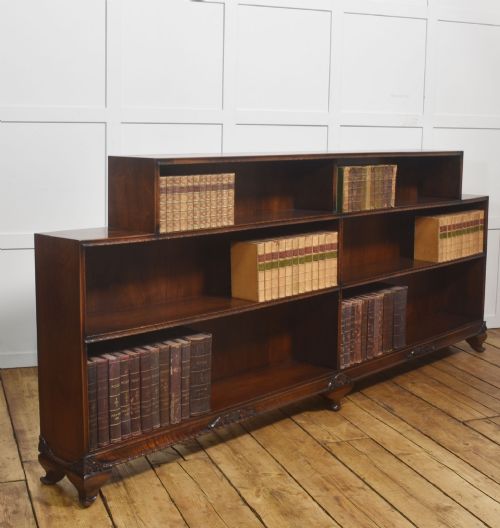
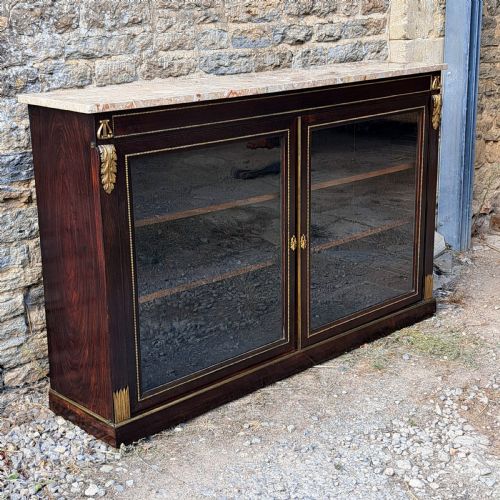
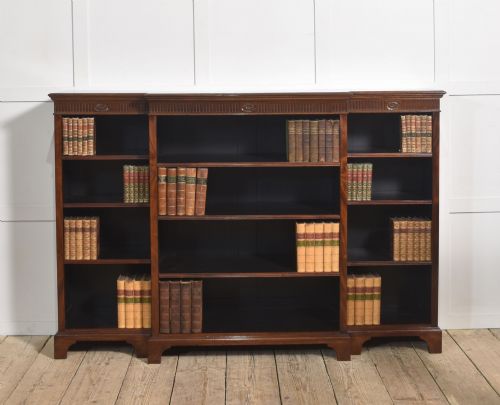
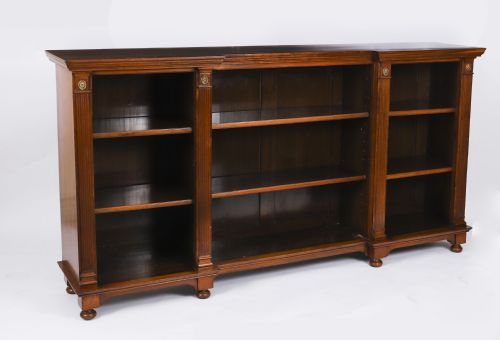
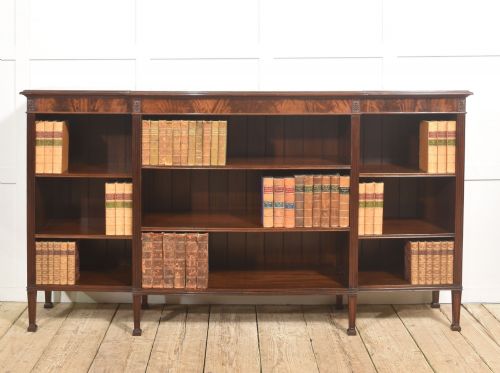
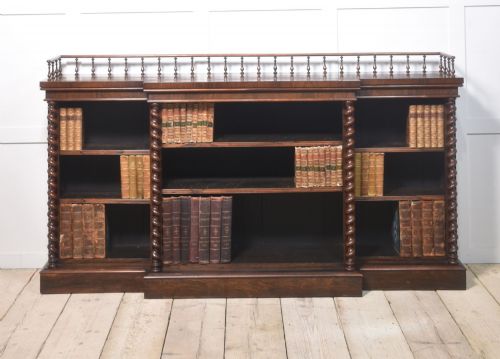

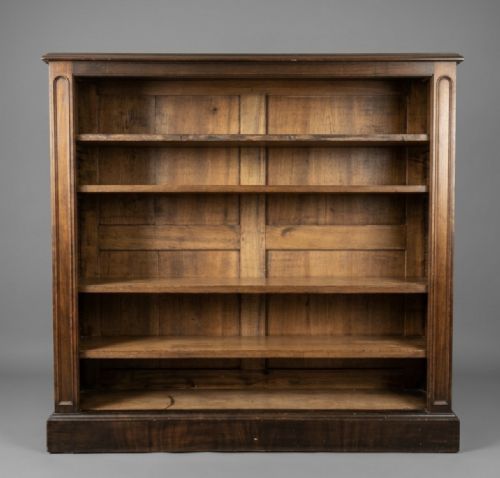
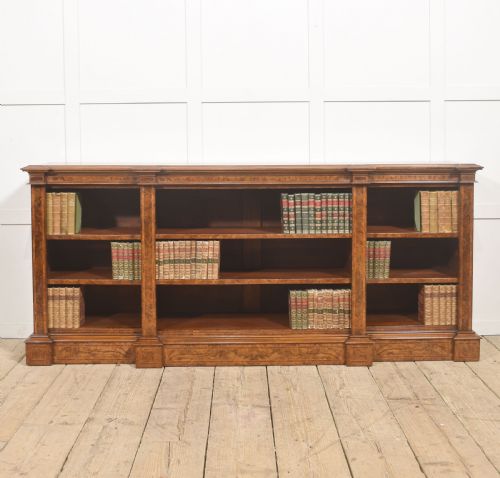


Large Low Bookcase
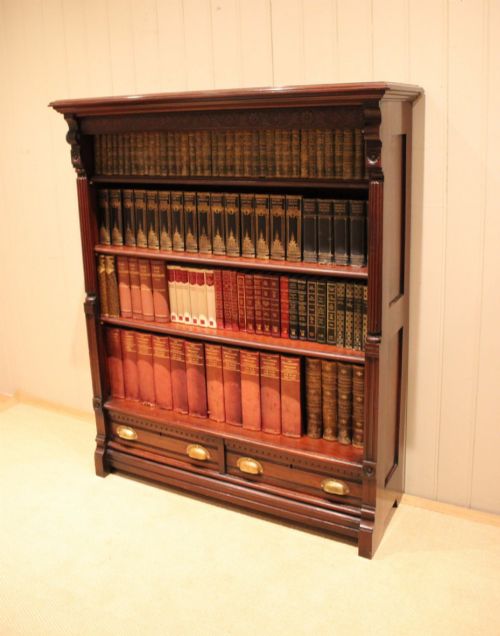
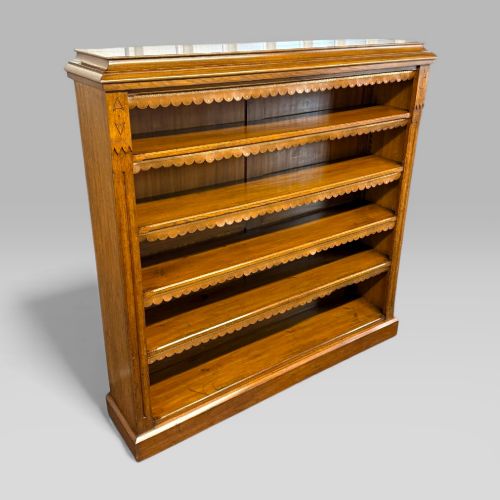
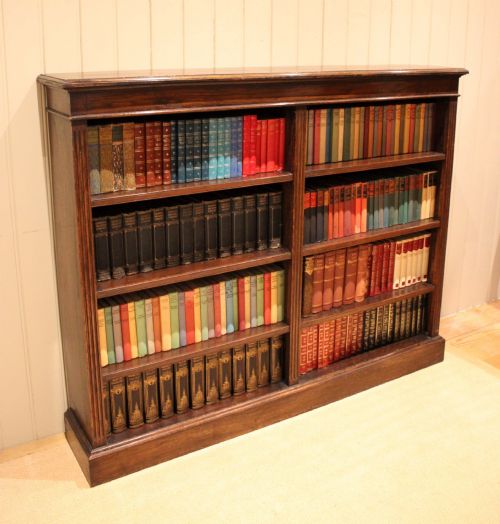
A large low bookcase brings generous shelf capacity at a reachable height, combining floor-standing presence with convenient top access.
Large Low Bookcase
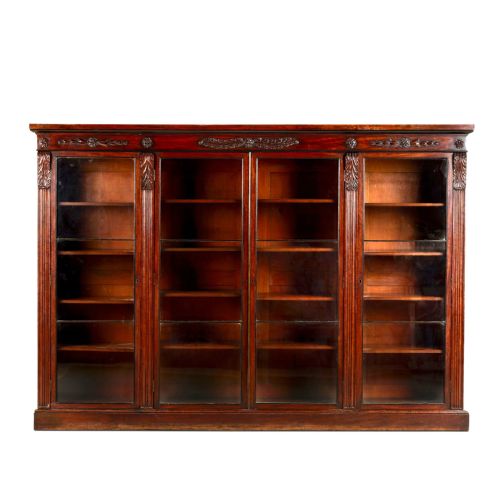
A large low bookcase offers extensive horizontal display and storage space while maintaining a grounded proportion that leaves walls unobstructed above. These pieces range from open library shelving to breakfront formats and glazed cabinets, designed to sit comfortably within nineteenth-century domestic spaces.
The versions most commonly encountered on this page date from the Victorian and Edwardian eras, alongside earlier Regency examples. Many feature adjustable shelving, making them practical for housing varied collections of books.
Makers often divided these long formats into breakfront sections, using mahogany, walnut, oak, and rosewood to anchor the design. The emphasis remains on functional capacity combined with refined timber figuring.
Timbers and Construction Methods
Makers relied on dense hardwoods such as mahogany, oak, walnut, and rosewood, frequently selecting flame mahogany and burr walnut veneers for striking grain patterns. Brass mounts, ormolu details, and ebonised finishes appear across several examples to accent the primary timber.
Construction techniques prioritise stability across wide spans, particularly in breakfront and multi-door formats. Adjustable shelf mechanisms allow internal flexibility, whilst applied carvings, brass inlays, and glass panels finish the cabinetry.
The inventory records open formats alongside glazed display cabinets and fitted breakfront library units.
Distinctions in Execution and Material Selection
Quality reveals itself in the choice of timber figure, such as richly matched flame mahogany or burr walnut veneers, and the crispness of carved details. Finer pieces display careful attention to proportion, particularly across wide breakfront cornices and plinths.
The integration of secondary materials like ormolu mounts, brass stringing, and glazed doors separates standard utility furniture from high-status library pieces. Superior examples also incorporate smoothly operating adjustable shelving systems and robust internal construction.
Maple & Co.·Gillows·Gillow & Co.
The Large Low Bookcase Glossary
- Breakfront
- A piece of furniture where the central section projects forward from the flanking wings. This architectural layout creates visual depth across long cabinetry.
- Open bookcase
- A shelving unit without doors, designed for immediate access to volumes. These frequently feature adjustable wooden shelves.
- Ormolu
- Gilded bronze mounts applied to furniture for decorative contrast. It appears frequently on nineteenth-century walnut and ebonised pieces.
- Dwarf bookcase
- A low-standing shelving unit designed to sit beneath dado height. These items provide stable display surfaces on top.
- Ebonised
- Timber treated to imitate ebony, producing a dark, uniform surface finish. It is often paired with contrasting brass mounts.
Large Low Bookcase: Frequently Asked Questions
How do I style a large low bookcase?
Position the bookcase against a principal wall where its horizontal proportion grounds the room without blocking light or artwork hung above. Use the top surface for lamps, decorative objects, or smaller framed pictures while keeping lower shelves accessible for everyday volumes.
Organise books by height or colour to create visual balance across wider spans. Adjustable shelving allows you to alter compartment sizes to accommodate oversized folios alongside standard octavos.
Were these bookcases built for home libraries?
These pieces were constructed primarily for nineteenth-century domestic libraries, drawing rooms, and studies where extensive book storage needed to coexist with other furniture. Their low profile kept upper wall spaces clear for paintings and mirrors.
Many incorporate adjustable shelves to cope with varying publication formats of the period. Breakfront and multi-door configurations allowed households to combine open display with secure cabinet storage.
How can I tell Victorian pieces apart from Edwardian ones?
Victorian examples often display heavier proportions, deeper timber tones, and more pronounced carving, such as Gothic Revival or Aesthetic Movement details. Ormolu mounts and ebonised finishes also point firmly to nineteenth-century preferences.
Edwardian furniture tends to lighten in feel, sometimes incorporating simpler lines or inlaid satinwood banding. Construction methods and secondary timbers inside the cabinet also help clarify the exact period of manufacture.