
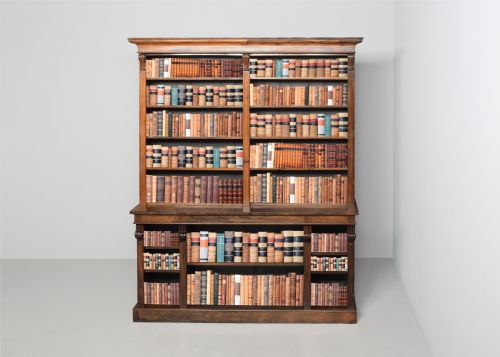
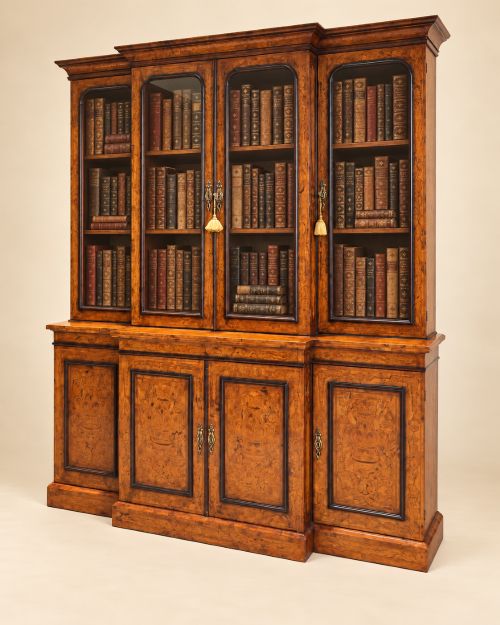
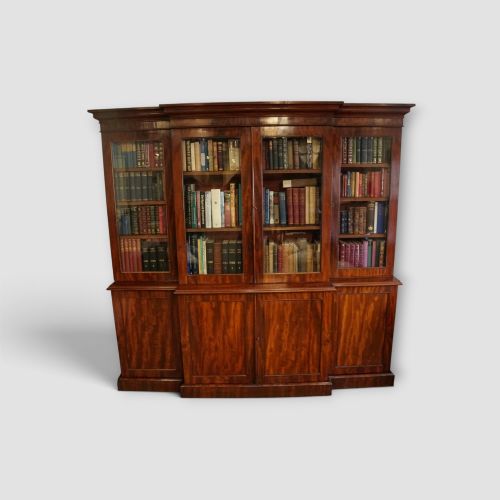
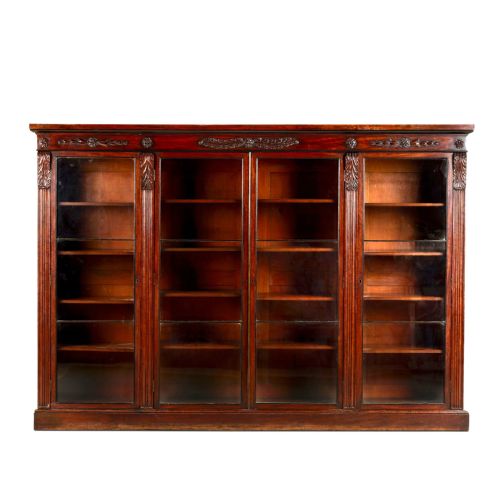
Large Library Cabinet
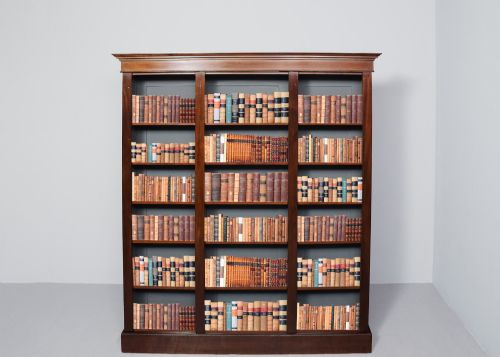
A large library cabinet organises heavy volumes and folio collections with presence, spanning centuries of formal domestic architecture.
Large Library Cabinet
A large library cabinet provides substantial storage for books and manuscripts, typically standing as a primary focal point in a domestic study or formal reception room. When searching for a large library cabinet, a buyer encounters monumental timber constructions designed to house extensive private collections.
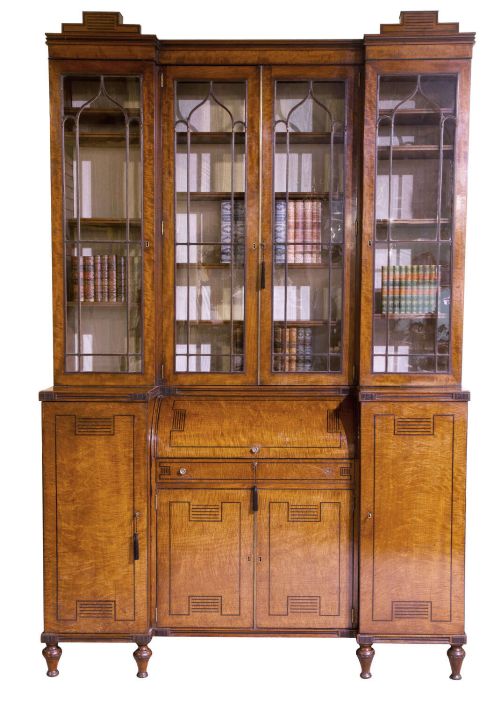
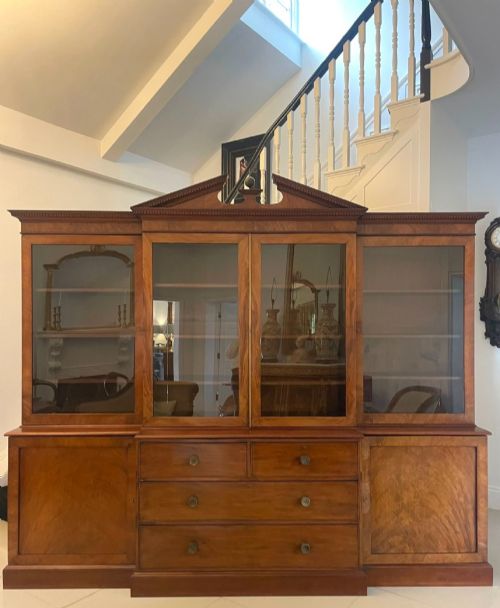
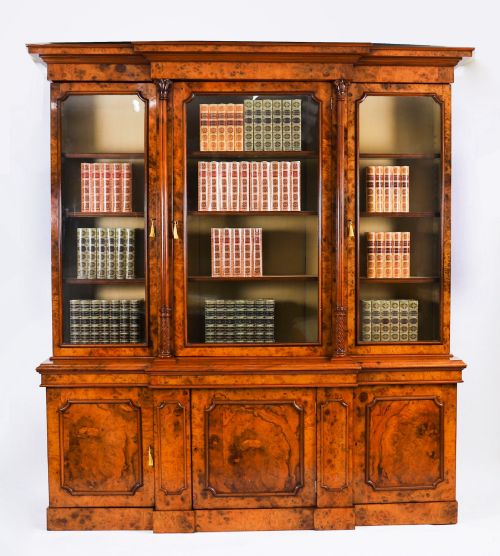
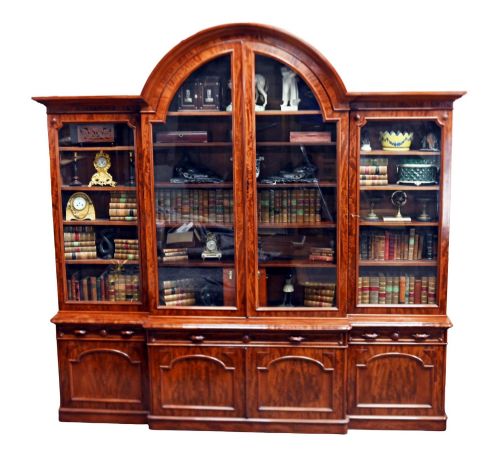
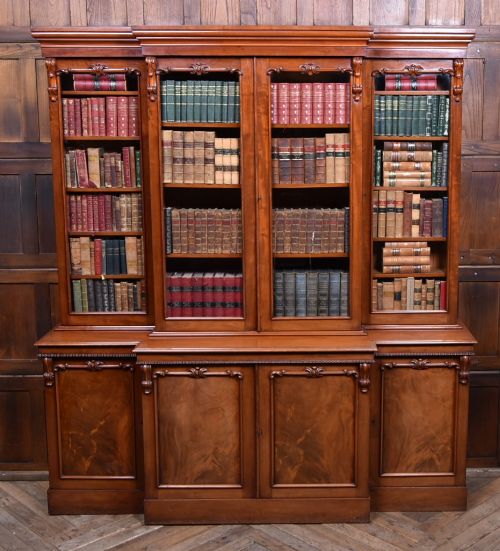
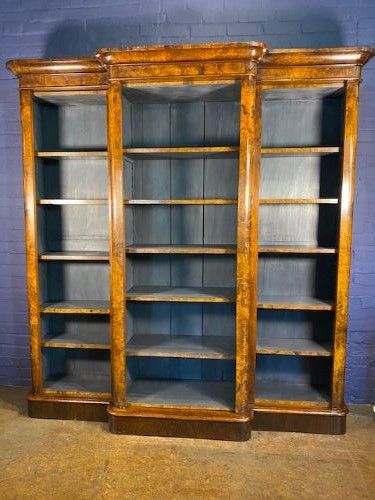
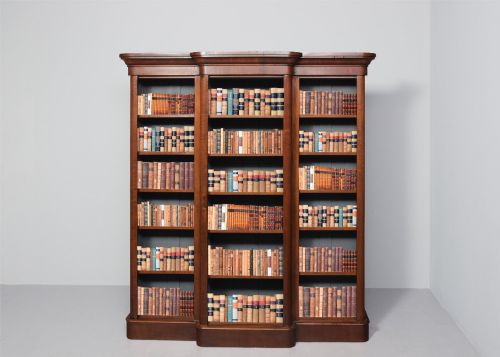
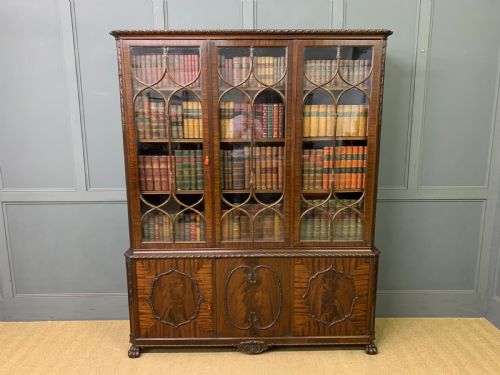
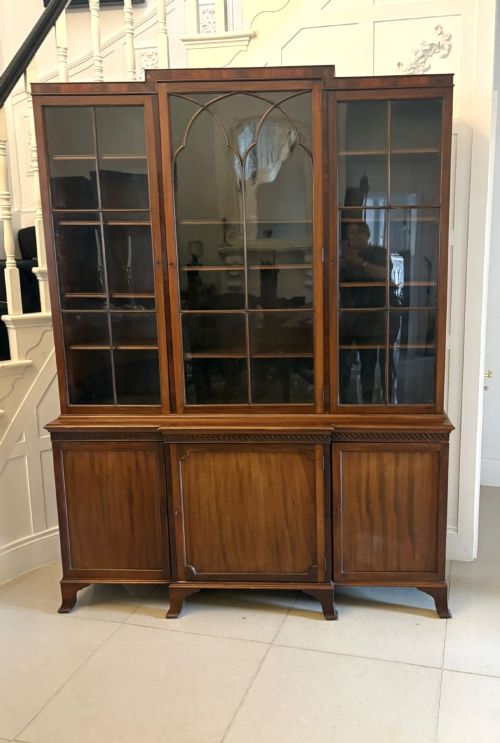
The pieces on this page lean heavily toward nineteenth-century Victorian designs alongside Georgian and Edwardian examples. Breakfront configurations dominate the selection, offering recessed centre sections flanked by projecting wings.
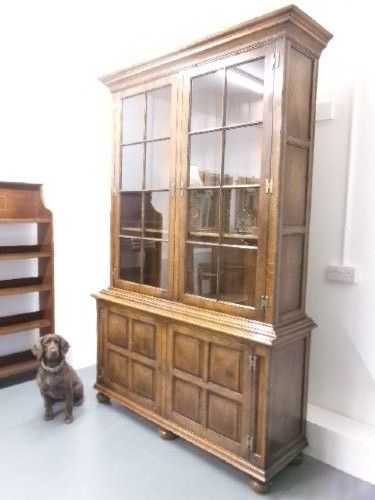
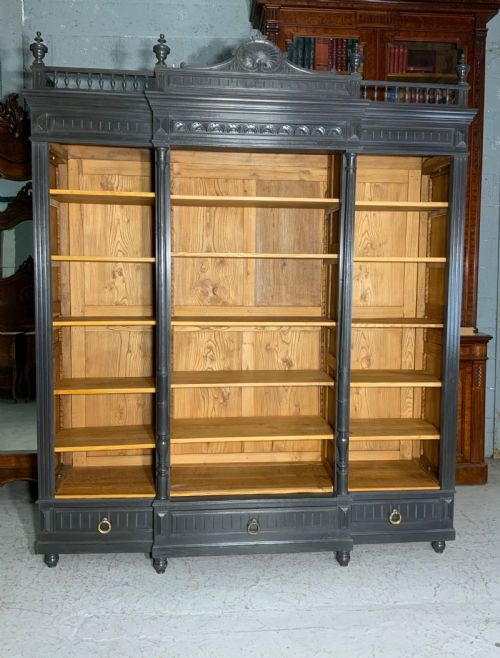
Constructed primarily as towering multi-door glazed display units or open shelving frameworks, these items originate from English, French, and continental workshops. Buyers find both glazed upper sections protecting fragile bindings and open front variants for frequent retrieval.
How they were made
Cabinet makers utilised dense native and imported timbers, notably mahogany, oak, and walnut, often selecting burr veneers or flame grain patterns for primary visual surfaces. Solid wood construction forms the structural core of these heavy case pieces, supported by brass hardware on doors and adjustable shelving tracks.
Glazing techniques involve individual glass panes set within timber framing, while decorative details incorporate carved mouldings, inlay, and ebonised highlights. Breakfront assembly methods join separate cabinet sections into single cohesive architectural façades.
Continental workshop origins appear alongside English production, showing regional preferences for tall open oak frameworks and French walnut double doors.
What varies in quality
Quality rests upon the selection of timber figures, such as matched flame mahogany veneers or intricate burr walnut surfaces that indicate higher workshop expenditure. The architectural proportion of the breakfront profile and the crispness of hand-carved mouldings separate standard production from superior craftsmanship.
Internal engineering also dictates standing value, evident in smoothly operating adjustable shelf mechanisms and robust door alignment. Original brass mounts and intact antique glass panes preserve the historical integrity of the piece.
Wylie and Lochhead·Gillows
The Large Library Cabinet Glossary
- Breakfront
- A cabinet facade featuring a projecting centre section flanked by recessed or set-back wings. This configuration breaks the flat line of long walls and adds architectural depth.
- Flame mahogany veneer
- A sliced timber sheet displaying a flickering, flame-like grain pattern derived from the branch forks of the mahogany tree. Cabinet makers applied these decorative veneers to primary display surfaces.
- Burr walnut
- Timber taken from the root growths of walnut trees, characterised by swirling, dense knot clusters. It commands high regard for its decorative complexity.
- Secretaire
- A desk component incorporated into a cabinet featuring a fold-down writing flap concealing small drawers and pigeonholes. It combines storage with functional workspace.
- Glazed
- Fitted with transparent glass panels within door frames to display book bindings while protecting volumes from dust.
Large Library Cabinet: Frequently Asked Questions
How do I fit a large library cabinet?
Measure ceiling height and wall space carefully before acquisition, ensuring clearance for projecting breakfront cornices and wide opening doors. These monumental case pieces require stable, level flooring to prevent structural distortion over time.
Position the cabinet away from direct sunlight and heat sources to protect sensitive wood finishes and aged book bindings from environmental degradation.
How do I care for antique timber?
Maintain stable indoor humidity levels to prevent timber shrinkage and veneer lifting across expansive cabinet doors. Clean surfaces gently with a soft, dry cloth without applying modern silicone polishes.
Feed dry wood periodically with appropriate traditional wax formulations to preserve the depth of the nineteenth-century finish.
How do I tell Victorian from Georgian cabinets?
Georgian examples demonstrate restrained classical proportions, rectilinear cornices, and lighter structural framing reflecting eighteenth-century architectural ideals. Timbers lean toward figured mahogany with subtle string inlay.
Victorian pieces introduce heavier breakfront massing, deeper mouldings, elaborate carving, and an expanded palette including burr walnut and ebonised highlights.