





Large Glass Front Bookcase
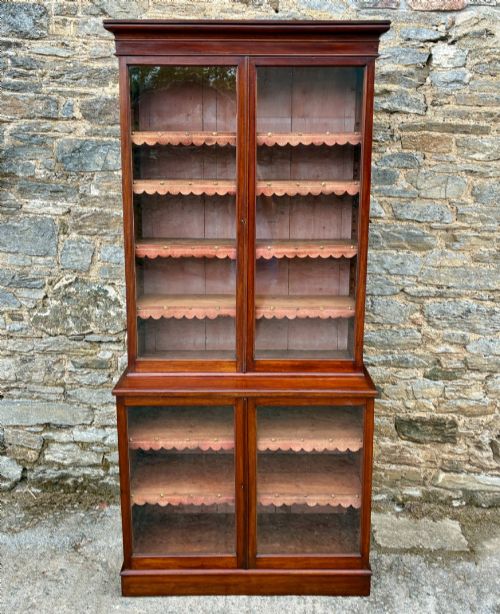
A large glass front bookcase is a substantial timber cabinet designed to protect volumes behind glazed doors while keeping them visible.
Large Glass Front Bookcase
A large glass front bookcase brings together timber joinery and glazed panels to form a prominent storage piece for a library or study. These pieces serve to house and preserve collections of books while displaying bindings clearly behind protective glass.
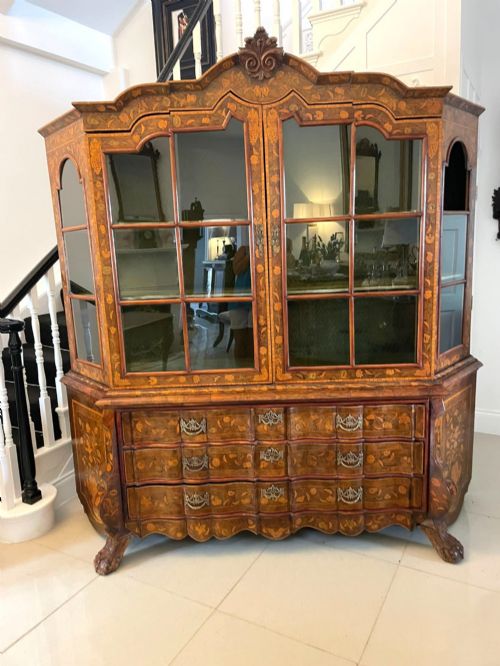
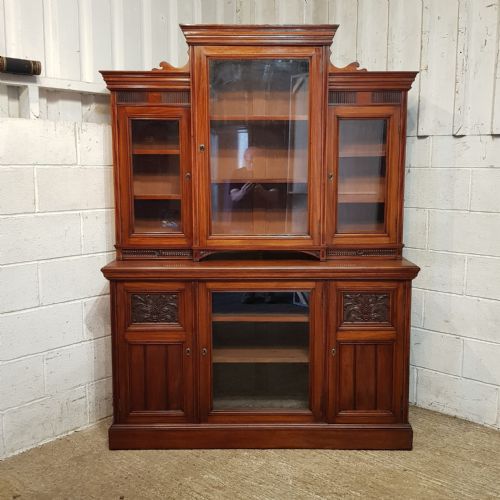
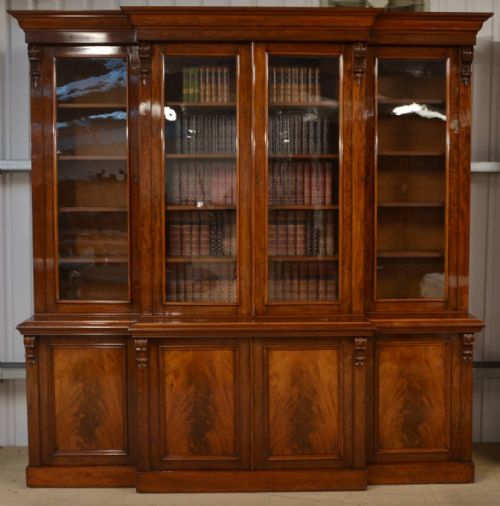
The versions met most often on this page date from the nineteenth century, including Victorian and Edwardian examples alongside Regency and earlier periods. Forms range from breakfront libraries to single glazed cabinets and inlaid display pieces.
Makers utilised woods such as mahogany, walnut, and burr walnut, frequently incorporating marquetry, brass, or ebonised details. The architectural presence of these cabinets suits formal rooms where large amounts of shelf space are required.
How they were made
Cabinet makers constructed the primary carcasses from solid timbers like mahogany and walnut, applying veneers such as burr walnut and amboyna to prominent surfaces. Drawer linings and secondary woods typically included native timbers suited to structural stability.
Glazing involved fitting individual glass panes into timber framing bars, securing them with putty or wooden glazing beads. Marquetry and brass mounts added decorative contrast to the timber surfaces on specific revival and aesthetic pieces.
Large Glass Front Bookcase Retail Price Guide 2026
Typical asking prices for large glass front bookcase among the pieces listed under this phrase on Sellingantiques today, from the lower quarter to the upper quarter. They describe what is for sale here now, not the wider market.
Materials recorded across the inventory include mahogany, walnut, burr walnut, amboyna, brass, ormolu, and ebonised wood.
What varies in quality
The standard of a large glass front bookcase rests on the selection of timber and the precision of its veneers. Figured mahogany and well-matched burr walnut veneers demonstrate superior craftsmanship compared to plainer grain choices.
Structural refinement shows in the tightness of the door joints, the smooth movement of drawers, and the integration of decorative inlays or brass mounts. Finer examples maintain crisp carving and balanced proportions across breakfront or bow front forms.
The Large Glass Front Bookcase Glossary
- Breakfront
- A cabinet design where the central section projects forward from the flanking wings. This architectural arrangement creates depth and shadow across the front elevation.
- Glazed
- Fitted with panes of glass. This term describes doors that allow visibility of the contents within.
- Marquetry
- Decorative veneer work formed by fitted pieces of different coloured woods or materials. It creates pictorial or floral patterns on the cabinet surface.
- Ebonised
- Wood stained or treated to imitate ebony. This dark finish provides a sharp contrast in aesthetic and Victorian pieces.
Large Glass Front Bookcase: Frequently Asked Questions
What rooms suit a large glass front bookcase?
These tall timber cabinets require substantial wall space and high ceilings to sit comfortably without dominating the room. They function well in traditional libraries, studies, or large drawing rooms where books and display items need protection.
The glass doors keep dust away from leather bindings while allowing titles to be read easily from across the floor. Positioning them away from direct sunlight protects both the paper and the timber veneer from fading.
How do I care for the timber and glass?
Maintenance involves dusting timber surfaces with a soft, dry cloth and occasionally applying a suitable wax to nourish the polish. Avoid silicone-based sprays, which can build up and soften historical finishes over time.
Glass panels can be cleaned with a mild glass cleaner applied to a cloth rather than sprayed directly, preventing moisture from seeping into the surrounding wooden frames.
How do I distinguish Victorian from Regency styles?
Regency pieces often display clean classical proportions, architectural cornices, and restraint in ornament, drawing inspiration from ancient Roman and Greek designs. They frequently utilise dense mahogany with brass stringing or mounts.
Victorian cabinets tend to be heavier in scale and encompass a wider range of revival styles, from Dutch baroque floral marquetry to aesthetic movement ebonised finishes. Carved details on Victorian pieces are typically bolder and more robust.
Are the shelves adjustable?
Many nineteenth-century bookcases feature fixed wooden shelving supported by fixed wooden bearers built into the cabinet interior. Some later or more sophisticated examples incorporate rack-and-pinion or metal track systems for height adjustment.
When configuring shelves, distribute heavy book collections evenly to prevent any long-term sagging of older timber boards.