

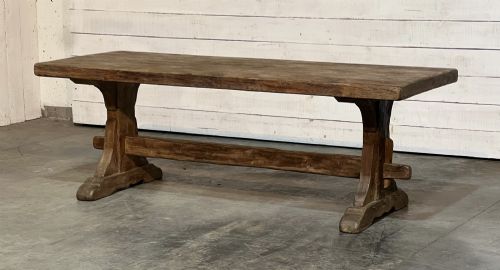
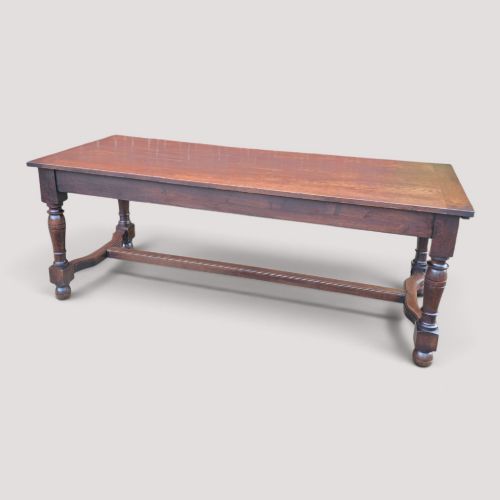
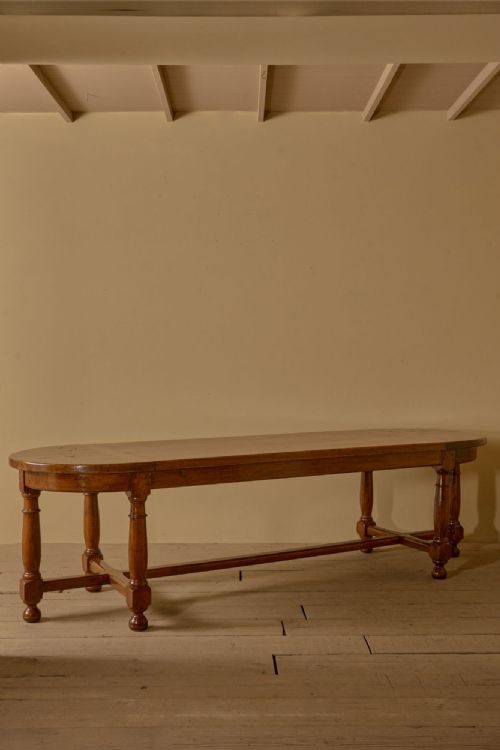
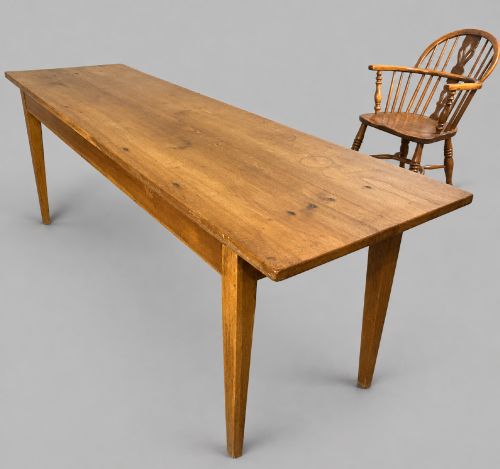
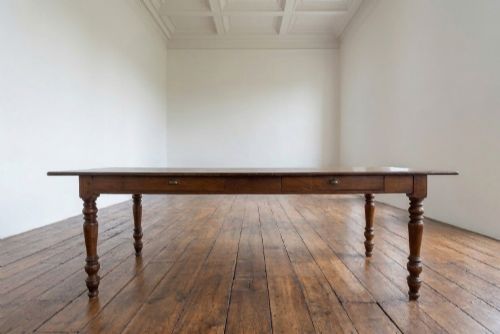
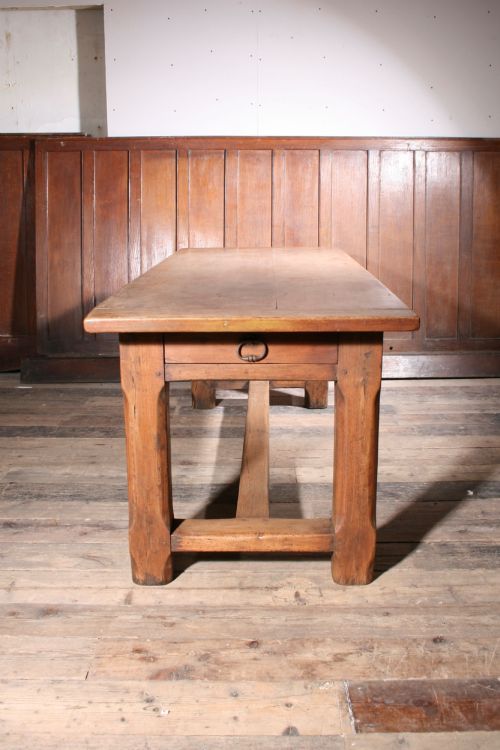
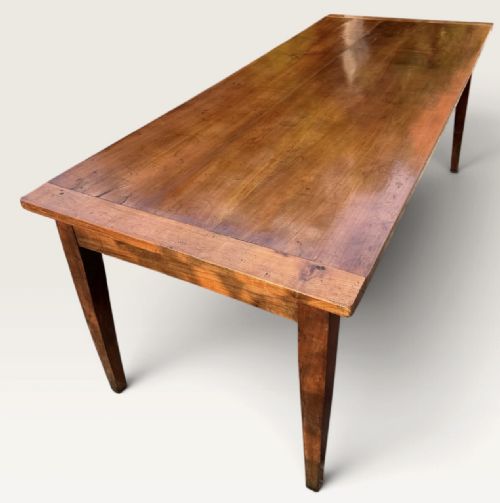
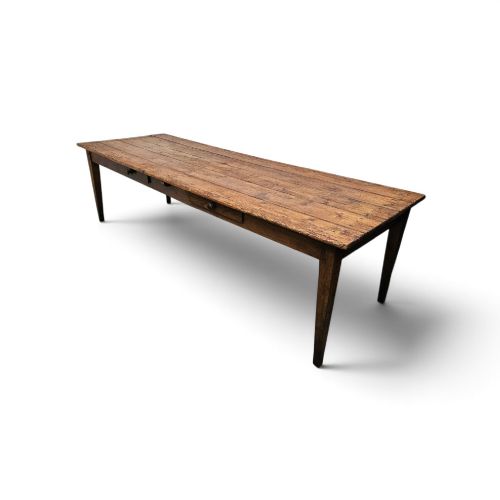
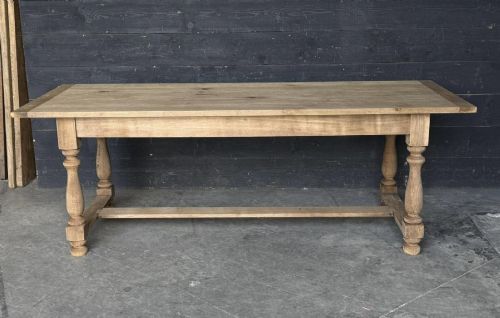
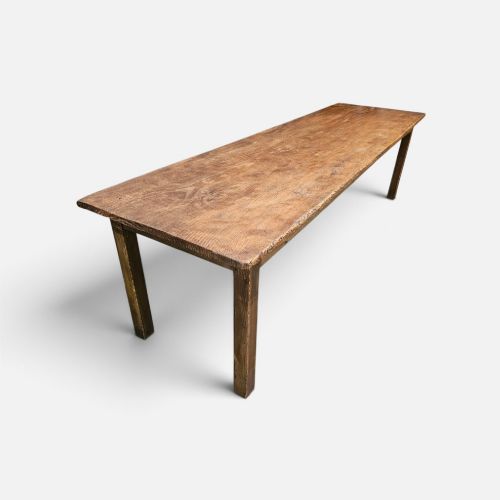
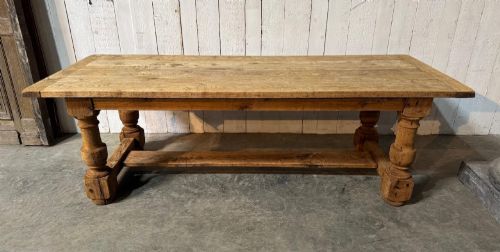
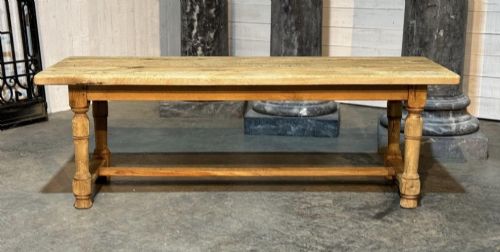
Large French Table
A large french table brings generous proportions and rustic charm into a room, serving as the central gathering place for meals and conversation.
Large French Table
When you search for a large french table, you encounter substantial dining surfaces, refectory designs, and kitchen tables rooted in provincial traditions. These pieces originate from periods spanning the eighteenth, nineteenth, and early twentieth centuries, reflecting regional European domestic life.
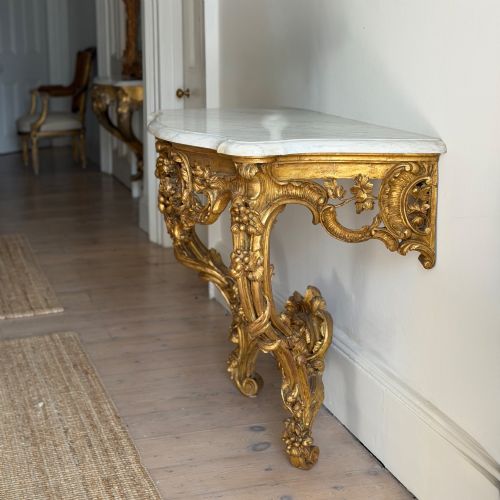
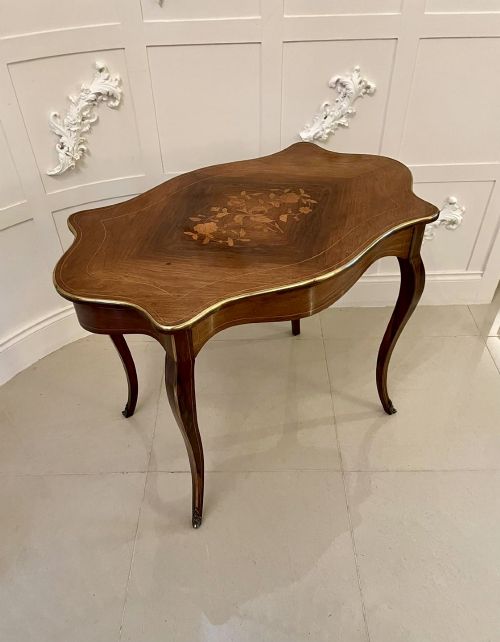
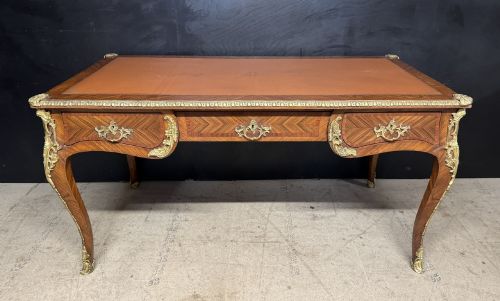
Makers and craftsmen utilised native timbers suited to daily household labour, creating sturdy structures intended for heavy domestic use. Styles range from simple rustic country forms to more ornate Louis XV expressions and neoclassical console adaptations.
What varies in quality
Quality rests in the selection of timber and the integrity of the original construction, where thick, stable top boards and robust underframes distinguish better examples. Tables retaining their original surface patination and uncompromised structural joints hold greater architectural presence.
The refinement of carved detailing on skirts and legs separates standard utilitarian workshop pieces from finer urban commissions. Proportion and timber matching across wide extensions dictate the visual balance of the finished piece.
Large French Table Retail Price Guide 2026
Typical asking prices for large french table among the pieces listed under this phrase on Sellingantiques today, from the lower quarter to the upper quarter. They describe what is for sale here now, not the wider market.
Listings feature oak, walnut, cherrywood, and chestnut, spanning the eighteenth, nineteenth, and early twentieth centuries.
The Large French Table Glossary
- Refectory table
- A long dining table traditionally used in monastic refectories and later adopted for domestic kitchens. These pieces typically feature sturdy stretcher bases designed to support expansive timber tops.
- Bleached oak
- Timber treated to lighten its natural colour, creating a softer, paler appearance often favoured in provincial furniture. This process highlights the grain while reducing the heavy dark tones of older oak.
- Console table
- A wall-mounted or freestanding table designed to stand against a vertical surface, frequently paired with a matching mirror. These forms often exhibit more decorative carving and gilt finishes than standard dining tables.
- French provincial
- A style descriptor for furniture produced in the regions outside Paris, prioritising functional domestic utility and modest regional decoration over courtly excess.
- Drapers table
- A long, narrow table historically used in textile shops for measuring and displaying cloth. These surfaces generally offer substantial length combined with a shallow depth.
Large French Table: Frequently Asked Questions
How do I clean a wooden table top?
Wipe surfaces using a damp cloth without harsh chemical detergents. Dry thoroughly to protect the timber grain.
Apply natural beeswax periodically to nourish older hardwoods and maintain a soft protective sheen.
Can these tables be used daily?
Most antique wooden dining tables were built for heavy kitchen work and family meals. Their solid construction suits regular modern usage.
Use coasters and heat mats to protect aged timber finishes from moisture rings and thermal marks.
How do I identify a provincial piece?
Provincial furniture displays simpler lines, regional timber choices such as cherry or chestnut, and minimal carved ornamentation. Construction prioritises utility over courtly fashion.
Hardware and joinery often show local hand tools rather than industrial standardisation.
What is the difference between oak and fruitwood?
Oak provides a prominent open grain and high structural density suited to long refectory spans. It darkens naturally over centuries unless bleached.
Fruitwoods such as cherry or pear offer a smoother, tighter grain with warmer reddish or golden undertones.