



Large Dairy Bowl
A large dairy bowl brings honest utility and warmth to a room, whether turned from sycamore or thrown in heavy terracotta.
Large Dairy Bowl
A large dairy bowl is a substantial vessel originally designed for setting milk, skimming cream, or salting butter in farmhouses and dairies. On this page, you will most frequently meet pieces from the nineteenth century and the Edwardian era, spanning both earthenware ceramics and turned wood.
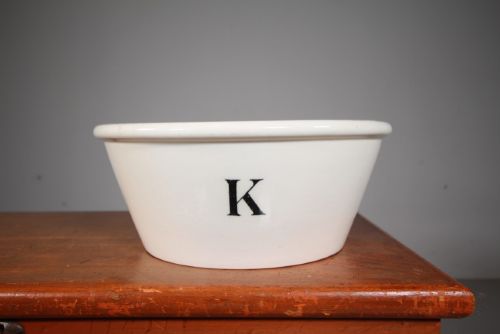
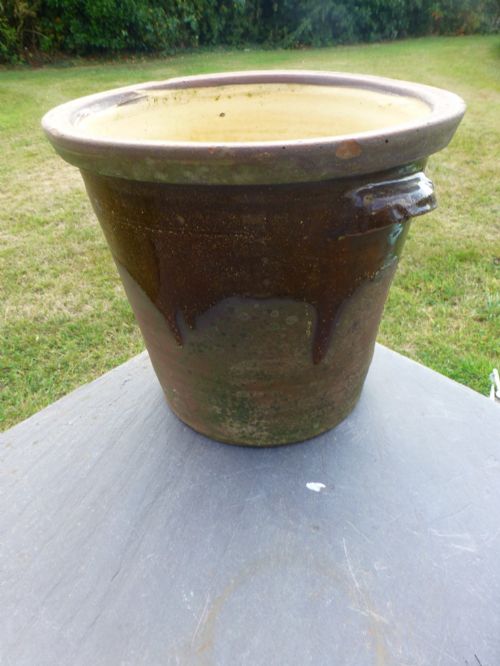
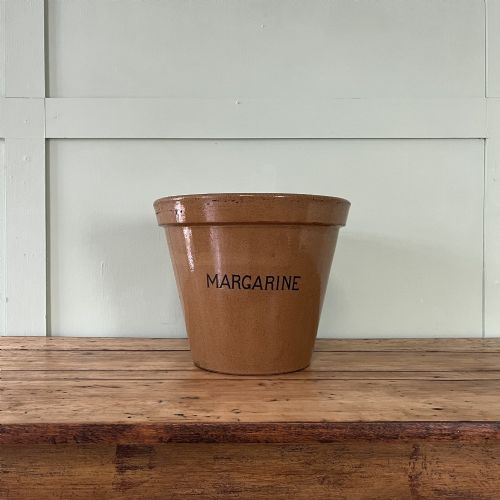
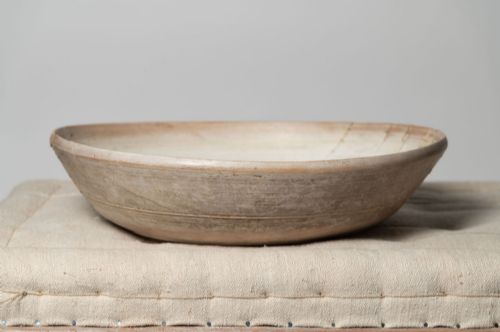
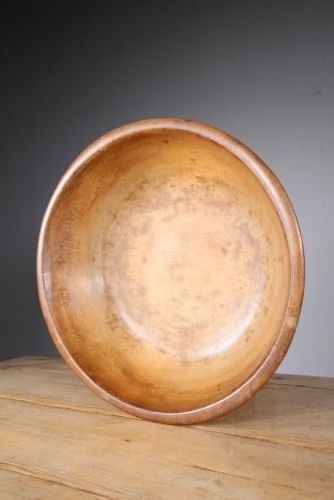
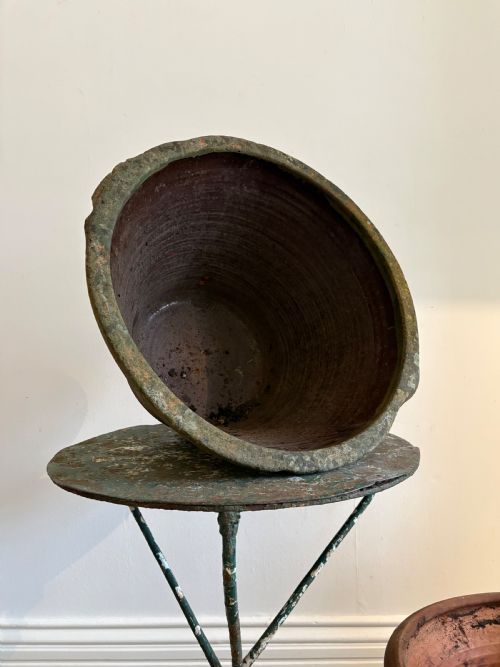
The ceramic forms range from glazed terracotta salting crocks and creamware to heavy stoneware margarine bowls. The wooden versions are typically carved from sycamore, showing the pale tone and soft grain characteristic of treen used in domestic dairies.
Geographic origins recorded in the listings include English, Welsh, Swedish, and French country traditions. These variations in regional style reflect how local materials dictated the form of daily dairy work.
How they were made
Ceramic dairy bowls are thrown from earthenware or stoneware clay, often featuring an interior glaze to contain liquids and make cleaning easier while leaving the exterior porous or matte. Terracotta vessels rely on thick walls for durability, whereas creamware and stoneware employ tighter, vitrified bodies fired at higher temperatures.
Wooden dairy bowls are turned from blocks of sycamore on a lathe, utilising the tight grain of the timber to resist moisture absorption. Makers shaped these treen pieces with smooth, wide rims designed for easy lifting and skimming during milk processing.
Large Dairy Bowl Retail Price Guide 2026
Typical asking prices for large dairy bowl among the pieces listed under this phrase on Sellingantiques today, from the lower quarter to the upper quarter. They describe what is for sale here now, not the wider market.
Geographic origins span English, Welsh, Swedish, and French country traditions.
What varies in quality
The quality of a large dairy bowl rests upon the integrity of its material and the preservation of its original surface. In wooden examples, a desirable piece retains its balanced proportions and a warm, honest patina earned through decades of agricultural use rather than aggressive modern cleaning.
For ceramic vessels, quality is determined by the evenness of the glaze coverage, the stability of the heavy clay body, and the crispness of any surviving form. Pieces that retain their structural soundness alongside signs of genuine period wear represent the better examples of the type.
The Large Dairy Bowl Glossary
- Sycamore
- A pale, close-grained hardwood traditionally favoured by turners for domestic dairy utensils because it imparts no taste or colour to milk products.
- Creamware
- A refined fine earthenware developed in the eighteenth century, noted for its pale yellow or cream-coloured lead glaze.
- Stoneware
- A heavy, dense ceramic fired at a high temperature until vitrified, making it completely impermeable to liquids without requiring an interior glaze.
- Treen
- Small handmade wooden domestic objects and utensils, encompassing turned bowls and dairy equipment.
- Patina
- The surface sheen and softening of detail developed on wood or ceramic through age, handling, and use.
Large Dairy Bowl: Frequently Asked Questions
What were large dairy bowls used for?
These vessels were utilised in farm dairies for holding fresh milk so that the cream could rise to the surface for skimming. They also served in butter-making and general food storage.
Today, their generous proportions make them practical for modern display, serving, or as botanical planters in a home.
How do I care for a antique wooden dairy bowl?
Wooden bowls require gentle treatment to prevent the sycamore from drying out or splitting. Keep them away from direct heat sources and radiators.
Clean them with a damp cloth rather than submerging them in water, and occasionally treat the wood with a neutral food-safe oil.
Are ceramic dairy bowls waterproof?
Most ceramic examples feature an interior glaze designed to hold liquids safely during dairy work. Stoneware bowls are completely vitrified and hold water naturally.
Terracotta pieces with interior glazes are suitable for holding plants, but unglazed earthenware can be slightly porous over long periods.
How do I tell wood from ceramic in these listings?
Listings distinguish between materials by explicitly noting terms such as sycamore or wood versus terracotta, stoneware, earthenware, and glaze. Wooden bowls are described through turning and treen terminology.
Ceramic pieces refer to glazes, crocks, pans, and kilned bodies rather than timber grain.