





Large Corner Cupboard
These large corner cupboard pieces turn awkward wall angles into practical display space with genuine period character.
Large Corner Cupboard
A large corner cupboard fits neatly into the junction of two walls to utilise domestic space that normally remains empty. These items range from compact hanging versions to tall standing furniture designed to command a room.
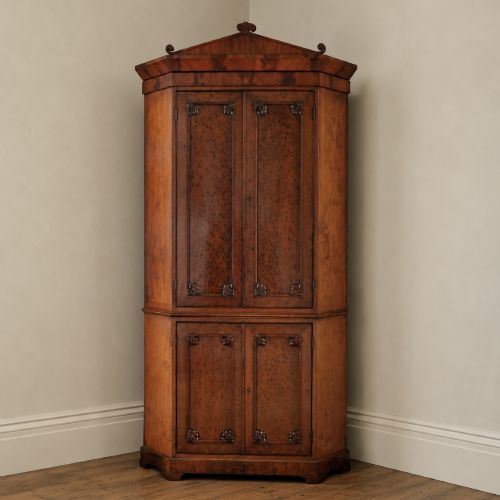
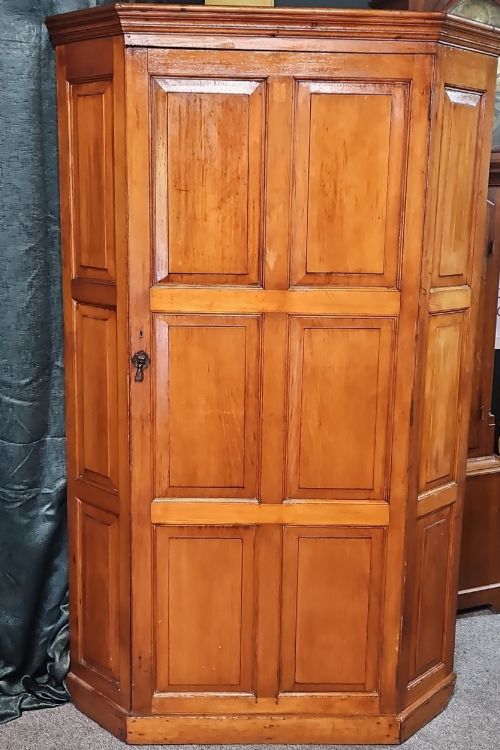
The form developed to solve storage problems in period houses, evolving from simple pine farmhouses pieces to sophisticated Sheraton revival designs. Each piece utilises ninety-degree angles to anchor itself securely in the room.
How they were made
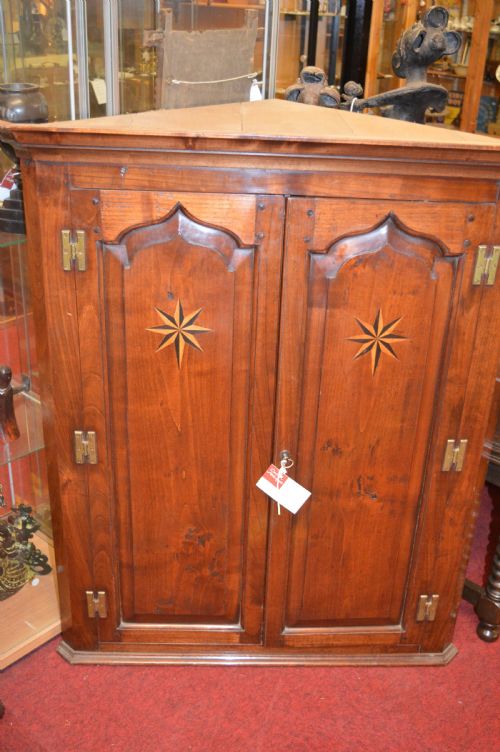
Cabinet makers built these carcasses primarily using solid mahogany, oak, and pine, often applying figured veneers such as plum pudding mahogany to prominent display surfaces. Brass hinges, escutcheons, and working keys complete the hardware.
Joinery techniques relied on dovetailed joints and pegged frames to ensure stability across the wide angles of the cupboard body. Glass panels and mirrored sections appeared in later Victorian iterations to lighten the visual mass.
Large Corner Cupboard Retail Price Guide 2026
Typical asking prices for large corner cupboard among the pieces listed under this phrase on Sellingantiques today, from the lower quarter to the upper quarter. They describe what is for sale here now, not the wider market.
Current listings span the eighteenth through the early twentieth centuries, featuring oak, mahogany, pine, and brass materials across Georgian and Victorian styles.
What varies in quality
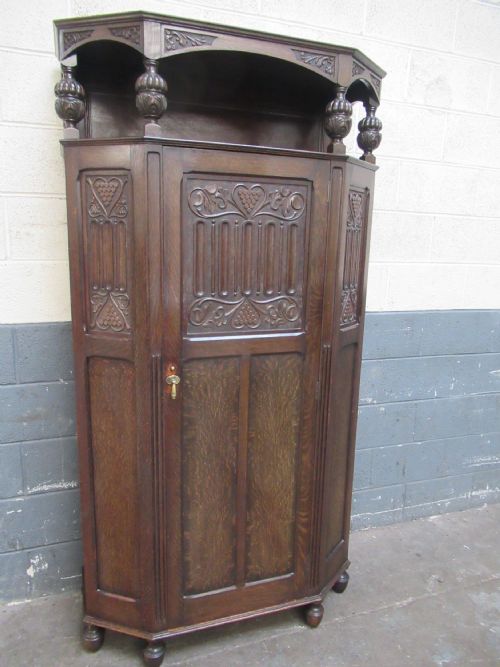
Quality rests upon the selection of timber and the crispness of any applied carving or painted and gilded decoration. Superior examples display thoughtful grain matching across the door panels and cornices rather than hasty assembly.
The proportion between the depth of the corner projection and the height of the cabinet dictates the overall elegance of the piece. Robust internal shelving and original brass fittings elevate the standard significantly.
Goodhall Lamb and Heighway
The Large Corner Cupboard Glossary
- Hanging cupboard
- A wall-mounted storage unit designed to be secured through the backboards directly to wall studs. These items free up floor space while providing accessible eye-level storage.
- Standing cupboard
- A floor-resting cabinet featuring a wide base that supports the upper section into the corner. They offer greater internal volume than wall-hung variants.
- Escutcheon
- A protective plate surrounding the keyhole of a cupboard door. They are frequently cast in brass and styled to match the period of the furniture.
Large Corner Cupboard: Frequently Asked Questions
How do I fit a large corner cupboard?
Measure the exact wall angles and ceiling height before selecting a hanging or standing model. Most period corners deviate from ninety degrees, requiring careful shimming during installation.
Ensure the wall construction can support the weight of timber cabinets, particularly glazed models loaded with heavy china or books.
What is the difference between hanging and standing cupboards?
Hanging versions mount directly to the wall to keep floor space completely clear underneath. Standing variants rest on the floor and often incorporate deeper shelving.
Standing pieces suit heavier storage needs, while hanging cupboards work well in smaller rooms or hallways.
How do I date an antique corner cupboard?
Examine the timber species, secondary woods used in internal construction, and the style of the brass hardware. Georgian pieces frequently feature mahogany and hand-cut dovetails, while Victorian examples often utilise pine or oak with machine-sawn elements.
Construction marks and hinge types provide further clues to the decade of manufacture.
Can these cupboards hold modern items?
The interior depth easily accommodates modern tableware, books, and glassware once you verify the weight capacity of the shelves. Deep triangular storage actually suits bulky kitchenware and collection displays.
Check the shelf depth near the back corner to ensure your specific items fit through the door opening.