


Large Copper Wash Boiler
A large copper wash boiler brings substantial warmth and industrial history to contemporary interiors.
Large Copper Wash Boiler
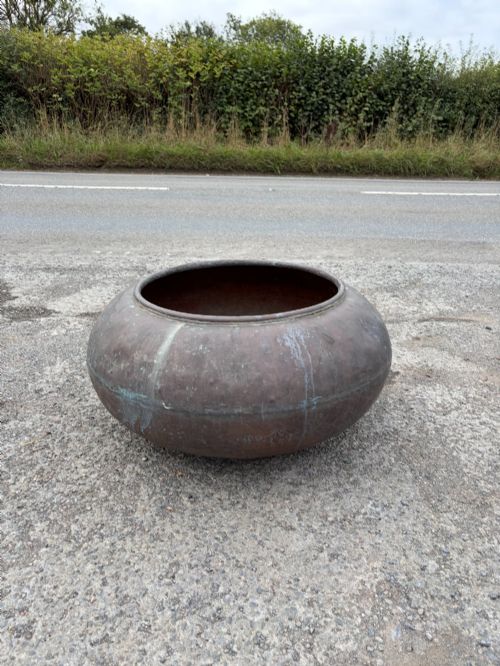
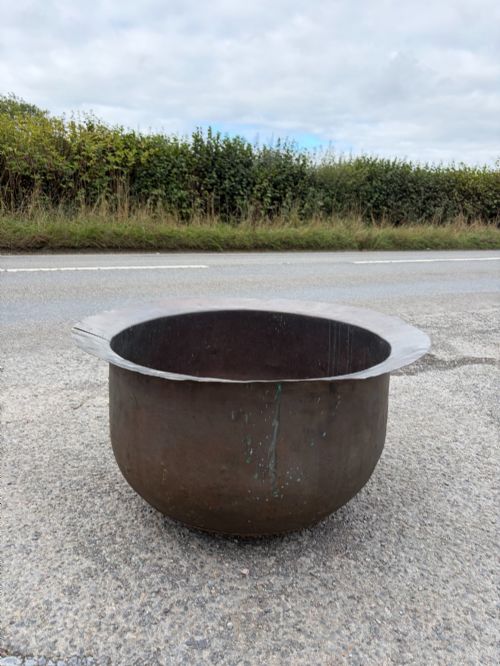
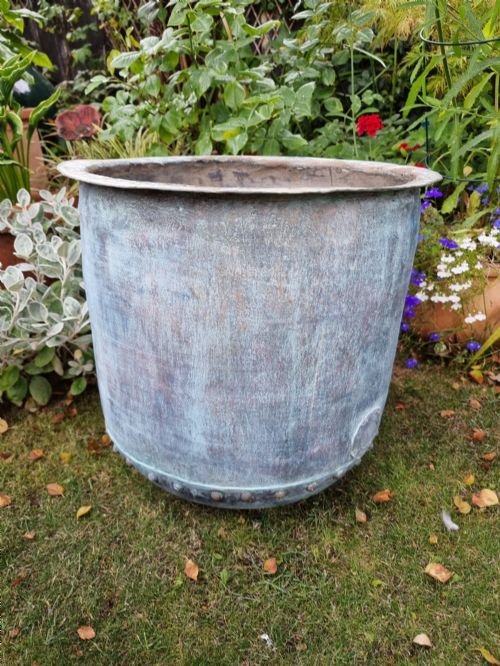
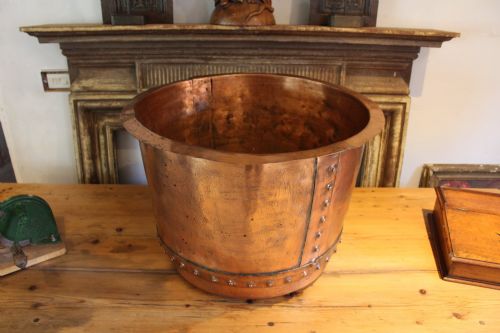
A large copper wash boiler represents heavy domestic and agricultural utility from the nineteenth century, built to hold water over heat for laundry or boiling. These generous vessels appear here in various repurposed forms, primarily serving as substantial log bins, garden planters, and decorative pots.
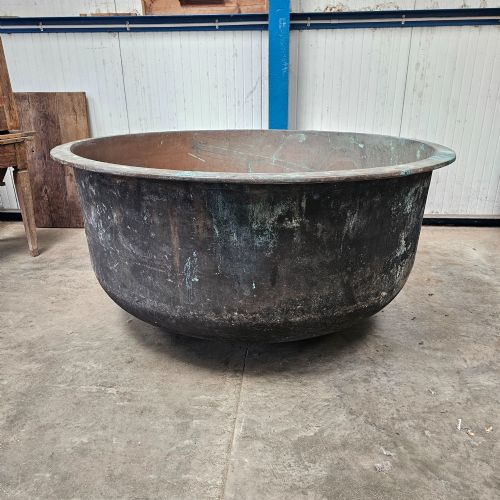
Most examples originate from the Victorian period, spanning the mid to late nineteenth century into the early twentieth century. They arrive from both English and French workshops, encompassing utilitarian pots, riveted boilers, cauldrons, and cheese vats adapted for modern decorative display.
How they were made
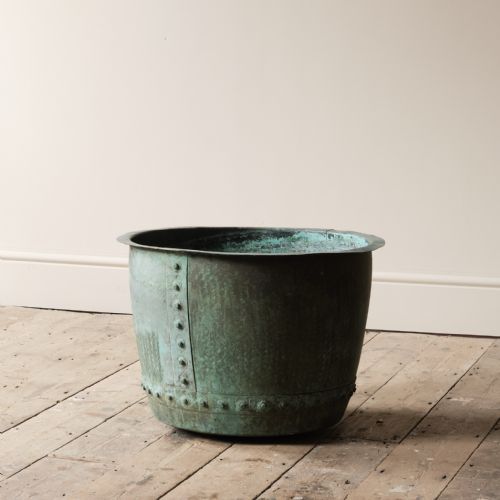
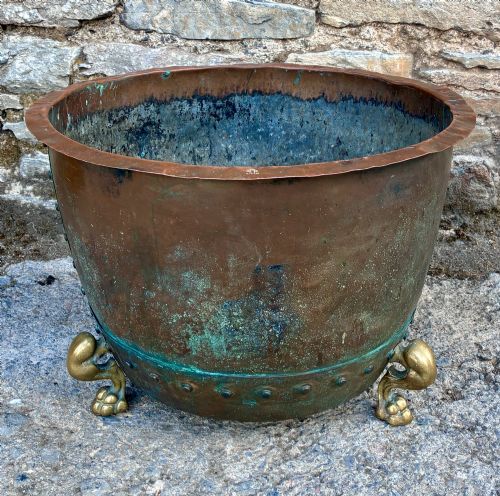
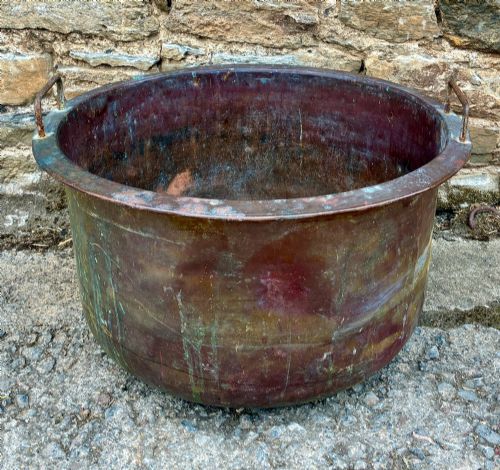
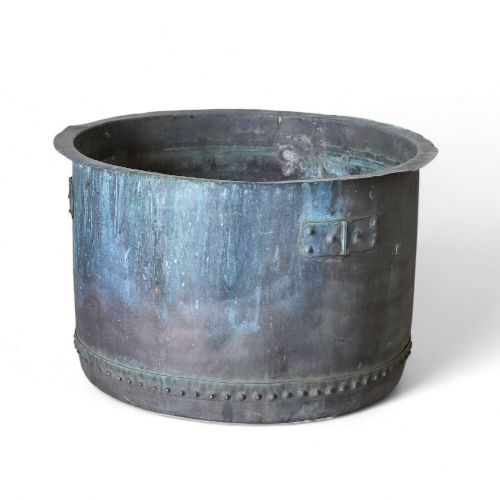
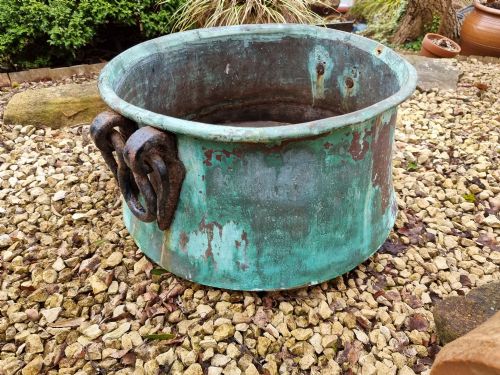
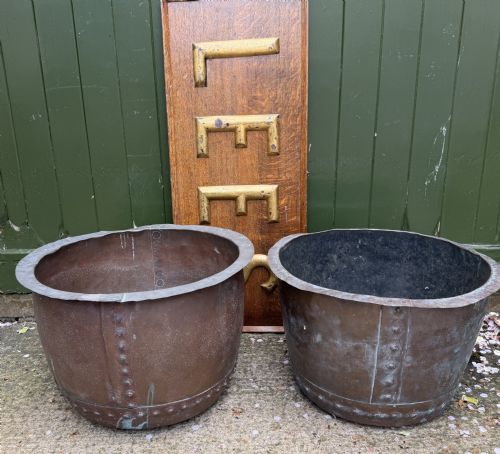
Makers constructed these vessels primarily from heavy sheet copper, joining plates together with hand-riveted seams that demonstrate robust nineteenth-century engineering. Wrought iron or cast iron often forms the structural handles, rims, and fixings necessary to lift such immense dead weight.
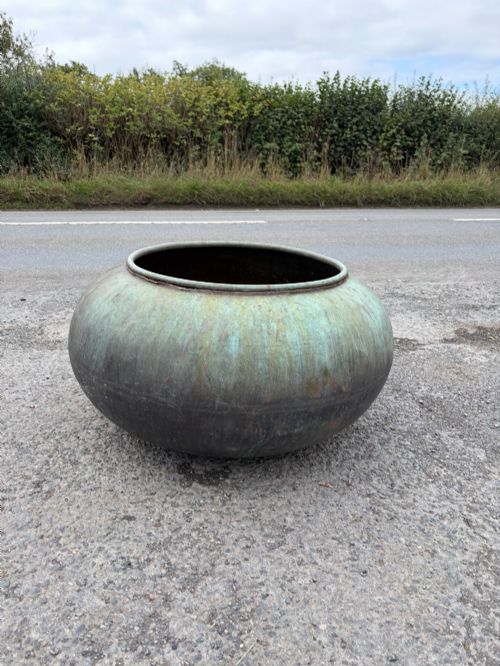
Surfaces developed their character through continuous exposure to heat, water, and atmosphere, resulting in rich natural patinas and occasional verdigris finishes. These marks of utility remain integral to the physical structure of each piece.
Some French cheese vats crossed the channel to spend their retirement holding logs.
What varies in quality
The integrity of the hand-riveted seams and the thickness of the original copper sheet determine the fundamental durability of the vessel. Heavier metal gauge and intact iron swing handles separate robust utilitarian survivors from lighter decorative reproductions.
The depth and uniformity of the natural patina, alongside the pleasing presence of aged verdigris, dictate the visual merit of the piece. Superior examples retain their original structural form without excessive distortion from centuries of hard use.
The Large Copper Wash Boiler Glossary
- Patina
- The surface sheen and colour acquired through age, handling, and environmental exposure. A rich patina indicates undisturbed historical wear.
- Verdigris
- The green crust or patina formed on copper by atmospheric oxidation. This chemical layer often adds considerable aesthetic depth to antique metalwork.
- Riveted
- Joined together using metal bolts hammered flat to secure overlapping plates. This technique predates modern welding methods.
- Cauldron
- A large deep metal pot used for boiling over an open fire. These vessels typically feature sturdy swing handles for suspension or lifting.
Large Copper Wash Boiler: Frequently Asked Questions
How do I clean an antique copper boiler?
Wash the surface gently with warm soapy water and a soft cloth to remove accumulated dust without disturbing the historical skin.
Avoid harsh chemical metal polishes that strip away the authentic patina and verdigris valued by collectors.
Can I use these copper pots outdoors?
Many people repurpose these vessels as garden planters or outdoor displays because copper handles exposure to the elements effectively.
Ensure proper drainage if planting directly inside, or use the vessel as an outer cachepot to protect the historic metal.
How do I date a nineteenth-century copper vessel?
Examine the construction methods, noting whether the body utilises hand-riveted plates or machine-rolled seams typical of later manufacturing.
Stylistic markers such as wrought iron swing handles and Victorian utility stamps also help narrow down the decade of origin.
What is the difference between a boiler and a log bin?
Wash boilers were originally manufactured for domestic laundering or brewing, featuring heavy riveted construction designed to hold boiling water.
Today, buyers repurpose these exact utilitarian cylinders as decorative log bins and plant holders beside hearths.