

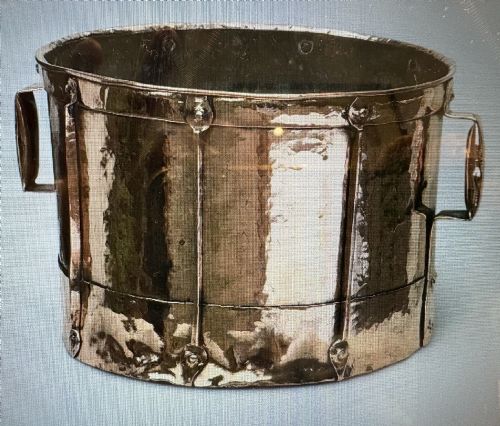


Large Copper Measure
A large copper measure offers utilitarian history for the home, combining substantial scale with practical design.
Large Copper Measure
A large copper measure is a utilitarian vessel built to hold specific volumes of liquid or grain in domestic and commercial settings. The pieces found here span the Georgian and Victorian eras, alongside French provincial examples.
Forms on this page range from jugs and flagons to harvest measures and grain buckets, often stamped with capacity markings such as gallons, pints or specific numbers. English and French origins predominate, showing distinct regional profiles in handle placement and rim reinforcement.
Buyers encounter items originating from the nineteenth century and earlier, reflecting working origins in agricultural and tavern contexts. These vessels survive in copper with brass trim, iron handles and lead or tin solder details.
Materials and Construction
Makers shaped heavy sheet copper by hand, hammering the metal over stakes and joining seams with folded edges and solder. Rivets secure brass and iron handles to the bodies, ensuring structural strength for daily handling of liquids or grain.
Brass rims and collars frequently reinforce the mouths of these measures to resist wear from pouring and scooping. Tin or lead linings coat the interiors of many pieces to prevent corrosion and protect the contents.
Large Copper Measure Retail Price Guide 2026
Typical asking prices for large copper measure among the pieces listed under this phrase on Sellingantiques today, from the lower quarter to the upper quarter. They describe what is for sale here now, not the wider market.
Listings feature copper alongside brass, iron, lead and tin across the Georgian and Victorian periods.
Assessing Quality
Quality rests upon the weight of the metal and the integrity of the original construction rather than decorative flourish. Thicker gauge copper maintains its form better under pressure and develops a deeper tone through age.
The crispness of capacity stamps, VR marks or maker names adds distinction to a vessel. Original handles and undisturbed surface patination separate honest working pieces from heavily restored examples.
S Hancock
The Large Copper Measure Glossary
- Haystack measure
- A tall, tapered liquid measure with a distinctive curved profile resembling a traditional hayrick. These vessels often hold specific capacities like two gallons.
- Grain measure
- A wide cylindrical or slightly flared vessel used for dry goods rather than liquids. They frequently feature heavy iron drop handles.
- VR mark
- A royal cypher stamp indicating Victoria Regina, denoting official government verification of capacity. These marks appear on measures used in commerce.
- Seamed construction
- A method where copper sheets are joined together and hammered flat at the edges. Visible seam work indicates older hand-manufacturing techniques.
- Ferrat
- A regional French term associated with agricultural measures of heavy gauge copper. These pieces often display robust French provincial hammering.
Large Copper Measure: Frequently Asked Questions
What were large copper measures used for?
These vessels served commerce and agriculture by measuring dry goods like grain or liquids like ale and milk. Taverns and markets relied on them for accurate distribution.
Over time, many transitioned from working environments into decorative domestic objects valued for their scale and material.
How do I date a copper measure?
Dating relies on construction methods, capacity stamps and royal cyphers such as VR marks from the Victorian period. Georgian pieces often show different handle attachments and softer hand-beaten surfaces compared to later ones.
Form also guides attribution, with French provincial styles and English haystack shapes aligning with specific manufacturing eras.
Are these measures safe for holding water?
Many historical measures feature tin or lead linings that were intended to prevent copper reaction with consumable contents. Modern usage often keeps them as dry decorative objects or planters.
If used for fresh cut flowers, inspect the interior base for integrity to ensure the historical solder holds water effectively.
How do I care for antique copper?
Maintenance typically involves dusting and occasional light cleaning with a soft cloth to preserve the natural aged surface patination. Aggressive polishing removes the historical character that collectors value.
Keeping the metal in a stable environment away from excess moisture protects both the copper body and any iron or brass attachments.