


Large Copper Jugs
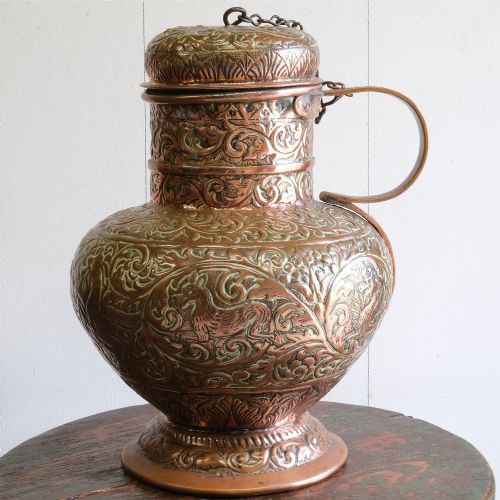
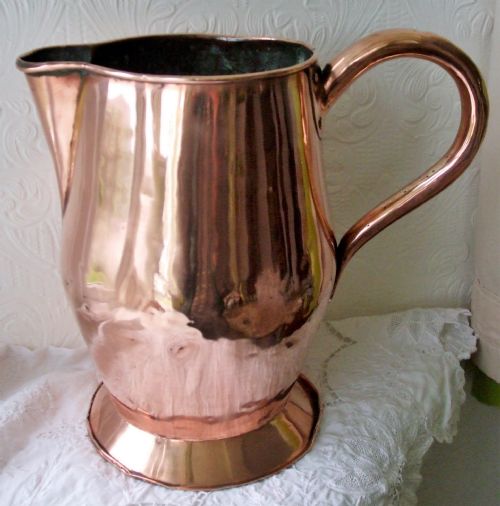
Large copper jugs are heavy, capacious vessels forged for utility, bringing warmth and character to a room.
Large Copper Jugs
Large copper jugs appear across this selection in various forms, spanning Georgian, Victorian, and Arts and Crafts periods. These sturdy vessels include flagons, measuring jugs, milk churns, and harvest jugs designed for practical use in domestic and tavern settings.
Most examples originate from the eighteenth and nineteenth centuries, featuring robust capacities ranging from three pints to several gallons. Buyers will frequently encounter tall pitchers and heavy measures bearing marks of former service.
How they were made
Construction relies heavily on hammered copper sheets, often joined with visible seams and reinforced with brass fittings or handles. Some pieces incorporate tin linings for practical containment, while other variations combine copper with earthenware or ceramic glaze.
Makers shaped these utilitarian objects by hand, sometimes adding applied brass details or engraved touches to mark capacity and ownership. The integration of lead soldering and riveted joints ensures structural integrity across large volumes.
The listings span the eighteenth, nineteenth, and early twentieth centuries, incorporating materials such as brass, tin, and ceramic glaze alongside copper.
What varies in quality
Quality rests upon the heaviness of the gauge, the crispness of the hand-beaten form, and the integrity of the original construction. Substantial capacity combined with clean proportions elevates certain flagons and measures above standard utility pieces.
The presence of maker marks, touchmarks, or royal verification stamps adds significant interest for collectors. Surface tone and the natural patina developed over centuries distinguish superior examples from plain replacements.
S Hancock
The Large Copper Jugs Glossary
- Flagon
- A large drinking vessel with a handle and spout, often fitted with a lid for holding liquids. These pieces served communal and tavern functions in earlier centuries.
- Haystack measure
- A distinctively shaped conical liquid measure with a curved shoulder, resembling a traditional haystack. They were manufactured in specific volume standards.
- Milk churn
- A large container designed for transporting milk from farm to dairy, frequently constructed from copper and brass. These sturdy items display utilitarian pastoral design.
- Lustre
- A metallic pottery glaze that reflects light with a sheen resembling copper or gold. This finish appears on ceramic variations within the selection.
Large Copper Jugs: Frequently Asked Questions
What were large copper jugs used for?
These vessels served primarily for measuring, storing, and dispensing liquids such as ale, milk, and water in large households and public houses. Their substantial volume made them essential for communal gatherings and tavern service.
Many examples functioned as official standards of measurement, stamped to guarantee accurate capacity for trade and public use. Over time, their role shifted from active utility to decorative display.
How do I clean a copper jug?
Maintenance typically involves preserving the natural aged surface rather than aggressive polishing, as patination forms an important part of the object's history. Gentle washing with warm soapy water removes dust without disturbing the metal.
Harsh chemical cleaners strip away the historical character that collectors value. Most dealers recommend leaving the surface undisturbed to maintain visual depth.
How can I tell a Georgian jug from a Victorian one?
Georgian pieces generally exhibit simpler, heavier hand-beaten lines and earlier touchmarks associated with eighteenth-century tavern use. Their proportions tend toward robust utility without excessive ornamentation.
Victorian examples often incorporate standardised measurement stamps, such as VR cyphers, and may display more refined manufacturing techniques. Arts and Crafts pieces from later periods introduce stylized brass handles and decorative hammering.
Are these jugs watertight?
While many retain their original soldered seams and sound structure, older vessels may have developed minor historic leaks through decades of use. Evaluating the interior lining and base provides a good indication of current holding capacity.
Buyers intending to use them for fresh liquids should inspect the seams carefully. Many owners prefer to enjoy them as dry decorative objects rather than active containers.