






Large Cocktail Shaker
A large cocktail shaker brings serious presence to a home bar, offering generous capacity and striking twentieth-century design.
Large Cocktail Shaker
A large cocktail shaker is an essential piece of barware designed to hold substantial volumes of mixed drinks for gatherings. These vessels appear primarily from the Art Deco period, along with earlier pieces from around nineteen hundred.
The versions met most frequently on this page take the form of silver plated or sterling silver containers. Many examples originate from English, French, and American makers, showcasing distinct regional aesthetics of the twentieth century.
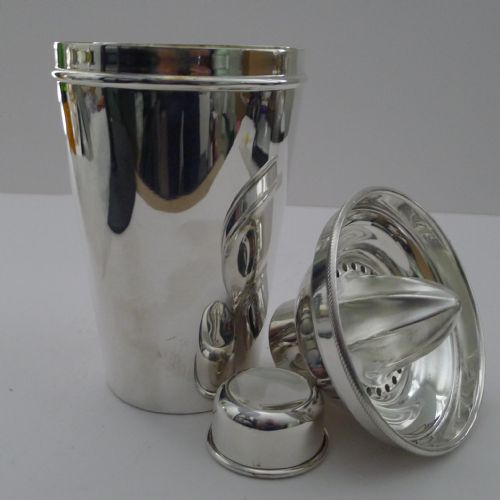
Specialised variants include models fitted with integral lemon squeezers or exterior surfaces engraved with cocktail recipes. Capacities range from one and a half pints up to three pints, accommodating serious bartending requirements.
How they were made
Makers utilised base metal, electroplated nickel silver, and sterling silver as the primary foundations for these heavy vessels. Glass also appears combined with sterling silver mounts, creating contrast in texture and weight.
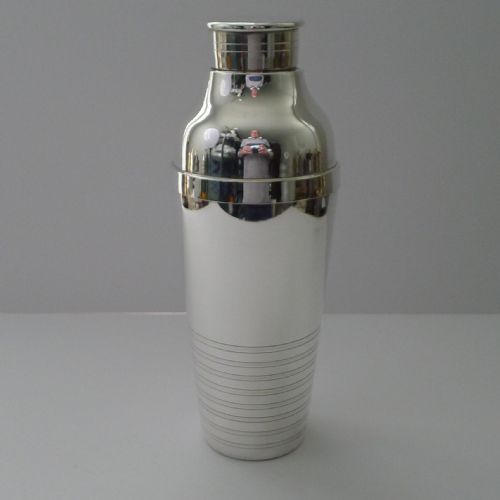
Surface decoration relies on techniques such as engine turning and careful engraving to apply geometric patterns and text. Metal spinning and plating completed the bodies, ensuring a durable finish suitable for frequent use behind a bar.
Large Cocktail Shaker Retail Price Guide 2026
Typical asking prices for large cocktail shaker among the pieces listed under this phrase on Sellingantiques today, from the lower quarter to the upper quarter. They describe what is for sale here now, not the wider market.
What varies in quality
Subtlety of proportion and crispness of decorative detail separate standard production from superior examples. The depth and precision of engine turned patterns dictate much of the visual weight.
Integrity of internal mechanisms, such as built-in lemon squeezers, influences the desirability of a piece. The weight of the metal and the quality of the silver plating determine how well the shaker ages through handling.
J. B. Chatterley & Sons·Hukin & Heath·Mappin & Webb·Tuttle
The Large Cocktail Shaker Glossary
- Silver Plate
- A thin layer of silver bonded to a base metal core such as copper or nickel. This technique provided the appearance of solid silver at a lower production cost.
- Electroplated Nickel Silver
- An alloy of copper, nickel, and zinc coated with a layer of pure silver using an electrical current. It forms a durable foundation common in mid-century barware.
- Engine Turned
- A decorative technique involving a machine that cuts intricate geometric patterns into metal surfaces. This method creates precise, repeating lines across the body of the shaker.
- Sterling Silver
- An alloy consisting of ninety-two point five percent silver and seven point five percent other metals, usually copper. This standard ensures structural rigidity while maintaining a high silver content.
Large Cocktail Shaker: Frequently Asked Questions
How much liquid do they hold?
These vessels typically hold between one and a half and three pints of mixed drinks. This capacity suits larger gatherings and parties.
Specific volumes often appear in the descriptions, ranging up to two and a quarter or three pints depending on the maker.
What metals were used?
Constructed items utilise silver plate, electroplated nickel silver, base metal, or solid sterling silver. Glass combinations also appear.
Silver plating provides a bright finish over a base metal foundation, while sterling silver offers solid precious metal construction throughout.
Are recipes engraved on them?
Certain examples feature drink recipes etched directly into the exterior metal surface. This practical addition served as a handy reference for hosts.
Other variations include built-in lemon squeezers housed within the lid assembly for functional convenience.
From which eras do they date?
The pieces span the twentieth century, with a strong concentration from the nineteen thirties Art Deco period. Earlier examples date back to around nineteen hundred.
French, English, and American workshops produced these styles during the height of cocktail culture.