





Large Book Storage Cabinet
A large book storage cabinet organises heavy volumes behind glass or wire mesh, bringing architectural scale and practical depth to a room.
Large Book Storage Cabinet
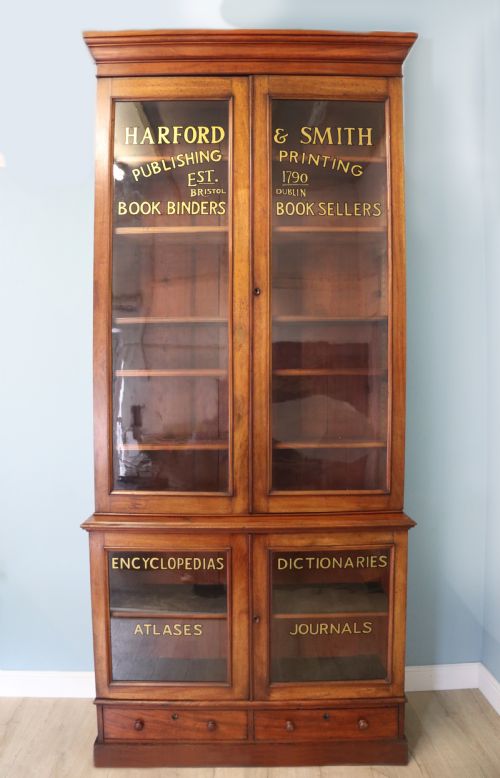
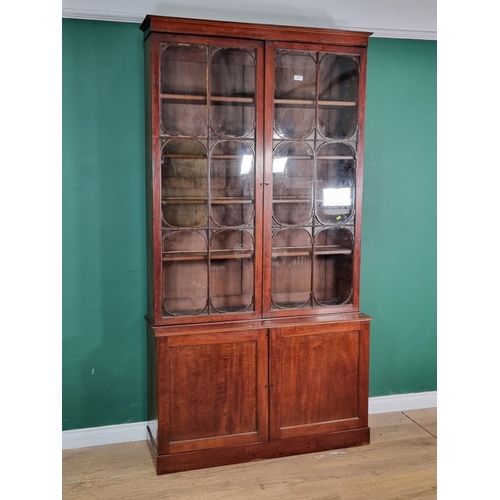
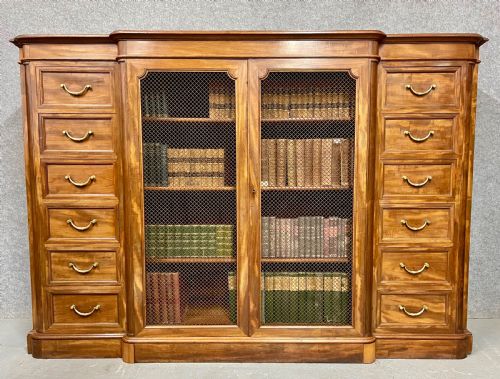
A large book storage cabinet is designed to hold extensive libraries within domestic or institutional settings. These pieces appear in periods ranging from the nineteenth century up to nineteen thirty, taking forms such as bookcases, bookcase cabinets, and open front designs.
Most examples encountered on this page belong to the Victorian era and the year eighteen eighty, alongside nineteenth-century and nineteen thirty pieces. Builders constructed them in substantial proportions, often dividing the structures into two sections for transport and installation.
Makers drew on traditional, Victorian, Jacobean Revival, and Restoration styles to shape these large book storage cabinet items. The forms utilise adjustable shelves and enclosed book cabinet configurations to accommodate various collection sizes.
Materials and construction methods
Wood selection focuses on solid hardwoods, with mahogany, oak, and walnut forming the primary structural carcasses of these large book storage cabinet pieces. Carved details appear on select library items, reflecting period workshop traditions.
Glazing and metalwork complete the construction, incorporating glass doors alongside brass fittings and wire mesh panels. These elements protect volumes while allowing visibility of the shelf contents.
Large Book Storage Cabinet Retail Price Guide 2026
Typical asking prices for large book storage cabinet among the pieces listed under this phrase on Sellingantiques today, from the lower quarter to the upper quarter. They describe what is for sale here now, not the wider market.
Materials documented across these large book storage cabinet entries include mahogany, oak, walnut, glass, brass, and wire mesh.
Judging quality in large book storage cabinet designs
Quality reveals itself in the architectural presence of the piece, from carved mahogany library bookcase examples to simpler oak formats. The integration of two-part construction demonstrates superior cabinetmaking designed for substantial weight.
Hardware and internal fittings distinguish finer editions, particularly brass accents, wire mesh security, and the precision of adjustable shelf mechanisms. The depth of timber selection and proportion govern the overall merit of each large book storage cabinet.
Gillows
The Large Book Storage Cabinet Glossary
- Bookcase cabinet
- A storage unit featuring enclosed lower cupboards and upper shelving behind glazed doors. This combination conceals larger folios while displaying working libraries.
- Wire mesh
- Metal screening fitted into cabinet doors in place of glass. This material provides ventilation and protection for sensitive or heavily used volumes.
- Adjustable shelves
- Internal boards supported by movable pegs or ratchets. This system permits customisation of vertical space for varying book heights.
- Two-part
- A tall cabinet built in separate upper and lower sections. This construction aids movement through domestic stairways and doorways.
Large Book Storage Cabinet: Frequently Asked Questions
How are large book storage cabinet sections separated?
Many taller library units are built in two distinct parts, featuring a heavier lower cupboard section and a lighter upper glazed bookcase resting directly on top. This vertical division allows the large book storage cabinet to be manoeuvred more easily during relocation.
To separate them, remove all shelves and doors if detachable, then lift the upper case away from the base moulding after unfastening any internal brackets.
What periods do these storage cabinets represent?
The listings span the Victorian era, the year eighteen eighty, nineteen thirty, and broader nineteenth-century periods. These dates indicate the prevailing furniture manufacturing standards of their respective decades.
Stylistic influences range from traditional and Restoration formats to Jacobean Revival carving, showing how cabinetmakers reinterpreted earlier historical motifs for Victorian homes.
Are shelves in these cabinets adjustable?
Many examples include adjustable shelves supported by internal wooden tracks, peg holes, or metal ratchets. This adaptability allows owners to store books of varying heights, from pocket editions to large folios.
Fixed shelving also occurs in certain traditional formats, providing rigid structural support for exceptionally heavy rows of bound volumes.
What woods were used for these cabinets?
Cabinetmakers relied on durable hardwoods including mahogany, oak, and walnut to build these substantial pieces. These timbers provided the necessary strength to support hundreds of pounds of paper without sagging.
Secondary woods were often utilised for internal framing and drawer linings, while primary show woods received polishing or carving to match prevailing room aesthetics.